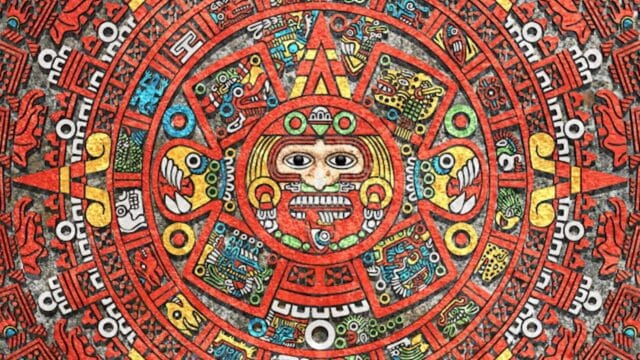
Xibalba is the name given by the K’iche’Maya to their underworld, meaning “place of fear.” The underworld was ruled by the Maya gods of death and terrified all Maya men, women, and children. A mythical place like Lethe, where the gods rested in eternity
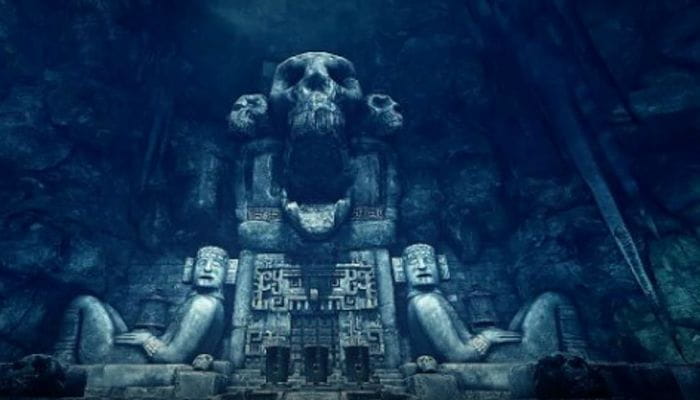
The Maya could not escape suffering in death and were subjected to horrible trials in Xibalba, or had to die violently to avoid it. Those who entered Xibalba put their wits to the test against cruel gods, but very few survived. The Maya believed that freshwater sinkholes, or cenotes, were the sacred portals to this place.
This underwater labyrinth of rivers on the Yucatan Peninsula was a previously hidden realm. Only in recent history have adventurers risked their lives to explore the secret passageways and caves filled with human remains and hidden temples to reveal a glimpse of the mysteries of the Mayan underworld.
Where is the Mayan Underworld?
According to the Popol Vuh, the sacred text of the Maya, it was located just below the Earth’s surface, off the west coast of the Yucatan Peninsula. The underworld was entered through a cave on the Earth’s surface, the first of the nine levels of the underworld. The Popol Vuh describes it as expansive with rivers, mountains, six houses where the dead were tested, the place of the council of the Lords, and the ball court, where a traditional Mayan ball game called Pokatok was played.
The cruelty of the gods
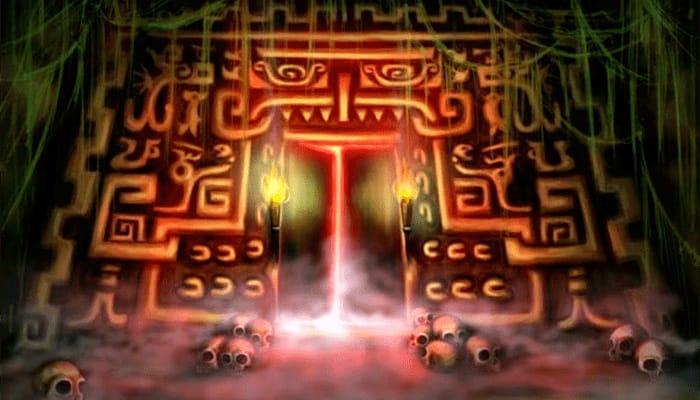
Xibalba served as a court for the dead and was home to 12 gods who ruled the place, Hun-Came (“One Death”) and Vucub-Came (“Seven Deaths”). The gods operated in pairs to cause human suffering and had names that personified their gruesome functions, such as Master Pus, Bone Scepter, Master Jaundice, and Blood Collector! The gods occasionally ventured to the surface to inflict disease and distress on the living, when they were not reveling in the suffering of the dead.
Xibalba’s ruthless trials
The rulers were extremely proud and sought to humiliate or destroy those of lesser wit. In order for the dead to enter and successfully endure the nine levels of Xibalba, they had to overcome many deadly trials and traps set by the gods.
The supplicant’s tribulations began on the route to the place, where they first had to cross a river of scorpions, a river of blood, and a river of pus! Afterward, they were subjected to impossible trials, such as surviving a house of jaguars, being attacked by deadly knives, or being subjected to relentless fire.
The dead were usually buried with weapons and tools to help them overcome the god’s seemingly insurmountable trials. Corn, a symbol of rebirth, was placed in their mouths to feed them, and jade paid for the journey to the underworld.
The twin heroes conquer the gods
When the corn god (Hun Hun Hunahpu) and his brother (7 Hunahpu) played Pokatok, the gods were annoyed by the noise and envied the brothers’ talents.
Pokatok was a particularly fast and violent ball game played with a solid rubber ball weighing up to 9 pounds. Mortals and gods alike were obsessed with the game. The stone ball court was located just above the entrance to Xibalba, where the two brothers were summoned.
They almost mocked the gods and passed through the nine levels of the underworld. Their trials, however, culminated in a game of Pokatok. When the brothers lost the game, they were sacrificed and their bodies buried just below the playing field.
Hun Hun Hunahpu’s head was placed on a pumpkin tree and later found by a goddess of the underworld, Blood Moon. She miraculously became pregnant after the head spat on her hands and later gave birth to the legendary Mayan Hero Twins, Hunahpu and Xbalanque.
The twins were excellent hunters and accomplished ball players; they even had magical powers! One day, they caught a rat while hunting, and the rodent told them what had happened to their father and uncle in the underworld. Lured by this knowledge or by the irresistible challenge of a game of Pokatok, the two allowed themselves to be lured into Xibalba.
After surviving many brutal trials, they spent their last night in the House of Bats, where an evil bat tore off Hunahpu’s head. The gods forced Xbalanque to play the ball game with his brother’s head as the ball! Xbalanque cleverly swapped his brother’s head for that of a rabbit before reattaching Hunahpu’s head to his body.
Although they ultimately won the game, the lords of the underworld still wanted the twins dead. Hunahpu and Xbalanque allowed themselves to be sacrificed by fire, but they ultimately tricked the gods using their magical abilities. Not only did they come back to life, but they also killed the Xibalba gods and resurrected their father, the King of Corn!
Mayan hidden treasure
The sacred cenotes, also considered the entrance to Xibalba, have only recently begun to be explored for all their ancient hidden treasures! All the great Mayan cities were located next to the sinkholes, which provided them with the fresh water they needed. In the Yucatan Peninsula region, there are no lakes or rivers above ground level. The dark passages and caves that were once hidden now reveal their secrets to brave adventurers who venture into their depths.
Offer to the Rain God
Archaeologists have recently discovered offerings of stone and ceramic tools to the Mayan rain god, Chaak, in a cenote in Cara Blanca, Belize. The sacred pool is surrounded by lush forest and is also the site of a Mayan water temple. Archaeologists suggest that the offerings were from the period after the extensive drought that began to destroy the entire Mayan civilization.
Near Caracol in Belize, a large Mayan city, National Geographic explorers explored the ruins of Las Cuevas and found a huge cave opening under one of the largest pyramids on the site. They also found a sinkhole and an underground river that was probably a ceremonial site, reaffirming the link between sinkholes, or cenotes, and the sacred beliefs of the Maya.
Haunted Cenote
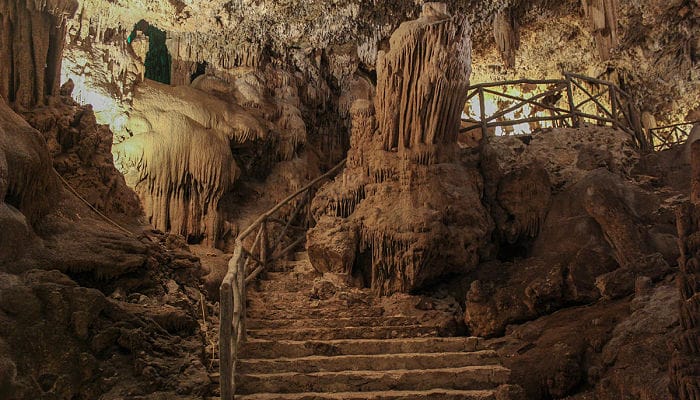
Mayapan was an ancient walled Mayan city founded after the decline of Chichén Itzá. Within the city walls there are several cenotes, but one cenote—Sac Uayum—is located just outside the walls. Local villagers do not drink water from Sac Uayum and do not even let their children play near it! Perhaps the recent chilling discovery of human bones scattered throughout its two caverns explains their unease.
Intrigued by the cenote’s position, archaeologists couldn’t resist exploring its hidden depths. This required them to first rappel 40 feet just to reach the water’s surface! They believed the cenote was a burial site as they discovered human and animal skeletal remains in its depths.
The cenote’s location, south of Mayapan, may have been associated with the underworld, researchers said. The victims may also have been buried there if they had succumbed to a plague. However, the cenote is now protected by a local legend of a horse-headed snake that defends the mysteries of the sacred sinkhole.
The Sacred Light of the Cenote
Acclaimed underwater archaeologist Guillermo de Anda made a remarkable discovery in a cenote near Chichén Itzá. The water at the bottom of the sinkhole acted as a sacred sundial for two days of the year: May 23 and July 19—when the sun reaches its zenith.
The zenithal light only works on those specific days, as the sun is directly overhead and casts no shadow. The sunlight would be focused through the small opening of the cenote and sink vertically into the waters below. On the day of the zenith, the sun rises in line with the northeast corner of the El Castillo pyramid at Chichén Itzá and then sets in line with the west staircase of the pyramid, and the cenote with the hidden Mayan sundial!
Archaeologists and other brave adventurers who eagerly enter the realm of the Mayan underworld seem to have no fear or trepidation. But would they have the ingenuity to outsmart the ruthless gods of Xibalba? At least they don’t need to suffer through nine levels of hell to bring us the sacred mysteries of the Maya.