These are just the 8 main Masonic symbols, but Masonic symbolism is much broader. However, by knowing these 8 elements, you can learn a little more about the customs, beliefs, and traditions of this religious practice.
Viking symbols played an important role in Viking culture. From simply representing their faith to invoking their gods for protection or instilling fear in their enemies, the Norse used various symbols for different purposes.

In addition to that, figures of Odin, as well as figures and drawings of animals closely associated with him, were discovered in many Viking graves with the Valknut drawn or placed right next to them. These are the two main reasons why the Valknut is considered the symbol of Odin.
The nine corners of the three triangles that make up the Valknut are also associated with the nine worlds in Norse mythology and the cycle of life through motherhood and pregnancy.
2. Yggdrasil
Yggdrasil, the Tree of Life, is not only one of the most prominent Norse Viking symbols, but also an important element of the Norse faith.

According to Norse mythology, Yggdrasil is the Great Tree that connects the nine worlds or nine realms of the universe, namely Asgard, Midgard, Muspelheim, Jotunheim, Vanaheim, Niflheim, Alfheim, Svartalfheim, and Helheim.
That is why Yggdrasil is considered the symbol of the interconnectedness of all things in the universe.
Yggdrasil is located at a spring according to Norse belief, which suggests that all life comes from water. That is one of the reasons why it is called the Tree of Life. The second reason is that the fruits of Yggdrasil are believed to provide youth to the gods, “giving them life.”
According to Norse mythology, the world will end with Ragnarok, a battle between gods with only one man and one woman surviving by hiding in the hollow of a tree. The couple will leave the tree to bring life back to the world.
Although the tree in question is not specifically mentioned or Yggdrasil is not clearly associated with the myth, some believe that it is the tree that will protect life from Ragnarok.
3. Aegishjalmur / Aegishjalmr, the helm of fear and terror
Aegishjalmur (also known as the Helm of Awe and Terror) is a rune that is known as a Viking symbol of protection. The word Aegishjalmr is composed of two different words in the Old Norse language: aegis, meaning “shield,” and hjalmr, meaning “helm.”

We should clarify something at this point: the “helm” part of Aegishjalmr here, which is actually the root of the word “helmet” in English, does not refer to anything physical or mean a physical helmet, as many others later decided to believe. It simply means “at the forefront.”
In fact, Viking warriors used to draw Aegishjalmr on their foreheads to protect themselves from their enemies and instill fear in them. As one of several Nordic symbols of protection, Aegishjalmr is mentioned in several sagas regarding the deeds of Viking heroes, including the Völsunga saga.
Today, the Aegishjalmur is drawn or worn in the form of tattoos as a symbol of protection or a symbol of identification among Asatru believers.
4. Vegvisir, the Viking compass / runic compass
Widely associated with Aegishjalmr or sometimes even confused with it due to the similarity between the two, the Vegvisir is another Viking symbol composed of pentagrams of runes.
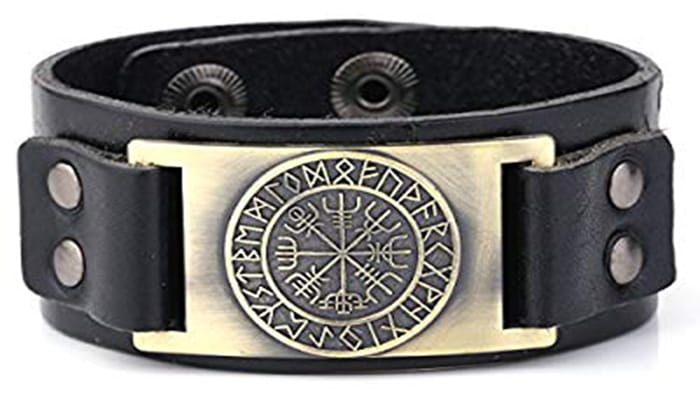
The Vegvisir, also known as the Viking compass / Nordic compass or the runic compass, was believed to provide guidance to a person who might lose their way. It would also be drawn on Viking ships before setting sail to ensure that they would return home safely.
That said, there is some confusion about the origin of the symbol and whether or not it is a genuine symbol inherited from the Viking Age, as there are very few resources that mention it.
5. Odin’s Triple Horn – The Triskelion Horn
Odin’s Triple Horn is a Viking symbol consisting of three intertwined horns representing the three horns in the myth about Odin and his quest for the magical mead, Odhroerir / Oorerir, also known as the Eagle of Poetry.

According to belief, two dwarves named Fjalar and Galar killed Kvasir, a being (a god or a man according to different sources) created from the spit of Vanir and Aesir (the two groups of gods in Norse mythology) who knew everything and could answer every question.
According to the myth, Odin used his wits to convince the giantess Gunnlöð and negotiated with her to take a sip of mead for three days. With only one sip per day, he used an entire horn each time, thus managing to drink all the Mead of Poetry, which helped him escape by turning into an eagle.
Today, apart from identifying oneself as Norse, Odin’s Triple Horn is used as a symbol of wisdom and inspiration, particularly poetic inspiration.
6. Mjolnir, Thor’s Hammer
With its authenticity and significance in Norse mythology, Mjolnir, Thor’s Hammer is undoubtedly one of the most important Viking symbols in Norse symbolism. There are several ideas regarding the etymology of the word Mjolnir in the Old Norse language.
One suggests that Mjolnir means “lightning,” while others suggest that it could mean “white” (as in the color of lightning) and/or “new snow” (in the sense that it represents purity).
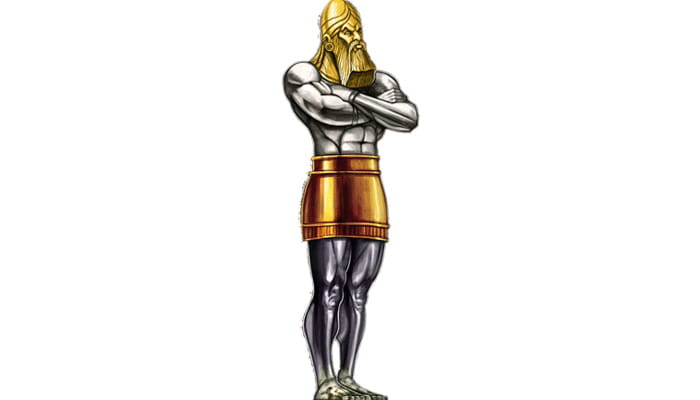
Another interpretation of the word suggests that the meaning is much closer to “to crush” or “to smash.” All of these suggestions are at least related to the symbolism behind Thor’s hammer.
According to Norse mythology, Mjolnir was not just a weapon but a tool that Thor used for many purposes. Thor consecrated the things and people he used his hammer on and brought them from the realm of chaos to the sacred realm, i.e., the cosmos. It was also believed that he used Mjolnir to bless marriages during which he provided fertility to the couple.
In the sense that Thor protected people from chaos by consecrating them with Mjolnir and protected the cosmos from giants by crushing them with it, Thor’s Hammer is considered a Nordic symbol of protection. In fact, Viking warriors used to wear Thor’s Hammer as an amulet during battle to provide protection.
This tradition continued even after many Vikings converted to Christianity: Christian Vikings wore Mjolnir amulets alongside crosses around their necks. Today, in addition to being one of the most prominent Norse symbols of protection, Mjolnir is used to represent the faith of Germanic neo-paganism, also known as Heathenry/Heathenism.
7. The swastika
Of all the Viking symbols, the swastika is undoubtedly the one that almost lost its true meaning. The symbol, which was used for consecration and blessing by the Vikings and Indo-Europeans in much the same way as Mjolnir, was appropriated by Hitler and the Nazi party and, sadly, has been associated with that and only that ever since.

If a person or thing was sanctified using the swastika, that person/thing would become holy and fortunate. It was believed to bring a person in a desperate and chaotic state to a state of strength, prosperity, and order.
8. Svefnthorn
Svefnthorn is one of the most authentic Viking symbols, mentioned many times in various Norse sagas, such as The Volsung Saga, The Saga of King Hrolf Kraki, and The Saga of Gongu-Hrolf.

Although the appearance, definition, and magical qualities of Svefnthorn are somewhat different in each myth, there is one thing in common in all stories: Svefnthorn was mainly used to put enemies to sleep.
The symbol was used by the Norse (and gods) to put their adversaries into a deep and prolonged sleep. Odin puts Valkyrie Brynhildr/Brunhild into a deep sleep in the Volsung Saga. She remains asleep until Sigurd heroically rescues her and awakens her.
Queen Olof uses Svefnthorn to put King Helgi to sleep in The Saga of King HrolfKraki, and he remains asleep for hours. Vilhjalmr uses it on Hrolf in The Saga of Gongu-Hrolf, and Hrolf does not wake up until the next day.
9. Huginn and Muninn – Odin’s Twin Ravens
Huginn and Muninn are a pair of ravens who served as messengers for Odin the Godfather. In various works of art, the two ravens were depicted right next to Odin or sitting on his shoulders.
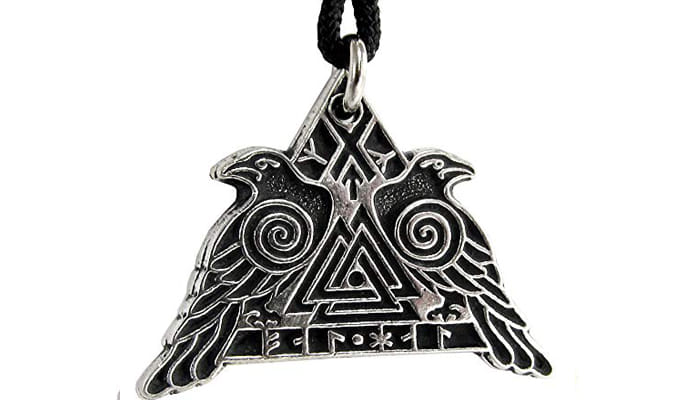
Huginn and Muninn flew around the world during the day and returned to Odin at night to tell him everything they saw. It was believed that, thanks to the abilities Odin had given them, Huginn and Muninn were keen observers and could travel across Midgard (the world) in a day, speak and understand the language of humans. The fact that the words Huginn and Muninn literally mean “thought” and “mind,” respectively, reinforces this theory.
10. Gungnir, Odin’s magical spear
Next on our list of ancient Viking symbols is a weapon, a magical one at that, Odin’s magical spear, the father of all. Gungnir is the name given to Odin’s magical spear forged by the dwarves, the most talented blacksmiths in the cosmos.
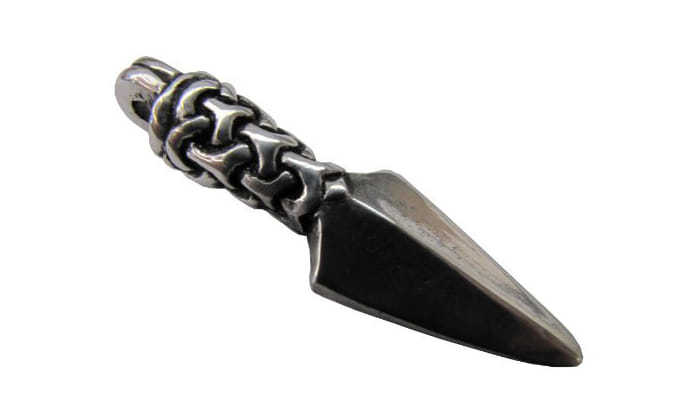
According to myth, Odin started the war between the two groups of gods in Norse mythology, the Aesir and the Vanir, by throwing Gungnir at his enemies. This gesture was later repeated by Viking warriors before battle in the hope of gaining Odin’s protection and help during the fight.
Gungnir never missed its target and, according to some stories, returned to Odin just as Mjolnir returns to Thor every time it is thrown by the God of Thunder. In the sense of representing him as the God of War, Gungnir is considered a symbol of Odin.
You can read this article in Spanish here: Viking Symbology: 10 Viking Symbols and their Meanings

