The Claddagh is almost certainly the most popular Celtic, Viking, Norse, or Irish symbol in jewelry. The history of the Claddagh dates back some 300 years to the fishing village of the same name in County Galway.
Legend has it that Richard Joyce, a native of Galway, was captured and sold into slavery in Algiers. While there, a Moorish goldsmith taught him his trade. William III, the king at the time, sent an ambassador to Algiers. The ambassador arranged for the release of all British prisoners.
Richard Joyce was one of those prisoners. He was finally released after 14 years and returned home to his waiting fiancée. While in captivity, he had made what we now know as the Claddagh Ring, especially for her. The heart symbolizes love, the hand symbolizes friendship, and the crown symbolizes loyalty.
1. Use and symbolism
The distinctive design of the Claddagh features two hands grasping a heart and is usually crowned by a tiara. These elements symbolize the qualities of love (the heart), friendship (the hands), and loyalty (the crown).
Symbolism
A “Fenian” Claddagh ring, without a crown, is a slightly different version of the design, but it has not achieved the same level of popularity as the crowned version. Claddagh rings are relatively popular among Irish people and those of Irish heritage, such as Irish Americans, as cultural symbols and as friendship, engagement, and wedding rings.
While Claddagh rings are sometimes worn as friendship rings, they are commonly worn as engagement and wedding rings. Mothers sometimes give these rings to their daughters when they come of age.
There are several mottos and wishes associated with the ring, such as: “Let love and friendship reign.” In Ireland, the United States, Canada, and other parts of the Irish diaspora, the Claddagh is sometimes passed down from mother to eldest daughter or from grandmother to granddaughter according toNorse mythology .
Uses
According to Irish author Colin Murphy, a Claddagh ring was worn to convey the wearer’s relationship status:
- On the right hand with the tip of the heart pointing toward the wrist: the user is not looking for a relationship (they may already be in one or not, but they are not looking).
- On the right hand with the tip of the heart pointing toward the fingertips: the wearer is single and may be looking for love.
- On the left ring finger with the tip of the heart toward the fingertips: the wearer is busy.
- On the left ring finger with the tip of the heart toward the wrist: the user is married.
There are other localized variations and oral traditions involving the hand and finger on which the Claddagh is worn.
The folklore surrounding the ring is relatively recent, with “very little native Irish writing about the ring,” hence the current difficulty in finding a source that describes or explains the traditional ways of wearing the ring.
2. History of the Claddagh
The Claddagh ring is associated with fidelity, love, and romance in Irish culture, and one of the main legends of the ring comes from a classic love story, although several different stories are attributed to it. We recount the two main ones below:
Richard Joyce
This was the name of a sailor from the fishing village of Claddagh in Galway who set sail for the plantations in the West Indies in the 17th century. Unfortunately, the entire crew was kidnapped by pirates and taken to Algeria, where they were sold as slaves.
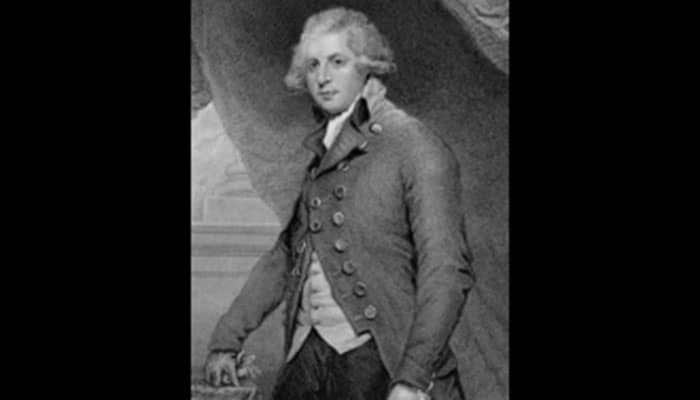
Richard was bought by a goldsmith who trained him in the trade, and in 1689, an amnesty was declared when William II, King of England, demanded the release of all slaves within his kingdom.
Richard had charmed and impressed his master so much that he was offered half of the goldsmith’s wealth and his daughter’s hand in marriage.
Unfortunately, Richard’s true love was waiting for him in Galway, and he asked to be sent home so he could be with her. Richard returned to Galway and was delighted to find his beloved waiting for him; it is not known whether he was freed or escaped.
Unbeknownst to the goldsmith, Richard had stolen flecks of gold from the workshop every day and turned them into a ring. This was given to his girlfriend, whom he married. He set up a goldsmith’s workshop and is said to have created more Claddagh rings with the initials “RI.”
Margaret Joyce
The other main story associated with the Claddagh relates to a young woman who was part of the Joyce family, one of the tribes of Galway. She married a wealthy Spaniard named Domingo de Rona in the 16th century; when he died, she was left half his fortune.
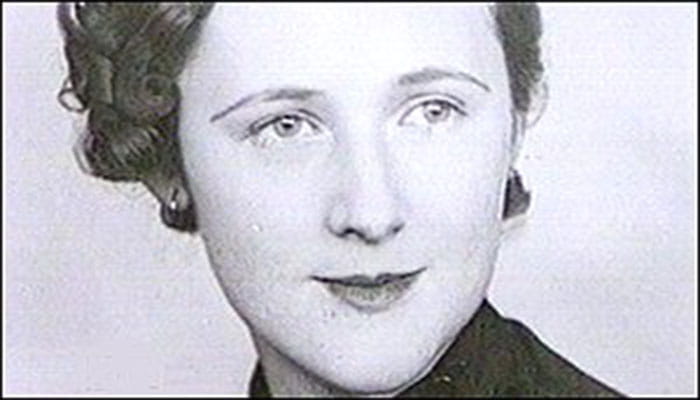
This money was used to build a series of bridges in the province of Connacht, and it is said that an eagle dropped a Claddagh ring into her lap as a reward for her good deeds. Margaret is said to have later married the mayor of Galway, Oliver Oge French.
3. Where did the Claddagh ring get its name?
Claddagh is a small, ancient fishing village located on the outskirts of the city of Galway in an area where the famous River Corrib opens out into the Atlantic.
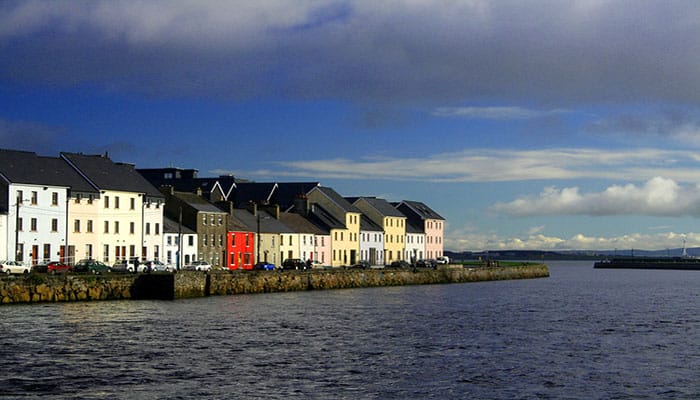
Although there are different stories about the origin of the ring, it is almost certain that it was created in or near the village of Claddagh, which comes from the Irish An Cladach (rocky shore). Centuries ago, the area was extremely independent and had its own king, while also thriving on trade with Spain.
The fishing fleet is made up of “hookers,” the traditional name for the old sailing boats used by local fishermen. Every year, the Blessing of the Bay Festival takes place where a Dominican priest blesses each boat at the start of the herring season.
It is believed to have started in 1488, and the ceremony in the modern era involves a number of boats and yachts joining the hookers in the bay in mid-August.
The priest performs the blessing on one of the boats and rings a bell; this is a signal for the local altar boys to sing and the fleet of boats to tour the bay.
Sadly, very little remains of the huts that once stood on The Claddagh. As romantic as the idea of white houses may seem, they were actually unsanitary dwellings and were demolished in the 1930s.
However, the area remains a popular tourist spot as it offers fantastic views of Galway Bay.
4. The symbolism of the Claddagh ring
In Irish tradition, the Claddagh is passed down from mother to eldest daughter and kept in the family for generations. In the mid-19th century, millions of Irish people emigrated due to the Great Famine and traveled thousands of miles in coffin ships; most of these emigrants arrived in North America.
5. Tradition
These rings were one of the few valuable possessions they had when making the long journey abroad and were kept as heirlooms. In many cases, a ring was basically a family’s only savings and became a daughter’s inheritance. As a result, there are countless Claddagh rings in American and Canadian homes today.
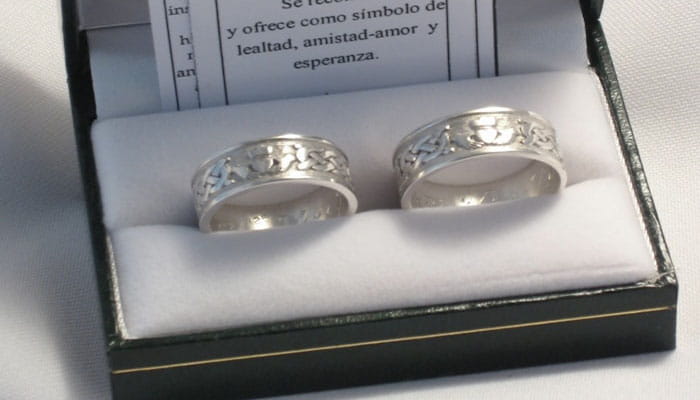
Many celebrations are known to use the Claddagh. Actor Gabriel Byrne always wears his.
Claddagh rings also have royal connections, having been worn by Queen Victoria, Queen Alexandra, and King Edward VII, along with the legendary Princess Grace of Monaco.
6. Religion
As you would expect in a country so closely associated with Christianity, the Claddagh also has religious significance for some, in that it is linked to God, Jesus, and the Holy Spirit, also known as the Holy Trinity.
The left hand of the ring represents Jesus; the right hand represents the Holy Spirit, while the crown represents God.
7. Similarities
The Claddagh ring is believed to be based on the Fede Rings, a group of finger rings originally worn during the Roman Empire. Fede rings were still popular accessories in medieval Europe and consist of a pair of intertwined hands symbolizing trust, faith, or brotherhood.
The many meanings of Claddagh rings allow you to wear them to celebrate many occasions, including weddings and, of course, engagements. Alternatively, you can add your own unique touch. While these rings celebrate Irish traditions, their beautiful and timeless design means they look fabulous in the modern era.

