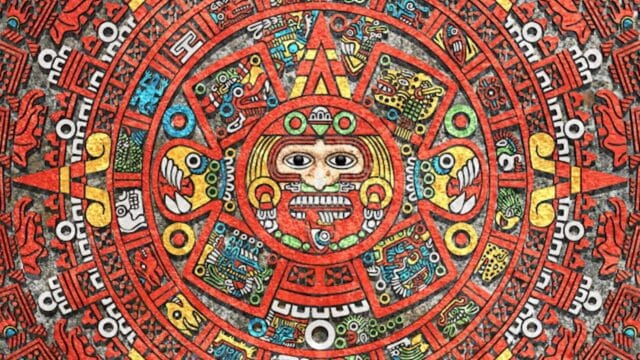
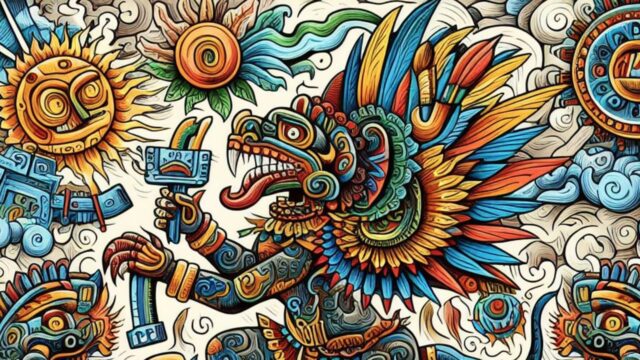
Mayan myths arose from the practices, traditions, and religions of ancient civilizations dating back more than three thousand years. All these traditions and myths were created in the regions known as Mesoamerica.
Mayan mythology is based on stories told in Mexican territories such as Chiapas, Tabasco, Quintana Roo, Campeche, and Yucatán, as well as some parts of central Latin America.
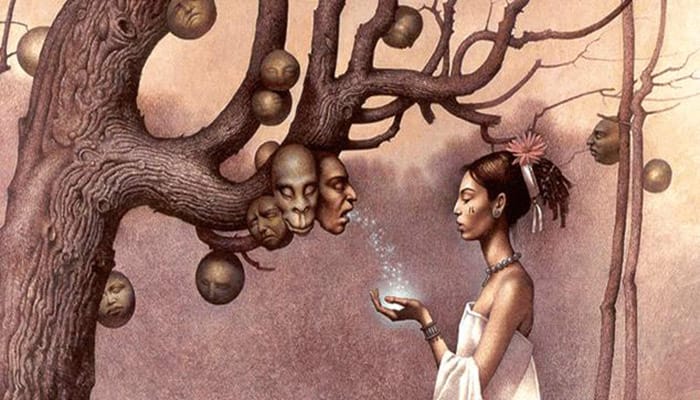
Mayan myths and culture
Although many of the texts written by the Maya were burned upon the arrival of the Spanish, some legends have survived and continue to be told today.
Mayan myths are as fascinating as the Mayan gods themselves. The stories below serve a dual purpose: to remember the traditions of a civilization that is still alive and to shed some light on a culture in which we are immersed.
- The legend of the Aluxes: mystical beings similar to elves that protect their owners, known as “ .”
- The legend of Xtabay: a story that gives life to a liqueur found in the Yucatan Peninsula.
- The love story of Sac-Nicte and Canek: a legend that explains the abandonment of Chichen Itza.
- The legend of the dwarf Uxmal: a king who built spectacular structures and made a city grow.
Here we will show you four of the most popular and interesting Mayan myths from this pre-Columbian culture.
1. The Legend of the Aluxes
The Aluxes are the first of the most popular Mayan myths of the Yucatan Peninsula. The aluxes are tiny beings created from clay, which they hid so that they could protect their owner. The aluxes had a strong bond with their creator. Once created, they were offered prayers and offerings so that they would come to life.
The aluxes were known to be loyal to their owners and mischievous to strangers. When their owners’ properties were sold to other people, the aluxes would come out and terrify the children. To please and calm them, the new owners of the house had to give them food, cigarettes, honey, and corn.
Today, the aluxes continue to look after the Mayan villages. Some original clay figurines can be found in the Dzitnup and Samula cenotes, near the city of Valladolid.
Some people believe, according to Mayan myths, that the aluxes are here to bring light to the world. The creatures are almost never seen as they are agile and light as the wind. The Mayans believe that if they are respected, the aluxes will protect them and take care of their property.
2. The Mayan myth of Xtabay and the Xtabentun flower.
This Mayan myth tells of Xtabay and the flower of Xtabentun. This legend tells the story of two beautiful sisters. One was known as the sinner and the other as the good one. The first was unwanted because she gave herself to love, but she was actually loved by the sick and the weak. The second was appreciated by the people, but inside she was rigid and incapable of loving those around her.
After the death of Xbeban (the sinner), she received visitors from all over. Her tomb was surrounded by beautiful, colorful flowers, and a sweet smell filled the air. Then Utz-Colel (the good woman) died. As soon as she died, her body began to emit an unpleasant odor, and all the flowers around her tomb died.
From Xkeban’s grave grows a particular flower called Xtabentun, while from Utz-Colel’s grave grows a cactus called tzacam. Utz-Colel’s death was difficult, and she returned from eternity to take revenge on her sister’s kindness. To imitate her sister’s life, Utz-Colel offers worldly love to strange men. She lures them and then kills them. She waits for them by the ceiba trees while combing her hair with a brush made of tzacam.
3. The Mayan myth of Sac-Nicte and Canek.
This Mayan myth is a love story about Sac-nicte and CanekSac-Nicte. They were the children of chiefs born in Mayapan and were known as the powerful peace alliance between Mayab Uxmal and Chichen Itza. Canek was a brave prince with a kind heart. When he turned 21, he was chosen as king of Chichen Itza. That same morning, he met Princess Sac-Nicte and fell in love with her. She was 15 years old. They fell in love quickly; however, Sac-Nicte was destined to marry the young Ulil, prince of Uxmal.
The Mayan myth says that a young advisor to the princess told Canek that Sac-Nicte would be waiting among the green flowers and that he would have to fight for her before fate fought against them.
On the day of the wedding, Canek arrived with 60 of his best warriors and climbed onto the altar shouting Itzalan’s name. It was as if he were on the battlefield, stealing the princess from the altar. Ulil, enraged, declared war: Mayapan and Uxmal against Izta. The Itzaes abandoned their homes and temples in Chichén Itzá. At the head of the road was King Canek, hand in hand with his beloved Sac-Nicte. The armies of Uxmal and Mayapan found Chichén Itzá empty, dead, and abandoned by its citizens.
4. The dwarf in Uxmal
The dwarf of Uxmal is one of the well-known Mayan myths of Mexico. Legend has it that long ago, in the ancient Mayan city, there lived an old woman who worked as an oracle in the city. The woman was unable to bear children and asked the god Chic Chan for a son, so the god asked her to bring him a turtle egg as payment for his request. A few months later, a small green dwarf with red hair was born from the egg.
One day, the dwarf decided to make a large gourd, which would serve as a kind of rattle. According to Mayan myths, there was a prophecy that the person who played such an instrument would be the new king. When the king heard of the prophecy, he became angry and challenged the dwarf to a music contest. He set three challenges for the dwarf.
- Test No. 1: The king asked the dwarf how many trees there were around his palace, and the dwarf guessed correctly, passing the first test.
- Test No. 2: The king asked the dwarf to find a male turkey and make it lay eggs. The next day, the dwarf brought him a pot-bellied man who looked like he was pregnant, to explain that it was impossible and that a male turkey cannot lay eggs. The advisors approved the explanation, and he won the second challenge.
- Test No. 3: In the last test, the king asked Saiya the dwarf to place a type of walnut on his head and crush it with his own skull. The dwarf did so without fear and passed. After passing the last test, the dwarf challenged the king to perform the same challenge, which he did, but he broke his head and died, and so the dwarf won the throne.
Once established as king, the dwarf built the famous temple “the governor’s house” and a house for his mother, which he called “the house of the old mother.” Both buildings can be seen in the Mayan ruins of Uxmal.