Sobek is the ancient Egyptian crocodile god of the Nile. The Nile River was believed to have been created from his sweat. Therefore, Sobek controlled the waters, as well as the fertility of the soil. The Nile, incidentally, was full of aggressive and fearless creatures. It seems fitting that Sobek was revered by the Egyptians for his virility and reproductive capacity, much like Durga.
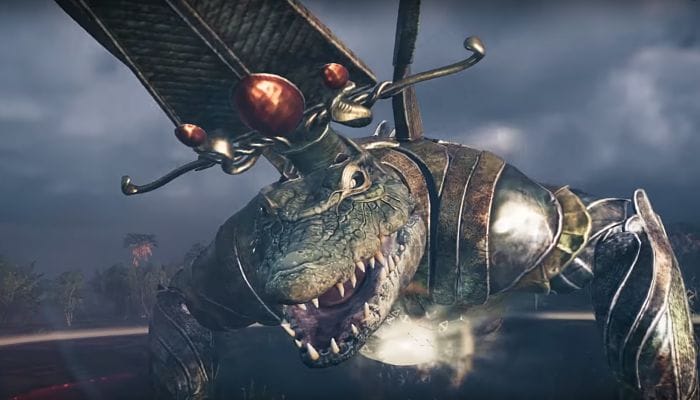
Crocodiles are man-eaters, so although Sobek was revered and appreciated for his gifts of fertile land fed by the impressive Nile River, he was also greatly feared. Due to his reptilian nature, Sobek operated from a place of pure instinct, was often aggressive and violent in his behavior, and was known to be openly sexual.
Sobek is mentioned in the Pyramid Texts, the oldest sacred texts in the world. He was the protector of the Egyptian pharaohs and their armies, and his strength and courage were his source for overcoming obstacles. He also protected them from evil, destructive magic, and malicious witchcraft.
Origin
Sobek first appeared during the Old Kingdom in the ancient Egyptian city of Shedyet. The Greek name for Sheydet is Crocodilopolis, meaning “Crocodile City.” The city is located in the Fayyum region, and Sobek is also known as the “Lord of Fayyum.”
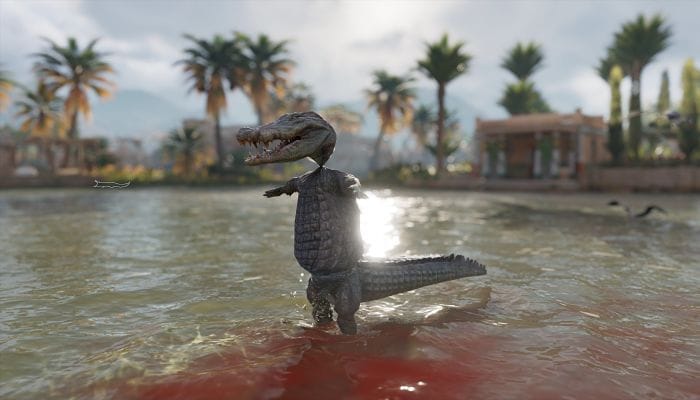
A special temple was built in Crocodilopolis and dedicated to Sobek. The temple grounds housed a lake, sand, and a live crocodile named Petsuchos, meaning “son of Sobek.” Petsuchos was worshipped as a manifestation of Sobek and was adorned with gold and gems. He was fed the finest food, including grain, meat, wine, and milk mixed with honey. When Petsuchos died, the animal was mummified and replaced by another crocodile.
The ancient Greek historian and philosopher Herodotus recorded that anyone killed by a crocodile in the district of Crocodilopolis was considered divine. The victims were embalmed and buried in a sacred coffin after receiving a special funeral led by priests of the Nile.
Kom Ombo was also a center of worship for Sobek. It was a sanctuary for a large number of crocodiles and a center of worship. The temple that Sobek shared with Horus, the god of war, still stands today.
Crocodiles were often kept in pools and treated as family pets. The Egyptians believed that if they fed a crocodile, they would receive the blessings of Sobek. Crocodiles of all ages and mummified crocodile eggs with jewels have been found throughout Egypt.
Sobek was worshipped in the Old Kingdom, but his prominence really grew during the Middle Kingdom. It was during this time that he was often merged with the falcon-headed god of royalty, Horus.
Sobek rescued the four sons of Horus by gathering them in a net from the waters where they had emerged from a lotus flower. He was adopted into the divine triad of Horus, which also included Isis and Osiris, the parents of Horus.
Later, during the New Kingdom period, a god named Sobek-Ra emerged. This newer god was a fusion of Sobek and the sun god Ra, perhaps the most important god of the ancient Egyptians. Sobek was also believed to have influence in the underworld. He could awaken the senses of the dead and give them sight.
Sobek’s family
Sobek’s parents were a formidable couple. His mother Neith was a fearsome goddess of war. His father was Set, god of thunder, storms, war, and chaos. Set is best known in Egyptian mythology for killing and dismembering his own brother, Osiris.
Sobek’s wife was Renenutet, the snake goddess and protector of the harvest. Their son is Khonsu, the god of the moon and time. The name Khonsu means “traveler,” which refers to the moon traveling across the sky.
Symbolic influence
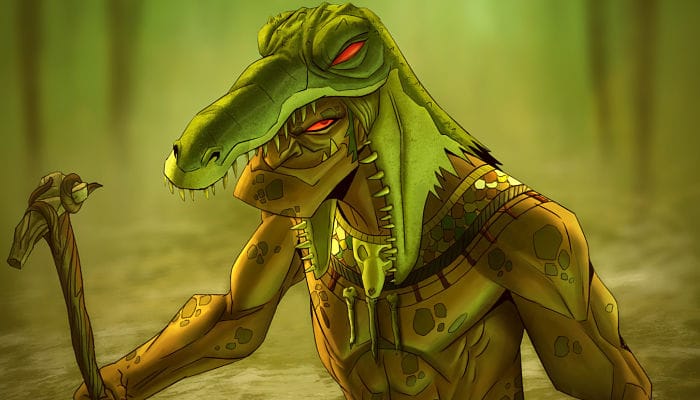
In the Old Kingdom, Sobek was most often depicted as a man with a crocodile head, and occasionally in the form of a typical crocodile. Later depictions from the Middle and New Kingdoms have attributes that connect him to Horus and Ra.
Sometimes his body shape is that of a crocodile with the head of a falcon with a double crown. Sobek-Ra is characterized by being a crocodile adorned with a sun disk and tall plumes around his head.
Mummified crocodiles with baby crocodiles in their mouths and on their backs have been found in Egyptian tombs. Crocodiles are one of the few non-mammalian animals in nature that diligently care for their young. They often carry their young on their backs.
The practice of preserving this aspect of the animal’s behavior through mummification seems to emphasize the protective and nurturing aspects of the fierce Sobek. He was the protector of the Egyptian kings and people, just as a crocodile protects its young.
Modern Influence
In 2012, the third novel in The Kane Chronicles series was published by Disney Hyperion. It is a compilation of stories based on Egyptian mythology and written by author Rick Riordan. In the story titled “The Son of Sobek,” a fictional crocodile named Petsuchos, aka “the son of Sobek,” terrorizes Long Island, New York. The protagonist transforms from an ordinary crocodile into a creature with the powers of a monster after being adorned with a magical necklace.
Tick-Tock the Crocodile was a character from Disney’s Peter Pan. Tick-Tock, who had previously swallowed an alarm clock, constantly chased the villain Captain Hook in an attempt to take a bite out of him.
However, after a young child was tragically killed by an alligator at Walt Disney World in 2016, the decision was made to remove all references and depictions of alligators and crocodiles from any attraction at Magic Kingdom in Florida.
A real-life reptile, the Nile crocodile (Crocodylus niloticus), is the basis for the god Sobek. Male crocodiles from the region are known to grow over 16 feet long and weigh up to 1,600 pounds. Females, who protect crocodile eggs, are smaller but equally treacherous predators.
Nile crocodiles eat almost anything they can sink their sharp teeth into, including large mammals. The dangerous species remains responsible for multiple human deaths each year.
Considering the fierce and well-deserved reputation of these reptiles, it makes sense that Sobek was an influential god throughout the history of the Kingdoms. The ancient Egyptians were amazed and fearful of crocodiles, as many people still are today.
