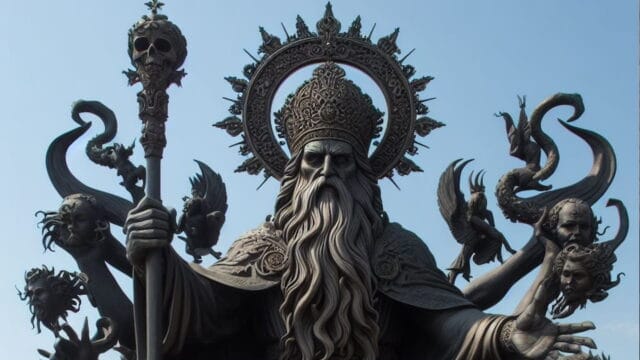
Siberia is located in the Asian part of the Russian Federation. It is an area with a very extreme subarctic climate that was inhabited by various nomadic groups such as the Tuvans, Votiaks, Huns, Yenets, Komis, Uighurs, Yakuts, Tunguses, and Nenets, who left behind great stories that became what is now known as Siberian mythology.
Main deities of Siberian mythology
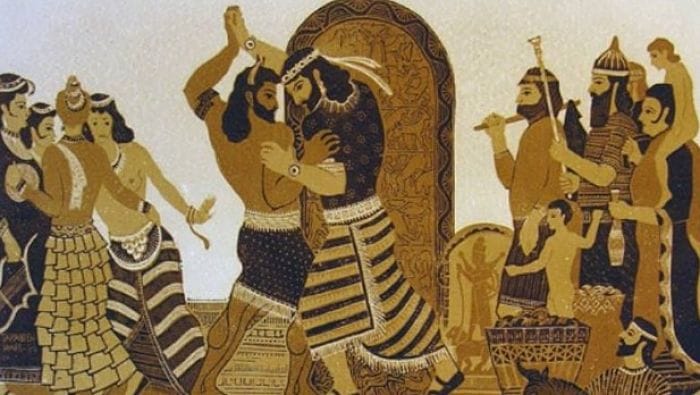
Legend has it that the inhabitants of Uruk, tired of a despotic king who oppressed them, sought help from the gods. The gods sent a character named Enkidu to fight Gilgamesh and defeat him.
However, this was not easy, as the fight was very evenly matched, and there was no clear winner. As a result, Enkidu declared Gilgamesh king of the town, and they became friends. Following this battle, they decided to go on a journey in search of adventure, during which they encountered various fantastic and dangerous animals that they fought.
While they made their way to new places, the goddess Inanna was left in charge of the town. Upon her return, she declared her love for the hero Gilgamesh, who rejected her feelings, causing her great anger.
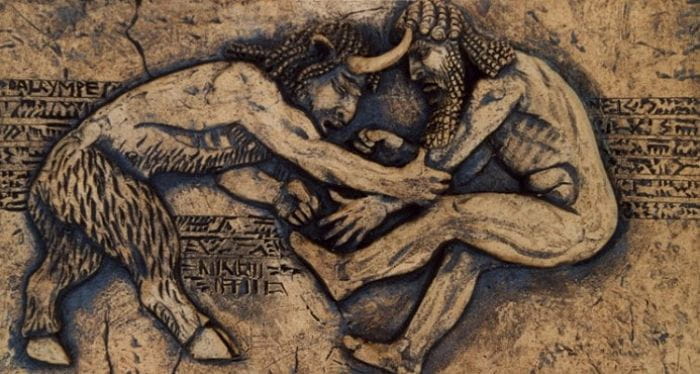
Hurt, she sends the Bull of the Storms to destroy the city and especially these two characters. In view of this, Gilgamesh and Enkidu fight against him, saving everyone by killing him, but enraging the gods, who decide to punish their servant Enkidu by killing him.
Devastated by the death of his friend, the king goes to ask the wise Utnapishtim for help, accompanied by his wife, because he saved them from the universal flood by granting him immortality.
They ask him how to obtain eternal life, but the wise man tells them that this only happened once and will not happen again. Finally, seeking comfort for the failed journey, the wife asks Utnapishtim for the location of the plant that restores youth but not immortality.
He relents and reveals that it is found in the depths of the sea. Gilgamesh decides to go in search of it and, surprisingly, finds it, but on his way back to Uruk, he stops to bathe, leaving the plant unprotected, and it is stolen by a snake.
As a result, upon arriving in the city, he commits suicide because of the calamities he has faced, burying himself alive with 80 members of his court, according to the version of Assyriologist Giovanni Pettinato published in 2001.
It should be noted that Gilgamesh’s personality is recognized for his desire to cling to life, a universal longing, and therefore his downfall is the lesson he learns, which is common to all: death. This points out that immortality is a gift used only by the gods, and they decide to whom to give it, which is why it is a dream to aspire to it.
Immortality in Mesopotamia
For the ancient Mesopotamian civilizations, immortality was a subject about which no information existed until the Epic of Gilgamesh, which was written based on a “real” event in 2500 BC, detailing a great first-hand account of one of the most important and influential kings in the history of Uruk.
This epic recounts the journey undertaken by this mythical character to obtain immortality, a need that arose following the death of Enkidu, but which is reserved solely for the gods because they created the world.
As a result of this information, immortality was viewed differently in Mesopotamia, becoming a derivative of religion and considered something sacred and valuable that ancient man could achieve due to his direct relationship with the gods.
Poem of Gilgamesh
Known as “He Who Saw the Depths” or “Above All Other Kings, “ these verses recount the exceptional nature of Gilgamesh.
This poem was written because people wanted to narrate the legends based on his adventures in verse, and the poems resulted in a longer poem. It was written on clay tablets around 2500-2000 BC.
There are many versions of this poem, and the complete version is owned by the library of the Assyrian king Ashurbanipal from the 7th century BC.
It should be noted that the first 11 tablets recount the Gilgamesh epic in a clearer and more explicit manner, and the 12th is thought to contain a poem that can be read independently about how Enkidu descended into hell.
However, there are other epic tales about this myth that can be read independently, including:
- Gilgamesh and Agga of Kish.
- Gilgamesh and the Land of Life.
- Gilgamesh and the Celestial Bull.
- Gilgamesh, Endiku, and the Underworld.
- The Death of Gilgamesh.