The English word “seraphim” is a transliteration of the Hebrew term seraphim, a plural form of the root saraph, meaning “to burn.”
The root appears about 120 times in the Old Testament in various contexts in which different objects are described as burning (e.g., sacrifices, cities, etc.). This plural form, seraphim, is found only in the context of Isaiah.
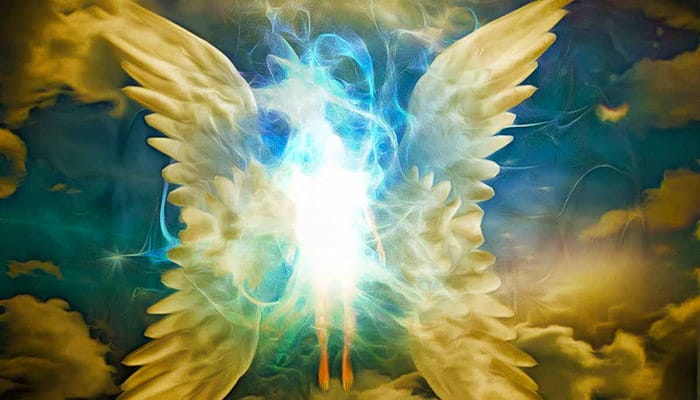
1. Description
Seraphim have six wings, two covering their faces, two above their feet, and they fly with the other two. If they are angels, they have a different appearance from all others in Scripture. They also have a different appearance from cherubim.
2. Summary
Seraphim, or those who are ablaze, are only mentioned in the passage from Isaiah. They are somehow connected to God’s throne. They do not appear in the form of men as other angels do, but they seem to be a higher rank of angel. Although, like cherubim, they are depicted as having wings, they are a different order of angelic creatures.
The prophet Isaiah tells us that seraphim are “fiery” angels with six wings who surround God when He sits on His exalted throne and who worship God continuously (Isaiah 6). Seraphim also minister to the Lord and serve as His agents of purification, as evidenced by the cleansing of Isaiah’s sins before he began his prophetic ministry.
3. Who are the Seraphim? The Seraphim in the Bible
The prophet Isaiah tells us that seraphim are “fiery” angels with six wings who surround God when He sits on His exalted throne and worship God continuously (Isaiah 6). Seraphim also minister to the Lord and serve as His agents of purification, as demonstrated by the cleansing of Isaiah’s sins before he began his prophetic ministry.
4. Seraphim in the Bible: 4 unique characteristics
Seraphim have unique characteristics that distinguish them, as demonstrated in the Bible in four ways

The word “seraphim” appears only in chapter 6 of Isaiah.
Isaiah 6 is the only passage in the Bible that specifically mentions the word “seraphim,” which means “those of fire.” In that chapter of the Bible, Isaiah describes his intense vision of God’s heavenly court. That is, the prophet saw God seated on an exalted throne surrounded by flying angels called “seraphim” (Isaiah 6:1-2).
The word “seraphim” is the plural form of the Hebrew root “saraph,” which means “to burn.” The implication here is that these attendant angels burn with love for God. Seraphim appear to bear a resemblance to humans, as Isaiah describes them as having faces, feet, hands, and voices (Isaiah 6:2-7).
Seraphim are fiery angels who revere God and proclaim His supreme glory.
In Isaiah’s vision, the seraphim repeatedly proclaim God’s supreme holiness and glory. (Isaiah 6:3). Seraphim do not address God directly, but call out to one another in God’s presence: “And they called to one another: ‘Holy, holy, holy is the Lord Almighty; the whole earth is his glory'” (Isaiah 6:3).
To be “holy” means to be set apart and viewed as sacred. This triple invocation of the word “holy” to describe God’s sacred nature appears only twice in the Bible, and both times it is uttered by angels to someone transported in a vision to God’s throne.
(The other passage containing this triple invocation of God’s holiness is found in Revelation 4:8, which also refers to the six-winged angels surrounding God’s heavenly throne and constantly declaring God’s glory).
The Trihagion, the triple invocation of “Holy,” in the seraphim’s worship of God is significant.
The fact that the seraphim in Isaiah’s vision use a triple repetition of God’s holiness, called the trihagion, is significant. In ancient Judaism, the number “three” meant integrity and stability, here connoting the totality of God as the beginning, the middle, and the end. Proclaiming God’s holiness three times also connotes:
- The eternal nature of God, who is the same yesterday, today, and forever (Hebrews 13:8)
- The divine perfection of God as seen in the Holy Trinity: the Father, the Son, and the Holy Spirit; and the complete and supreme holiness of God, without comparison to anything or anyone else.
Isaiah goes on to describe the effect of the seraphim’s proclamation, telling us that upon hearing the voices of the angel affirming God’s magnificence, “the doorposts and thresholds shook, and the temple was filled with smoke” (Isaiah 6:4). In biblical times, earthquakes and smoke were signs of God’s divine presence (Exodus 19:18; Psalm 104:32).
The Seraphim also minister to God and serve as His agents of purification.
When Isaiah realized that the heavenly seraphim covered themselves before God to acknowledge their unworthiness before the Lord, the prophet became aware of his own mortal sin and feared for his life.
At that moment, one of the seraphim picked up a burning coal “with tongs from the altar,” brought the live coal to Isaiah, and touched it to Isaiah’s lips. (Isaiah 6:6-7). This act purified Isaiah’s sins through fire, as the seraph assured Isaiah that now “the guilt is taken away and your sin is atoned for” (Isaiah 6:7).
With his sins cleansed, Isaiah could now speak directly to God. When God called out to a prophet, “Whom shall I send? And who will go for us?” the “purified” Isaiah was able to accept this prophetic commission for the people of Israel by responding, “Here am I! Send me!” (Isaiah 6:8).
5. Wings of Seraphim: Their Meaning
Each of the seraphim is described as having six wings: two wings to cover their faces, two wings to cover their feet, and two wings for flying.
Two wings to cover their faces
One of the reasons why seraphim can use four of their six wings to cover themselves is to express their humility before God. In particular, these fiery angels can use a pair of wings to cover their faces to show reverence for God, considering themselves unworthy to look upon God’s face and also in obedience to the Lord’s warning that no one can see His face and live (Exodus 33:20).
Two wings to cover their feet
The fact that seraphim also use a second pair of wings to cover their feet may show even greater reverence toward God, as angels may refuse to reveal any impure aspect of their being before the Lord.
Two wings for flying
Seraphim use their two remaining wings to fly and wait on God. This detail that Isaiah gives us about seraphim using most of their six wings to worship God and the two remaining wings to serve God may mean that we, as believers, serve God best when we make Him our top priority.
6. Isaiah’s vision of the seraphim.
In Isaiah’s description, the scene is set in the year King Uzziah died (c. 744 BC). The prophet was allowed, as a vision, to look into the sanctuary of the Lord, whom he saw sitting on a high throne.
Above Jehovah were the seraphim. Each had six wings. With two wings they covered their faces, with two they covered their feet, and with the remaining two, each creature was able to fly.
Compare these expressions with similar language in the final book of the New Testament (Rev. 4:8). Many early writers interpreted this triple use of “holy” as an allusion to the Trinity. Although this conclusion could not be drawn from Isaiah 6:3 alone, the fuller revelation of the New Testament at least makes it seem possible.
The foundations of the place were shaken by this loud proclamation, and the house was filled with smoke (perhaps signifying the very presence of God—see Ps. 104:32).
After such an amazing experience, Isaiah was struck by a sense of his own sin. So he cried out:
“Woe is me! For I am undone; because I am a man of unclean lips, and I dwell in the midst of a people of unclean lips; for my eyes have seen the King, the Lord of hosts” (v. 5).
It is interesting to reflect on Peter’s similar response in the presence of the miracle-working Christ (Luke 5:8).
It is noteworthy that John, an inspired apostle, quotes this passage from Isaiah and identifies the Being called Jehovah who was seated on the throne as the pre-incarnate Christ (John 12:37-41). This is certainly a powerful argument for the deity of Jesus.
Following Isaiah’s confession of sin on behalf of himself and his people, one of the seraphim brought a “burning coal” from the sacred altar. He touched the prophet’s mouth with it and promised that his sins would be forgiven.
Some see the reference to the “burning coal” as actually a “hot stone” from the altar of incense (Young 1965, p. 250). Others see the object as a piece of burning coal from the altar of sacrifice (Grogan 1986, p. 56).
7. Who are the seraphim?
The question then is this: who were these seraphim? The most obvious answer is some kind of heavenly attendants, serving the Deity. The “fiery” aspect of the creatures may suggest a fiery glow, or perhaps there is an association with the act of purification by fire at the divine altar.
These ideas, from the very nature of the case, are speculations. The Scriptures simply mention the seraphim, without a detailed explanation. One can reasonably assume that they represent an order of created beings that facilitate the will of the Deity.
