Sea monsters are, by definition, any creature that comes from the sea—real or mythical—and is unusually large or threatening. There are hundreds of accounts of these creatures—any culture that has had contact with the sea has at least one form of sea monster reported in its mythological history, such as the kappa. Curiously, however, there seem to be some accounts of ‘friendly sea monsters’.
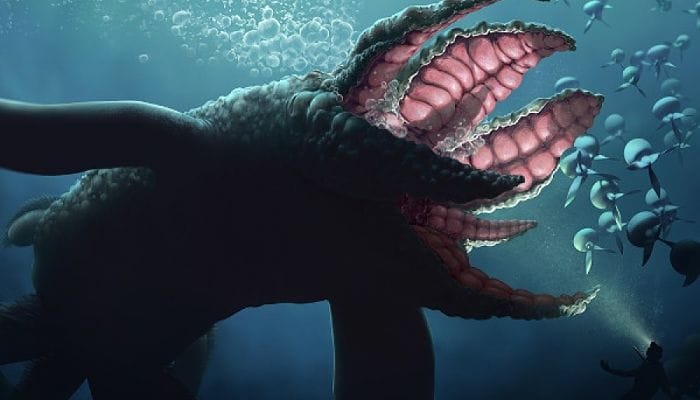
On the open sea, the murky waters beneath the ship’s hull seem to rest peacefully in the quiet night. Although there had been many days and nights filled with rain and storms, it seemed that the waters of the sea had finally calmed down. Suddenly, there is a cry from a shipmate at the front of the vessel.
The calm waters begin to bubble with the vengeance of the sea. As your fellow crew members rush to prepare the sails in an attempt to stop whatever is threatening to emerge from the depths of the ocean, you stand and wait for your fate to catch up with you. There is no point in running—a sea monster will soon be upon you.
What inspires stories of sea monsters?
There is much speculation about what might have inspired the myths of the terrifying sea creatures and monsters that have become infamous in world mythology.
Misidentification of sea creatures
It is believed that some of these stories may have been caused by real marine species that were new and frightening to sailors and explorers who were just beginning to venture across the ocean. It is also believed that some of the mythological creatures that have been reported are possibly just the carcasses of sharks and whales that decomposed in a way that made them appear significantly larger and more frightening.
Recent studies have shown that sperm whales and basking sharks decompose in such a way that they can appear otherworldly. Sperm whales decompose in a way that causes the fat to separate from the rest of the body. Sometimes, a hairy texture can grow on the whitish mass of fat, which would certainly look strange.
The basking shark undergoes a similar decomposition process that causes it to lose its head and lower fins as it is recycled. The end result is quite similar to the appearance of a plesiosaur. This strange appearance could have been the cause of many horrific stories of sea monsters.
Possible cryptids
There are also those who wonder if the answer may be more promising. Most of the world’s oceans are still largely unexplored. This makes it possible that these mythical creatures are cryptids, not just myths. There are many pseudoscientists who hope that we will discover these strange creatures when diving technology improves.
Some also speculate that the strange appearance of the reported creatures could be related to early marine dinosaurs. It is possible that sea monster cryptids are descendants of early dinosaurs and other megafauna.
Missing Persons
It is possible that the myths surrounding these creatures were also created out of concern for missing persons who disappeared during storms (hurricanes, typhoons, floods, etc.) or sailors who never returned home. It was probably easier to imagine that a creature of some kind was responsible for their disappearance.
Especially since many sea monster stories leave room for the victims to be alive and somewhere. Tales such as those of the Finfolk and the Vodyanoy tell of creatures that would kidnap humans and force them to marry their kind. These stories also tell that part of this kidnapping required them to remain under the surface of the sea for the rest of their lives. Despite this, there was often hope that the victims could escape and return home.
Seemingly inexplicable damage to the ship
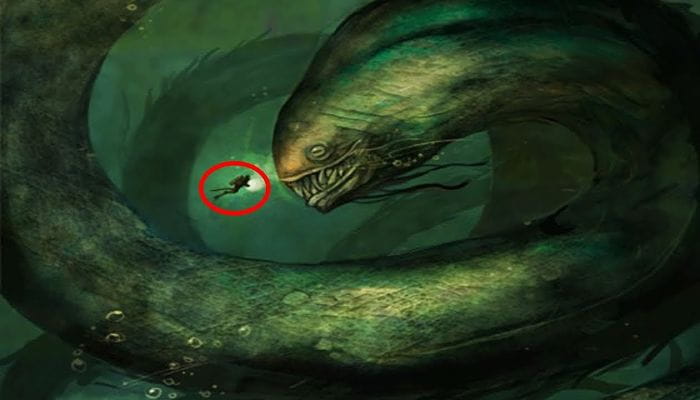
Another possible explanation is simply that the creatures were invented to explain ships that were destroyed by hurricanes and other tropical storms. The remains of a shipwreck would have seemed almost impossible to understand for many primitive cultures. It is plausible that many sea monsters were created to explain how these ships were so distorted and torn apart.
Inanimate floating objects
All other explanations typically fall under a category of mistaken identity of inanimate objects. This could be random floating objects such as driftwood, shipwrecks, and rafts. However, plant life, such as floating kelp, may also be responsible for the mistaken identity.
Famous sea monsters
Regardless of the causes of sea monster myths, one can agree that there are some monsters that are as terrifying today as they were on the day they were created. There are also stories of sea monsters that are not as popular on a global scale but have significant meaning in their respective regions of origin.
Cetus
In Greek mythology, it is common for a sea monster to be called Cetus. This term is quite vague. Based on contextual clues, however, it seems likely that Cetus was some kind of snake/dragon, shark, whale, or fish. The most famous example of Cetus is when Poseidon sent Cetus to devour Andromeda.
This was done to punish Andromeda’s mother for boasting that her daughter was more beautiful than all the Nereids (other sea creatures, one of whom was Poseidon’s wife). Andromeda was saved at the last minute by Perseus, but it is noted that he was only able to defeat Cetus by using Medusa’s head.
Charybdis
There was also a Greek monster named Charybdis that terrorized sailors and warriors when they tried to cross the Strait of Messina. Charybdis is said to have lived under a small rock on one side of the Messina Channel. She is believed to have been the daughter of Poseidon and Gaia who was turned into a terrible monster by Zeus. Part of her curse was to make her thirst for the sea so great that she had to swallow large amounts of water three times a day.
This process indirectly caused whirlpools that are estimated to have been nearly 75 feet in diameter. She was chained under a rock in the Strait that made it impossible for her to move from her location. There are also versions of this story that simply claim that Charybdis was the name of the whirlpool in the straits. This version is supported by the fact that there is a whirlpool in the same place. This whirlpool, however, can only affect small boats in extreme weather conditions, not the powerful Greek ships of that era.
The Cirein Croin
In Scotland, a terrifying creature known as Cirein Croin loved to terrify its victims before consuming them in a single bite. The creature has a typical water dragon or snake-like form that is vicious and terrifying, but it uses its ability to change shape to become a seemingly harmless fish.
When in this form, it is no larger than the palm of a human hand. When fishermen caught the Cirein Croin in its small fish form, it would suddenly transform back into its terrifying original state and swallow the fish whole.
Finns
Finfolk are known in Celtic mythology as a terrible group of siren-like sorcerers. These beings alternate their time between an underwater paradise and a colony on land. They are often known to prey on human populations and take the most desirable men and women away to be their spouses. These people were never seen again, although they are believed to have lived long lives.
Grindylows
Grindylows are water demons that appear in British folklore. They are believed to be most common in the county of Yorkshire. Grindylows were water demons who liked to wait in cold water for a victim to pass by, usually a child.
When a child ventured into cold water, the Grindylow would pull them into the water with its long fingers and drown them. It is believed that the Grindylow was invented to prevent children from wandering into dangerous waters.
Jengu
Living off the coast of Cameroon, the Jengu are an example of a sea monster that seems to have good intentions. They are believed to be very beautiful mermaids with extremely curly hair and a smile with open teeth. They live in both rivers and seas and are known for being able to cure illnesses and bring good luck to their worshippers. Some people even believe that the Jengu are capable of communicating with the spirit world and conveying messages to humans.
Jormungandr
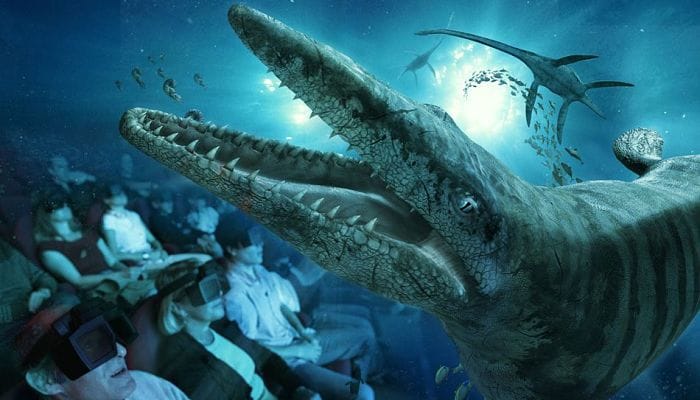
Another famous sea serpent is the Midgard serpent, which was called Jormungandr. This creature was the child of giants (Loki was its father) and was therefore an enemy of the gods. There were many frightening things associated with the Midgard serpent, but perhaps the most terrifying was the prospect of Ragnarok. It was believed that this would only be stopped by the fact that Jormungandr had become entangled in Midgard and had its own tail in its mouth. This action is thought to be what holds the world together—when Jormungandr lets go, it will mean the beginning of the end times.
The Kappa
The Kappa is a water insect that was known to inhabit bodies of water in Japan. This terrifying creature was known to have a humanoid body, superhuman strength, and terrifying speed. They were known to wait on the banks of the water (and sometimes in bathroom toilets) for victims to arrive. At that moment, they would throw their victims into the water and drown them to steal their shiri (a person’s life force). Sometimes women could survive a kappa attack, but they were often sexually assaulted by the beasts because kappa derived sexual pleasure from touching the shiri.
The Kraken
The Kraken is an infamous sea monster that was known for terrorizing sailors off the coast of Norway. It was believed that this enormous beast released a substance composed of its previous meals (similar to bait) into the water when it wanted to feed. This would cause an impressive number of fish to flock to the area to feed on the bait. When enough fish had gathered, the Kraken would swallow them all, and then fall into a deep sleep while digesting its meal.
Leviathan
One of the most famous sea monsters was brought to the forefront by Christianity. This monster is Leviathan, one of the first creatures created by Yahweh. Leviathan began as a gentle creature who was content to roam the seas with his mate.
Mami Wata
Mami Wata is known as a water deity found on the coasts of West, Central, and Southern Africa. She is also believed to exist in the waters of island countries with large populations of the African diaspora.
Scylla
Scylla was once a beautiful naiad who was pursued by many suitors. One day, Poseidon saw her and decided to claim her as his own. Unfortunately, this caused Amphitrite to become very jealous. Amphitrite decided to poison the water of the spring where Scylla loved to bathe, turning her into a terrible monster.
Mermaids
Although beautiful in appearance, mermaids are some of the most feared sea monsters due to their mischievous nature. There were two types of mermaids. The first was a woman with the arms and legs of a bird and a beautiful human face. The second was a woman with a fish tail who was also very beautiful. These creatures were known to swim or fly on ships that had been at sea for a considerable amount of time.
Umibozu
Perhaps the most terrifying sea monster in Japanese mythology is the dreaded Umibozu. Although many monsters appeared when the seas were stormy or other dangerous conditions were present, Umibozu preferred to take his victims when they least expected it.
Vodyanoy
Emerging from Slavic mythology, the Vodyanoy was known as a disgusting creature that supposedly embodied the spirit of an unbaptized man. This creature enjoyed taking the form of an irresistibly attractive man and luring women into the water where he would drown them. However, Vodyanoy did not always have murderous intentions; sometimes they would kidnap young women and force them to be their brides. Either fate was terrible, but sometimes it was thought that living the rest of one’s life with such a monster was a fate worse than death.
