Purgatory comes from the Latinword purgare, meaning “to purge.” In the context of the early Christian and Roman Catholic Church, purgatory is a place of waiting where souls are purified before entering heaven. According to some authors, there may be two versions of purgatory. In one model, humans must be punished for their sins in order for divine justice to be satisfied.
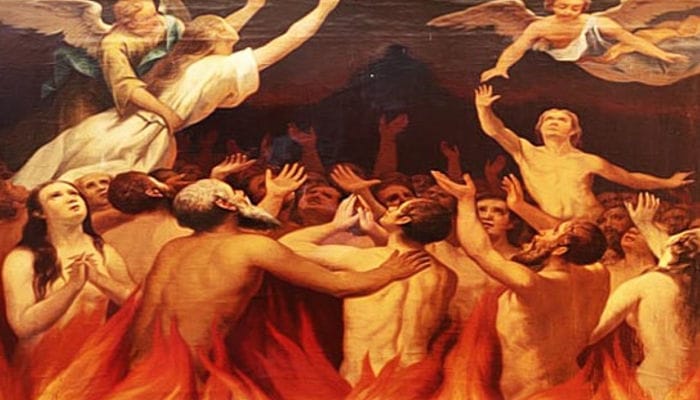
The other model focuses on the purification of the soul before it enters heaven. Many religions speak of the unspeakable horrors and pains of hell, or the eternal divine state of heaven, but in certain belief systems, there is a third temporary state in which souls are purified by fire before they are ready to enter paradise.
Origin
The concept of purgatory appears in pre-Christian sources, both religious and non-religious, depending on the source. Plato mentions the concept in Phaedo, a dialogue that influenced numerous ancient philosophers. Although the doctrine was not officially accepted by the Roman Catholic Church until 1274, early practices that preceded Jesus Christ, such as people praying for the dead, may have implied a belief in purgatory. The authors claim that people would pray for the dead to help them purify themselves in the afterlife. Christian theologian Hippolytus of Rome (170-235 AD) mentions punishments for the dead that are temporary and aligned with the degree of sin committed.
Catholicism
The concept of purgatory, or an intermediate state after death, is evident in many other religions besides Christianity. Perhaps we want to know that if we have not lived a holy life, nor one of continuous and heinous sin, there is a way to heal the burdens we have accumulated throughout our life. The Roman Catholic Church is one of the main proponents of the concept of purgatory.
The Church refers to three main parts of the concept that appear in the Bible, namely, prayer for the dead, a stage after death and before resurrection, and a fire that purifies the dead. Catholics believe that purgatory is the purification of souls that are not yet pure enough to enter heaven. Souls that are pure enough progress directly to heaven, while others, who harbor hatred toward God, are sent to hell.
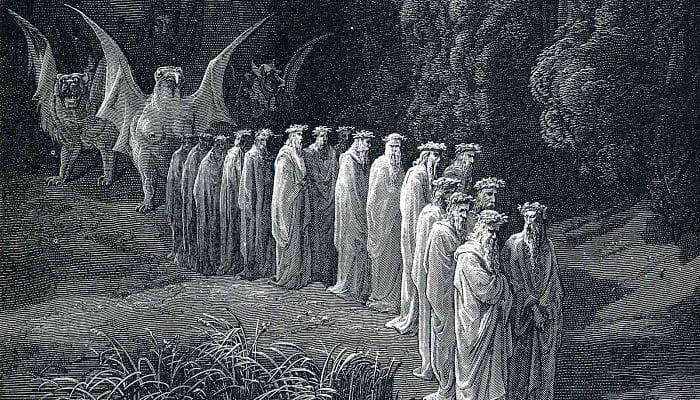
A distinction is made between two types of sin that affect experiences after death. Mortal sins, such as murder, adultery, and contraception, are defined as acts that will send a person to hell unless they seek forgiveness for these sins. Venial sins are explained as minor sins. If a person does not seek forgiveness for a venial sin, they are not automatically condemned to hell.
Examples of venial sins include not trusting God, thoughtless cursing, vanity, etc. One would receive temporary punishment for minor or venial sins. This temporary punishment would occur in purgatory. In this transitional stage, according to theologians, one will experience pain in the cleansing process, through fire. It is an accepted belief that the pain will be physical.
Along with prayers for the dead, Catholics also use indulgences to lessen the degree of purgatory for themselves or for someone who has already died. However, the granting of indulgences became a point of controversy over time, as it became associated with money, which led to alleged abuses of the practice. In early Christianity, purgatory, heaven, and hell were sometimes conceived as physical places, but no church doctrine supports this ancient belief.
Protestantism
Protestants, for the most part, reject the concept of purgatory. One of their main tenets leads to the exclusion of certain books of the Bible that mention purgatory. They believe that faith is the determining factor in the afterlife. If one has faith and is saved, then one can enter heaven.
Those who are not saved will be sent to hell, according to experts on Christianity. According to Anglican Bishop John Henry Hobart, a person passes into an intermediate state after death, until the resurrection. This state is known as Hades and is divided into Paradise and Gehenna, a transitional version of hell.
Buddhism
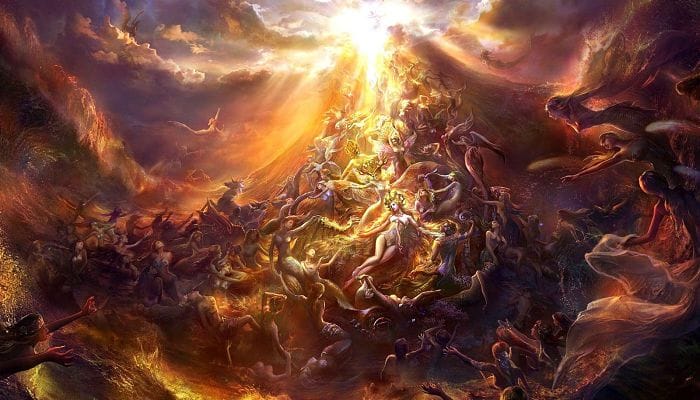
In Buddhism, there are more than two destinations—such as heaven and hell—after death. It is said that after a person dies, they are reborn into a temporary state, based on their karma, until their next rebirth. They may be sent to one of six realms: heavenly, demigod, human, animal, ghost, or hell. The heavenly realm is also not the final destination in Buddhism, but rather a state called Nirvana. Followers are not judged when they die and sent to purgatory, but rather determine their own destiny or next realm through their own actions or karma.
Being freed from sins through a cleansing fire or having one’s spiritual scales balanced in preparation for eternity in paradise seems fair, but with little evidence of the exact nature of life after death available, perhaps we are already in purgatory, heaven, or hell!
