The Octavius is a renowned ghost ship from the 17th century. Its history is fascinating and mysterious because it is considered more of a legend than reality, as it is believed to have been lost for 13 years in the Arctic. However , this ship was the protagonist of a sinister sequence of events that left the authorities frozen by the events they were able to gather from it, although there are still many blank spaces.
What is the Octavius?
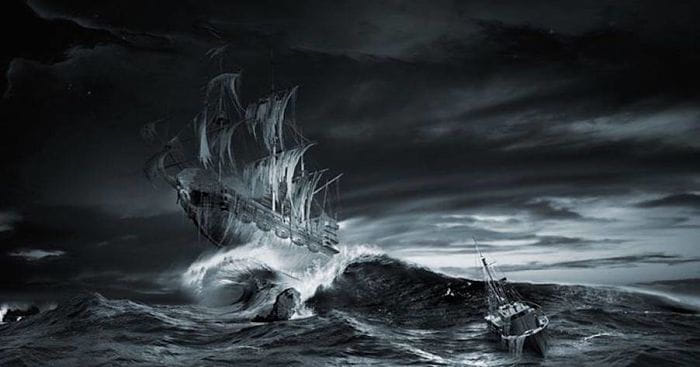
According to accounts, it was a ship that actually existed and set sail in 1761 from England bound for the Far East, where it arrived without incident the following year.
According to reports at the time, there was a stretch of water that was not often traveled by sailors because it was very treacherous. This was the Northwest Passage, but the captain of the Octavius bet that he could reach his destination by that route.
As a result, the ship was never seen again because it became trapped in the ice floes north of Alaska. This was also compounded by the fact that it collided with the Herald, which was then swept away by the wind and currents.
Therefore, confirmed data indicate that the last recorded location was about 250 miles north of Barrow, Alaska, but when it was finally found, it was in Greenland.
On the other hand, it is thought that this event is actually a modification of other similar legends, as they share several elements with that of the Octavius, including:
- David Meyer’s version in 1905, where the ship was Gloriana, but this does not mention the passage of the northwest.
- This version was published on December 13, 1828, in the Philadelphia newspaper The Ariel: A Literary and Critical Gazette.
The legend of the disappearance of the Octavius
This mythical legend begins in 1761 when the ship sets sail for London and China. Upon reaching its first destination, the captain decides to deviate from the classic route to return because he wants to shorten the journey. This route involves crossing the Northwest Passage, a journey that no sailor had ever successfully completed.
Under mysterious circumstances, once they set out on their journey, they were never heard from again. At first, it was thought that everything was fine because the ship had not sent a distress signal. However, as time passed and no sign of the Octavius was found, its disappearance became evident.
The appearance of the ghost ship at sea

The return of the Octavius was like magic, as it emerged from the depths of the water to prove that it had really existed.
On October 11, 1775, it was found by a whaler named Herald in Greenland, who, upon seeing a three-masted ship, decided to board it with five of his men.
However, they were not prepared for what they found: the entire crew of 28 people was below deck, none of them had survived, and their bodies were frozen and in perfect condition. In fact, it is believed that they arrived there unexpectedly.
This conclusion was reached because none of them showed signs of struggle or distress. As they continued to search the ship, they came across the captain of the Octavius, who was frozen in his cabin, sitting at his logbook. Also in his room were the bodies of a woman, a child wrapped in a blanket, and a sailor.
Eager to leave this dark scene, the group took only the logbook before leaving the ship. They later realized that the last entry made by the captain was dated November 11, 1762, indicating that the ship had been lost in the Arctic for 13 years.
In conclusion, the official version stated that the ship was trapped in thick layers of ice in such a way that the crew froze to death. However, many disagree because, if that were the case, why didn’t the people fight against the cold? Perhaps the change in climate was so sudden and unexpected that they didn’t have time to react while they were going about their daily activities.
Their bodies remained intact until the authorities arrived, as the whalers did not touch anything other than the logbook because they spoke of a curse that plagued the Octavius. It is therefore a legend shrouded in mystery and full of unanswered questions.
Appearance of the ship in culture
- The story of Octavius served as inspiration for the novel The Demon of the Cold Seas, published in 1974 by Jacques Tardi.
The plot revolves around the year 1889, when a steamship called L’Anjou is sailing the Barents Sea when it comes across a ghostly ship that is strangely stranded on top of a giant iceberg.
. Curious, they decide to investigate the ship called the Icelandic Steamship, where they find the entire crew frozen, along with the captain, who is frozen in his cabin, pointing his finger at a spot on his nautical chart. Subsequently, the L’Anjou explodes in the air before the eyes of the crew, who are left stranded on the ghost ship.
- Its second appearance in culture was in the video game Assassin’s Creed III, in which the Octavius takes part in a naval mission where the protagonist Connor Kenway, aboard the ship, is searching for clues as to the whereabouts of William Kidd’s lost treasure.