Metis was one of the greatest Oceanids and therefore also has the distinction of being a Titan, and is considered the wisest of all beings in creation. She advised Zeus during the war against Cronus with a cunning that would propel him to ultimate victory and leadership of the gods. The Titans of the oceans and fresh waters of the world, Oceanus and Tethys, gave birth to many female offspring who were known as the Oceanids. They were guardians of springs, rivers, ponds, lakes, and even pastures. Their daughter.
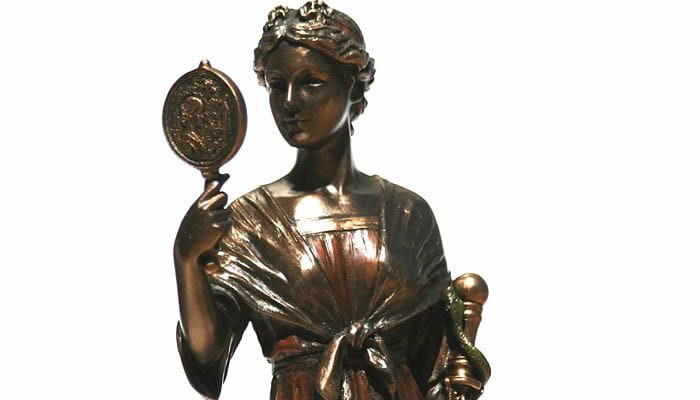
Origin
Tethys and Oceanus were very busy. They had created celestial bodies to control and move water across the Earth, and a great river that surrounded the world, but they also needed a way to protect the waters. Together, they conceived more than 6,000 children in the Golden Age of the gods under Cronus: the Potamoi, the Oceanids, and the Nephelai. Among the first of the Oceanids was Metis, who stood out from the others for her rarity and exceptional nature.
Family
Metis was one of this second generation of Titans, born of Oceanus and his sister Tethys before other Titans such as Zeus, her cousin who would eventually become her husband. The daughters of Tethys, Europa, Telesto, Erynome, and Metis were the first to be born in this new generation. Metis would go on to bear Athena, another goddess of wisdom and creativity.
History
She became well known as the goddess of good advice, deep thought, and cunning through various events involving planning and betrayal, something commonly seen among the gods. She would play a role in a prophecy and later become part of Zeus’ mind, adding temperance to his decisions.
Metis as Advisor
Zeus was worried. He knew he had to find some way to defeat Cronus. But how was he going to rescue his siblings who had been swallowed by Cronus? And then, how could he defeat someone as big as Cronus when he couldn’t even think of how to complete the first part of the rescue? An elegant and silent figure entered the great hall, a female silhouette cast as a shadow on the wall.
Metis had joined him, and he felt comforted as he looked at her beauty. He fell even more in love with her when she told him of a brilliant plan. Metis spoke of a simple way to carry out the rescue, in a manner that would severely humiliate Cronus and defeat him. From a storehouse of ingredients with properties she had studied, Metis gave Zeus a small glass vial filled with a curious liquid she had concocted. In her other hand was a bottle of wine.
She instructed him to pour the contents of the jar into the wine that Cronus had come to love drinking in excess. He would not notice it by taste, color, or smell, as she had designed it with a cloak of mystery to hide its true properties. This option would release his children in a great torrent of shameful diseases never before seen by the gods.

Metis was satisfied with this plan because, deep in her mind, she remembered her studies of the history of the gods and that this terrible fate of being devoured had already happened once before. Perhaps the sight of someone as powerful as Cronos turning green with disease and vomiting the imprisoned children before the other gods would somehow serve as a deterrent to prevent such things from happening again.
Zeus laughed silently. He would never have thought of something so funny and treacherous as this. But who cares about that, he thought. Cronus would get what he deserved after his cruelty and broken promises, along with humiliation in abundance. That worked for him… it was enough.
Metis advised that when Cronus was poisoned and the children freed, Zeus should seek her counsel again to plan the Titanomachy, using his allies to find a way to defeat Cronus once and for all. But before this, and before poisoning Cronus, Metis told Zeus that he must seek out those monsters within Tartarus, the deformed children of Gaia. Metis knew they were dangerous but that in time they would help Zeus in the great battle. She reasoned that the best way to gain their support would be to offer them the freedom they so desired in exchange for their help. Metis told Zeus that in order to trust them and the value of their help, he should demand that they perform tasks that would prove they had control over both their bodies and their rage.
As his wife
Everything would happen as Zeus and Metis had planned. Cronus fell ill after drinking the potion, and the children were freed, the enemies defeated, and Cronus was wounded and imprisoned. Now that the war was over, it was a time to rejoice and a time for Zeus to seek what would be his in power and in love. Metis married Zeus in a grand celebration. Her beauty and wisdom, greater than those of any mortal or immortal before her, were a good complement to her husband’s personality.
At first, she seemed to be one of Zeus’s best and most trusted advisors, but she later became an unexpected threat to him through a prophecy spoken by the oracle of Gaia. The prophecy revealed that Metis would have two very powerful children. The first would be Athena, and the second a mysterious, unnamed son who would repeat the cycle of betrayal, overthrowing his father and seizing the throne of the gods.
Zeus was no different from his ancestors when it came to his fear of being usurped by his own son. He had to find a way to outwit one of the most cunning and calculating thinkers the gods had ever known.
And then there was this new and irritating habit that Metis developed to avoid Zeus’ bed. She was his first love, but she had become increasingly shy and reserved. Metis had learned, after observing Zeus’ transformations into animals, that he would run away with other lovers. She reasoned that she could do the same to avoid his advances, being herself an accomplished shape-shifter.
For Metis, the best revenge for his infidelities was to transform herself into a different creature and then fly, glide, gallop, or swim away whenever he made advances toward her. Zeus soon grew angry at this tactic. There was a prophecy that she would have a son who would usurp him, but how could this happen if his wife would not give him the time of day while she quacked, barked, bleated, neighed, and then flew away in animal form? Something had to be done about Metis.
One day, after she had escaped his advances once again, he taunted Metis into playing her own game of shape-shifting. Zeus challenged Metis to a duel of shape-shifting, which she readily accepted. After all, she had outwitted him thus far in spurning his advances; taunting him in a game would be even easier.
The two transformed into one magnificent creature after another and fought with teeth, fangs, feathers, claws, and scales. They trampled, stomped, and attacked each other; they bit and mauled, each time ending in a stalemate, as neither seemed to be winning the game. Finally, Zeus and Metis collapsed, exhausted.
Praising her ability to keep up with him as large animals, he challenged her to find a way to defeat him as a small insect. Metis, like many of the gods, was proud and knew she was smarter than Zeus. She accepted this boastful challenge and allowed him to turn her into a fly, but she did not realize the magnitude of this mistake until she was caught in his hand and spiraled downward toward Zeus’s stomach. He had finally defeated Metis at her own game, twice: once with a change of form, and once with wit. Perhaps now he could find another wife, or even a lover, who would not reject him.
The fate of Metis
Metis was furious. For the first time, he had allowed foolish pride to cloud his own mind, and he knew he had to escape from his new prison inside Zeus. His tricks had backfired. And to make matters worse, he was about to give birth to Zeus’s daughter, Athena, very soon.
He realized he didn’t have much time, and he knew it. Using everything he could find in Zeus’s gut, Metis began to build a forge with a large fire before his daughter was born. The fire had grown hot inside his belly, hot enough to create the helmet he had in mind for Athena.
Zeus began to feel the burning and pain inside him. At first, he thought it was Metis’ fury toward him. But the pain grew and grew. It was almost as if his insides were on fire. It got to the point where he thought he would go mad. And at the same time, Metis began to feel her own pain as Athena came into the world in the light of the forge’s flames.
Zeus grabbed his stomach, grimaced, and fell to the ground. How ironic that he felt the pain that, not long ago, Cronus had felt in his own stomach. Would he suffer a similar fate? The pain grew and soon reached a crescendo of terrible suffering as the pain traveled to his head. The clanging of the hammer and the forge echoed, and Zeus fell with his skull in his hands.
Unable to bear the blows and the resulting pain, Zeus ordered Hephaestus to strike him on the head with his axe. Hephaestus was forced to do so reluctantly, and the blow fell quickly and sharply. Zeus would give birth to his new daughter with Metis on the banks of the river Triton through the wound in his head. Athena emerged, fully mature, dressed in armor and wearing the helmet her mother had made for her.
She was ready for battle. Zeus struck and swallowed the water from Triton, extinguishing the fire inside his belly. For a moment he stood silent, shocked by what had happened, but he realized that this was not the end for him after all.
Current influence

Although Athena escaped, Metis remained inside Zeus’ belly. She had been weakened by her efforts and the birth of her son, and despite his transgressions against her, she still loved Zeus and wanted to be with him. So there, in his belly, she remained, and willingly, and sometimes unwittingly, she thought kindly of him and gave him advice. She could not have children again, and this would leave the prophecy unfulfilled, which was rare among the immortals. And although Zeus would marry other goddesses, she remained a permanent part of him, as the two had become one in mind, thought, and being.
When mortals plan their wars, use cunning to gain revenge or advantage against an enemy in order to defeat them, or seek wisdom and deep thought, it is believed that Metis and her daughter Athena are at their side, whispering in their heads. Metis would be respected and revered by mortals in literature, myths, and poems long after her physical presence on Olympus.

