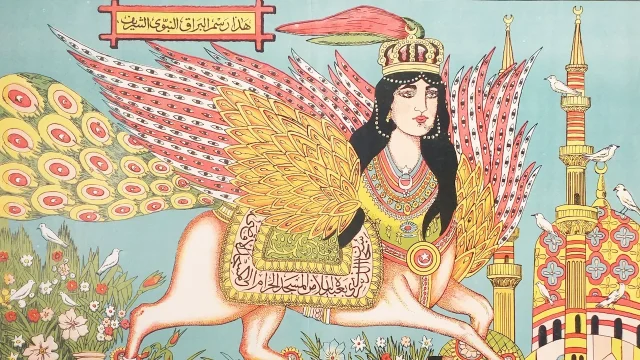
Mecca is a holy city in the province of Makkah, Saudi Arabia, in the historic region of Hejaz. It sits in a valley surrounded by low hills. The city is located 45 miles (73 kilometers) inland from Jeddah, in the narrow, sandy Valley of Abraham, 277 meters (909 feet) above sea level. It is 50 miles (80 kilometers) from the Red Sea.
The city is revered by Muslims for containing Islam’s holiest site, Masjid al-Haram. A pilgrimage involving an extended visit to the city is required of all able-bodied Muslims who can afford to go at least once in an individual’s lifetime. People of other religions are prohibited from entering the holy city.
In English, the word “Mecca” means “a place to which many people are drawn.”
1. Name
Mecca is the original English transcription of the Arabic name. In the 1980s, the Saudi Arabian government and others began promoting the transliteration Makkah (in full, Makkah al-Mukarramah), which more closely resembles the actual Arabic pronunciation.
The spelling Makkah or Meccah is not new and has always been a common alternative. The spelling Makkah is becoming more common, adopted by many organizations, including the United Nations, the US State Department, and the British Foreign and Commonwealth Office, but the Mecca spelling remains in common use.
2. Religious significance
The city of Mecca, in the Kingdom of Saudi Arabia, is the holiest city in the Islamic religion. Mecca and Medina (the second holiest city after Mecca) are located in an area known as Hijaz (meaning “barrier”) in the western region of the Arabian Peninsula.
Mecca is located in the Sirat Mountains, about 50 miles from the port city of Jeddah. The sanctity of Mecca was established before the days of Muhammad, traceable back to the Ka’bah and the Zamzam Spring.
3. Objects and places of veneration.
The center of the sacred mosque, showing the Ka’bah after Friday prayers. Here are some of the objects and places of veneration:
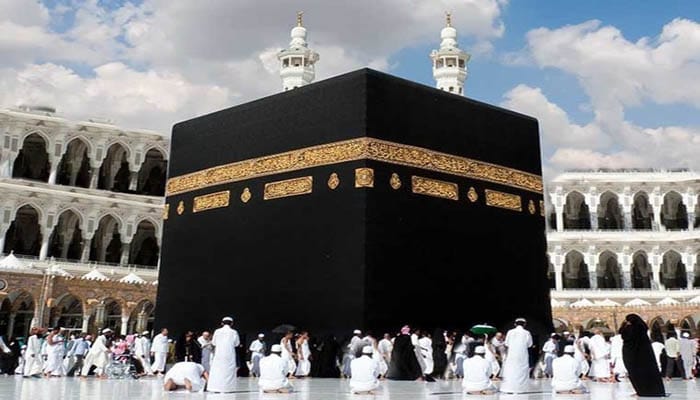
Ka’bah
The Ka’bah is a large cubic building located within Islam’s holiest mosque, Masjid al-Haram. The Ka’bah is also called al-Baytu’l-ḤarÄm or “The Sacred House.” For the Muslim community, the Ka’bah has a place analogous to that of the Temple Mount in Jerusalem for Jews.
The Ka’bah can be called the holiest place in Islam. Muslims around the world turn toward the Ka’bah for their daily prayers.
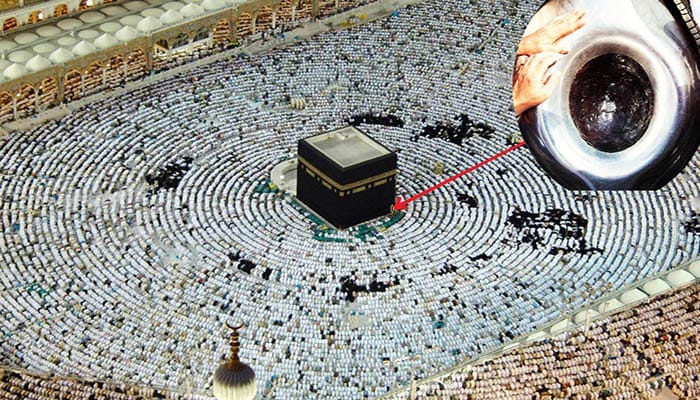
The Black Stone
The Black Stone is an object of reverence, said by some to date back to the time of Adam and Eve, hidden during the great flood and then restored to Abraham for inclusion in the original Ka’bah.
The stone is the eastern cornerstone of the Ka’bah. According to legend, the stone, originally white, was given to Adam upon his fall from paradise. It has turned black from absorbing the sins of the thousands of pilgrims who have kissed and touched it.
Zamzam Well
The Zamzam Well is located inside Masjid al Haram, near the Ka’bah.
The Sacred Mosque
The “Sacred Mosque,” sometimes called “The Noble Sanctuary,” is not only the largest mosque in Mecca, but in the world. It surrounds the Ka’bah, toward which Muslims turn while offering daily prayer. It is considered the holiest place on Earth by devout Muslims.
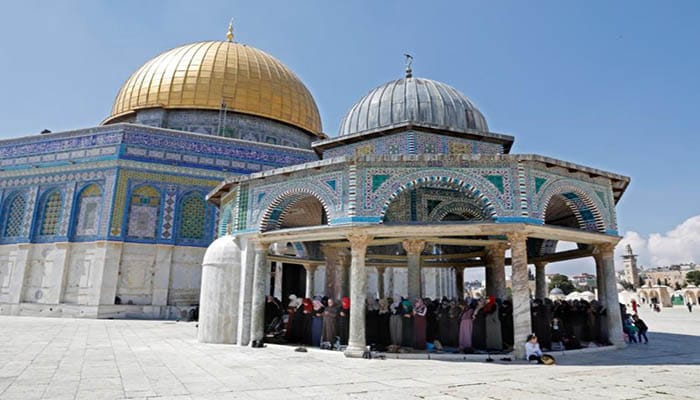
Enclosed within the vast structure are not only the Kaaba but also the Zamzam Well, the Hijr, and the hills of Safa and Marwa.
The structure covers an area of 356,800 square meters, including outdoor and indoor prayer spaces, and can accommodate nearly one million worshippers during the Hajj period.
The current structure is the result of a major extension project initiated in 1982 under the patronage of the late King Fahd. It not only serves as the common direction toward which Muslims pray, but is also the main site for pilgrimages.
According to Islamic theology, the mosque was first built by angels before the creation of mankind, when God commanded a place of worship on Earth to reflect the house in heaven called al-Baytu l-Mamur, which translates to“The place of worship of the angels.” The Ka’abah is believed to be directly beneath the heavenly Al-Baytu l-Mamur.
4. Government
Mecca is governed by the Municipality of Mecca, a fourteen-member municipal council elected locally and headed by a mayor (called Al-Amin) appointed by the Saudi government. As of May 2015, the mayor of the city was Dr. Osama bin Fadhel Al-Bar.
Mecca is the capital of the Makkah region, which includes neighboring Jeddah. The provincial governor was Prince Abdul Majeed bin Abdulaziz Al Saud from 2000 until his death in 2007.
5. Etymology and usage
“Mecca” is the familiar form of the English transcription of the Arabic name of the city, although the official transcription used by the Saudi government is Mecca, which is closer to the Arabic pronunciation.
The word “Mecca” in English has been used to refer to any place that attracts large numbers of people, and because of this, some English-speaking Muslims have come to consider the use of this spelling for the city highly offensive.
The Saudi government adopted Mecca as the official spelling in the 1980s, but it is not universally known or used throughout the world. The full official name is Makkah al-Mukarramah, which means “The Honored Mecca,” but it is also loosely translated as “The Holy City of Mecca.” A word in the Arabic language, its etymology, like that of Mecca, is obscure.