In Norse mythology, Loki was known as the trickster god. He caused endless problems for both mortals and gods, but there were times when he used his tricks for good. He lived in Asgard and was often found with Thor or Odin. He enjoyed mischief and can be found in many myths that live up to his reputation.
Purpose
Loki did not have a traditional role like many other gods. Instead, he served as a companion, using his mischievous nature to dissuade and help other gods.
Origins
One thing that makes Loki different from other gods is that historians have been able to explain the meaning of his name. When it comes to Norse mythology, many of the gods have an obvious source of origin. The accepted suggestion comes from the Viking era. The noun “loki” means “knot” or “tangle,” which could symbolize Loki’s ability to entangle the plans of others. It could also be linked to Loki’s ability to make nets.
Legends and Stories
He can be found in many Norse myths, either helping the gods on their missions or causing them headaches along the way. The following myth focuses on a punishment he received for his mischief.
The Myth of Loki
The Norse gods spent most of their time in the sky, enjoying the splendor that surrounded them. From time to time, they looked down and checked on the men and giants who roamed the earth. Once, the mischievous god opened a crack in the sky, allowing the giants to reach and take the apples of eternal life that grew in the garden of heaven. With the crack open, Time was able to enter heaven and leave all the gods with wrinkles and gray hair. But he apologized, and the gods believed that he would never do anything so reckless again.
There was a god named Balder, and he was the most beautiful of all the gods. He was known for his purity and embodied all that was good. Everyone loved Balder, and no one could imagine any harm coming to him. But Balder began to dream that he would suffer a terrible and violent death.
Balder’s mother, Frigga, was upset by the premonitions her son was having, so she set out to demand a promise from all living beings. She asked all creatures and plants never to hurt her son. The move was impressive and admired by the other gods. With all living beings in unison, Frigga knew that no one would harm her son.
The gods turned this into a game. They threw stones and weapons at Balder, but all the objects disintegrated or fell at Balder’s feet. They never hurt him. While the other gods enjoyed this, he found it all very irritating. He made sure no one knew how he felt, but he couldn’t stand such perfection.
So Loki, being a shape-shifter, turned himself into an old woman so he could talk to Frigga without her knowing she was talking to Loki. He commented on how amazing Balder was and how invincible he seemed to be. It was then that Frigga admitted that she had skipped one plant when she asked for protection for her son. The plant was mistletoe, and since it was so small and seemed harmless, Frigga had skipped it.
This was all Loki needed to know. He went to Earth and grabbed some mistletoe. He found Hod, a blind god, and asked him why he had never thrown anything at Balder like the other gods did for fun. Hod replied that since he was blind and had no weapon, he never saw a reason to participate. Loki handed Hod the mistletoe and told him he would guide his hand. Hod, not thinking about the weapon, agreed.
The mistletoe struck Balder in the neck and instantly killed him. Loki immediately began to laugh, betraying his guilt, so he started to run. But the gods knew what had happened and caught him. They came up with a fitting punishment. They removed the intestines of one of Loki’s sons and used them to tie the god to a rock in a chamber. There was a cobra that dripped burning poison onto Loki’s face for the rest of eternity.
Loki’s wife, Sigu, demanded that she be allowed to stay with her husband. The gods agreed, giving in. Sigu stood with a bowl to catch the poison, but sometimes she had to leave to throw it away. During this time, Loki writhed in pain as the poison dripped onto his face. This is the Norse explanation for earthquakes.
Family
Loki’s father was a giant named Farbauti, and his mother was Laufey, who was believed to be a goddess or a giantess. Loki and the giantess Angrboda had a relationship. Their children were Hel, the goddess of the underworld, Jormungand, the giant serpent who would kill Thor, and Fenir, a wolf. Loki married Sigu, and together they had a son named Nari. As a shape-shifter, Loki also became the mother of Sleipnir, Odin’s horse.
Appearance
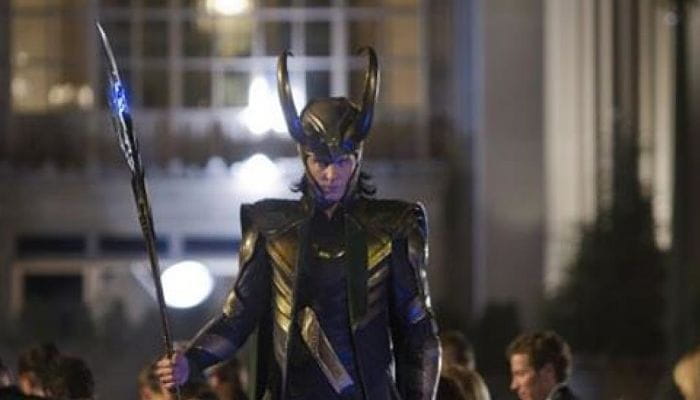
Loki had a jester-like appearance, with many artistic depictions showing him dancing and mocking others. His nose is often depicted as large. You will find several variations of Loki, as he was a shape-shifter and could alter his appearance at will.
Symbolism
The main symbol associated with Loki is a snake, as it represents his cunning and mischievous behavior.

