A huldra is a seductive forest creature found in Scandinavian folklore. Its name derives from a root meaning “covered” or “secret.” In Norwegian folklore, she is known as huldra (“the huldra,” although folklore presupposes that there is an entire Huldra race and not just one individual). She is known as skogsra “forest spirit” or Tallemaja “pine tree Mary” in Swedish folklore and ulda in Sami folklore.
The word hulder is only used for a female; a “male name” is called huldrekall and also appears in Norwegian folklore. While the female character is almost invariably described as incredible, seductive, and beautiful, the males of the same race are often said to be hideous, with grotesquely long noses.
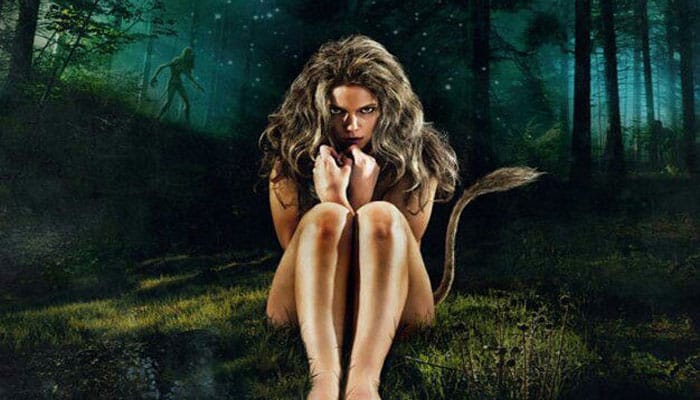
The Huldra is said to have long, blonde hair and always wears a crown made of flowers. The only thing that separates her from humans is that she has a cow’s tail, which is why most men run away when they see her.
She was known for seducing young single men and taking them to the mountains, where she would not let them go unless they married her. However, if a man married her (in a church in the name of God), the tales say that she would turn into an ugly woman. But in return, she would gain the strength of ten men like Heracles from Greek mythology, and she would lose her tail.
Huldras are neutral in character (depending on how they are treated). In some legends, she is friendly if approached properly and can offer advice such as where the best fishing is. In others, she is dangerous, and often leads young men who are attracted to her to horrible deaths.
1. Folklore
The Huldra is one of the guardians, including the water sjora or havsfru, which was later identified with a mermaid, and the bergsra in caves and mines that made life difficult for poor miners. More information can be found in the Norwegian folk tales of Peter Christen Asbjornsen and Jorgen Moe.
2. Origins
The origins of this creature are associated with Christianity. A fable tells that a woman was bathing only the lower parts of her children. One day, when God Jehovah came to the woman’s house in the countryside, she was ashamed that her firstborn children were indecent, so she hid them so that he would not see them. When God saw that she was hiding them, he decreed that because they were dirty, they would be in darkness; they turned into mountains, and she would grow a tail.
3. Place names
A multitude of places in Scandinavia bear the name Huldra, often places associated with legends about the presence of “hidden people.” Here are some examples that show the wide distribution of place names related to Huldra between the northern and southern extremes of Scandinavia, and the terms used in place names by different linguistic groups.
Danish
Huldremose (Huldra swamp) is a swamp in Djursland, Denmark, famous for the discovery of the Huldremose Woman, a bog body from 55 BC.
Norwegian
Hulderheim is located southeast of the island of Karlsoya, Troms, Norway. The name means “Home of the Huldra.”
Hulderhusan is an area in the southwest of Norway’s largest island, Hinnoya, whose name means “Houses of the Huldra.”
Sami
Ulddaidvárri in Kvaenangen, Troms (Norway) means “Mountain of the Huldra” in Northern Sami.
Ulddasvággi is a valley southwest of Alta in Finnmark, Norway. The name means “Valley of the Huldra” in Northern Sami. The peak guarding the pass from the valley to the higher mountains has a similar name, Ruollacohkka, meaning “Troll Mountain,” and the large mountain presiding over the valley on its northern side is called Háldi, which is a term similar to the previous one. The Norwegian Ra was mentioned, which is a local spirit or deity that rules over a specific area.
4. Notable Characteristics
From the front, the Huldra is a beautiful young woman with blonde hair, but she also has a cow’s tail and her back appears to be hollow or covered with tree bark. In Sweden, the Huldra is said to have a fox’s tail.
The Huldra is a forest creature found in Scandinavian folklore; in Norwegian folklore, she is known as the Huldra. These blonde-haired beauties are often said to lure men into the forest with their enchanting singing, their appearance, or their hypnotic harp playing to fulfill their desires.
If betrayed, Huldra are known to severely punish their victims. They help and punish, set boundaries, cause trouble for people, or generously give valuable gifts; how a Huldra reacts to you is based on how you treat her. Treat her with respect and she will reward you; treat her cruelly and you will receive the same. The lesson of this legend is to treat others as you would like to be treated.
It is often said that Huldra are connected to the German goddess of agriculture and craftsmanship, Hulda.
5. Legends
There are legends about this seductive creature, which offer moral lessons about how people should live together.
The Fisherman and the Huldra
A boy in Tiveden went fishing, but had no luck. Then he met a beautiful lady, and she was so dazzling that he felt he had to catch his breath. But then he realized that she was a Huldra, because he could see a fox’s tail sticking out from under her skirt. Knowing that it was forbidden to comment on the forest lady’s tail unless it was done in the most polite way, he bowed deeply and said in a low voice, “Lady, I see your petticoat showing under your skirt.”
The lady thanked him graciously and hid her tail under her skirt, telling the boy to fish on the other side of the lake. That day, the boy was very lucky with his fishing and caught a fish every time he cast his line; this was the Huldra’s reward for his courtesy.
The Braggart of Sigdal
In another story from Sigdal, when avenging his pride from a young braggart, he had sworn to marry the Huldra, with the promise that he would not tell anyone about their secret relationship. Instead, the boy bragged about his girlfriend for a whole year, and when they met again, she hit him on the ears with her cow’s tail. He lost his hearing and his wit for the rest of his life.
The Huldra’s Charcoal Burner
This legend tells of a Huldra who was talking to a charcoal burner. She looked like an ordinary young peasant girl, but her tail peeked out from under her skirt. It was said that the Huldra were kind to charcoal burners, watching over their charcoal kilns while they rested.
Knowing that she would wake them if there was any trouble, they could sleep, and in return they left provisions for her in a special place. A tale from Narke further illustrates how kind a Huldra could be, especially if treated with respect.

