The Gorgons belong to the depths of Greek legend, where the three Gorgon sisters , Sthenno, Euryale, and Medusa, are buried. Frightening and warlike, these sisters spread death throughout the Greek countryside. And the worst part? Two of the three sisters were immortal!

Physical Description
You can probably conjure up a mental image of Medusa, the most famous of the Gorgon sisters. Her snake hair is hard to forget, but the Gorgons have even more horrors in store. Beneath all the snakes, the Gorgon sisters have ugly faces, with broad, square features like a man’s and sometimes even a beard. Boar tusks curl over their lips, and their tongues hang out. Their eyes are both horrible and hypnotic. Behind their halo of snakes, a pair of dark wings spread out. According to some legends, their bodies are covered in fine hairs or scales.
Personality
The Gorgons were warrior creatures who loved to show off their strength by fighting men. Bloodshed delighted them to no end, and they ravaged countless villages, killing innocent people and laughing when a “hero” dared to try to defend his home.
Special abilities
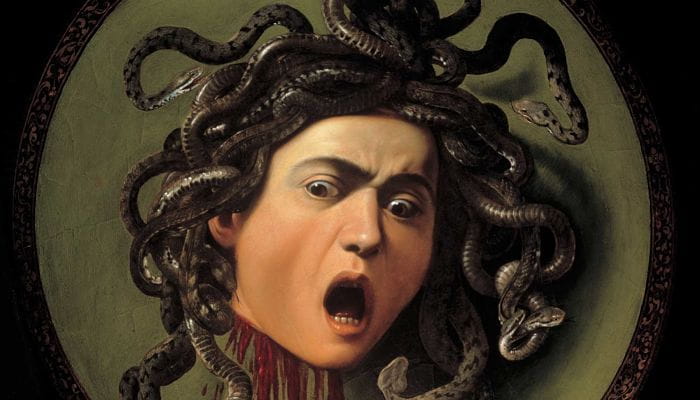
The Gorgon sisters have a good reason to love battle: the odds are almost always in their favor! For starters, two of the three sisters, Sthenno and Euryale, are immortal, so they have no fear of being wounded. Medusa is not immortal, but she shares all of her sisters’ other defenses.
These include divine strength; a powerful poison, which can kill a man in a matter of minutes if he is bitten by one of their snake locks or touches their blood; and a gaze so terrible that it can turn men to stone.
If, by some miracle, a warrior manages to defeat a Gorgon, she can claim her head not only as a trophy but as a magical weapon for future battles. Perseus, who beheaded Medusa, attached her head to his shield and used it to stun other monsters he had to fight. He also dipped arrows in her poisonous blood, so that even a slight scratch could be deadly.
Interestingly, some legends claim that the bodies of the Gorgons also have healing powers. Their hair can be a talisman against evil, and their blood, if prepared correctly, can become a stream of air that brings the dead back to life.
Family
The Gorgon sisters were born to Ceto, goddess of sea monsters, and Phorcys, a primitive sea god with a fish tail and crab claws. Their other sisters were Scylla—the legendary monster who hid in a sea cave, waiting to snatch sailors from their ships and eat them alive—and Echidna, a snake woman who was the mother of the next generation of Greece’s most terrifying monsters.
Only one of the Gorgons had children of her own. Medusa mated with Poseidon, and when she was beheaded, two children sprang from her blood. These were Pegasus and Chrysaor. Fortunately, both broke the monstrous cycle of their family and became noble and beloved characters in Greek mythology.
Cultural Representation
The Gorgons first appear in Homer’s Iliad, which was written sometime during the 8th century BC. In the Iliad, only one Gorgon is known to exist, but other Greek writers later expanded the first Gorgon into a trio of deadly sisters. Hesiod, Ovid, and Pindar all contributed to the creation of the legend.
Centuries later, Europeans began to look back on Greek culture through rose-colored glasses. They romanticized nearly all Greek legends, including the Gorgons. Classical writers chose to focus on Medusa, as she was the only mortal sister.
They created a backstory to justify her monstrosity, claiming that she was once a beautiful woman, but Athena transformed her hair into snakes after she had an affair with Poseidon. Sthenno, Euryale, scales, skins, and boar tusks were almost forgotten.
Modern appearances
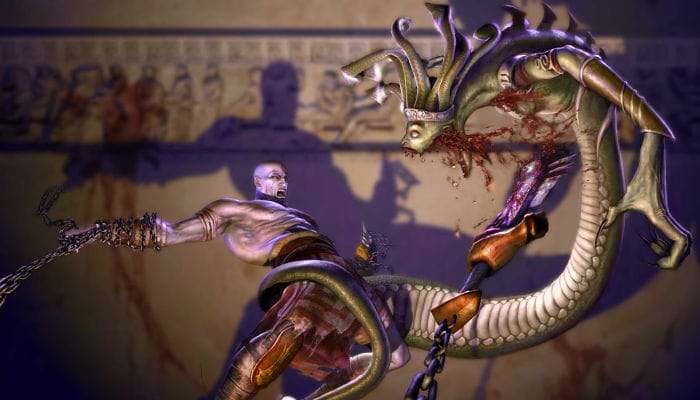
The Gorgons, especially Medusa, have never lost their hold on our imagination. Over the centuries, figures such as Leonardo da Vinci, Mary Shelley, and Charles Dickens have summoned the Gorgons in their works of art. Today, the sisters are best known for their roles in Percy Jackson, Doctor Who, Once Upon a Time, Clash of the Titans, Dungeons and Dragons, and Final Fantasy.