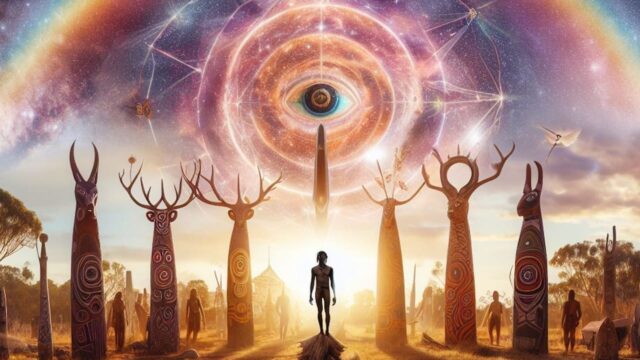
Discover all the mystique surrounding the Garden of Eden. See the paradise where Adam and Eve lived, and learn about the origins and legends surrounding its significance.

Garden of Eden
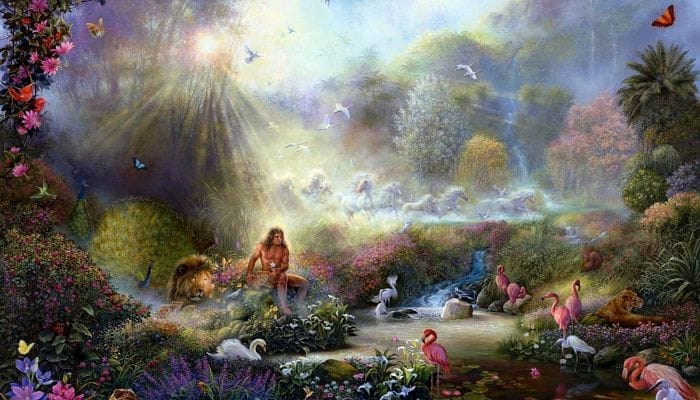
In Christian theology, the Garden of Eden is the paradise where Adam and Eve, the first man and woman created by God, lived. The term comes from the Hebrew word Gan Eden originally. In the Bible, in Genesis, the garden is described as having a temperate climate, no rain, lush trees and flowing rivers. The word paradise is often associated with the garden and originally meant a hunting park or royal garden. The word has Greek and Iranian origins.
Location
Genesis reveals the location of paradise between four rivers: the Gihon, the Pishon, the Euphrates and the Tigris. The Garden of Eden is located in the eastern region of Eden, implying that Eden itself is a region of which the garden is a part. The popular belief among scholars, however, is that the Garden of Eden is mythological and has no physical location. Similar to the lost city of Atlantis.
In 1881, a Christian cosmologist and explorer, General Charles Gordon, visited a group of islands, which matched the description of the Garden of Eden. The fertile islands he discovered are known today as the Seychelles. The island of Valle de Mai was believed to house the tree of the knowledge of good and evil, according to Gordon. However, Gordon was a bit of an atypical Christian. He believed in reincarnation, denied the existence of man’s free will and was accused of being a homosexual.
Banishment from the Garden
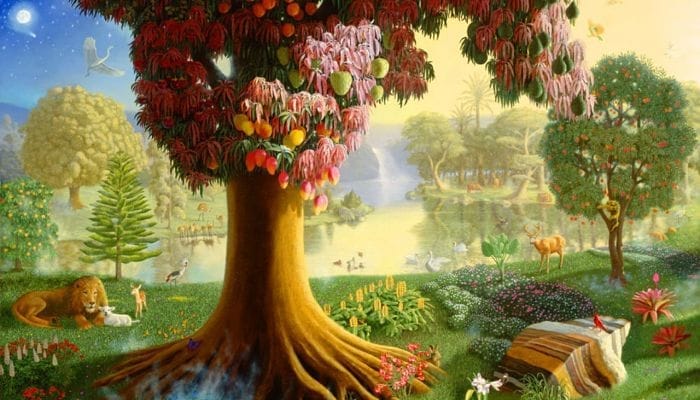
The Bible mentions the story of Adam and Eve and the tree of the knowledge of good and evil. Adam and Eve were allowed to eat anything in the garden except the fruit of the tree of the knowledge of good and evil. A serpent, unfortunately, was able to tempt Eve to eat the fruit of the forbidden tree, resulting in God throwing Adam and Eve out of the garden paradise.
In other religions
In Judaism, scholars offer two versions of the Garden of Eden. One is called Lower Gan Eden and refers to a physical place. The second version is related to an ethereal rather than a physical concept and is called Upper Gan Eden. The second paradise is said to appear at the end of the world. A similar concept exists in rabbinic literature and is called Olam Ha Ba. This refers to a utopian place where souls go after death in the Messianic Era, a time of peace and a heavenly state on Earth.
The Eden mentioned is Islam and is said to be where the righteous will find themselves after death. The Qur’an mentions the banishment of Adam and Eve from paradise and the devil or lblis who tempts them. According to some sources, Allah turns the lblis into Satan. The Koran only mentions the existence of the tree of immortality, and no other trees in the garden.
According to the Latter-day Saints, Adam and Eve moved to a place called Adam-ondi-Ahman after their banishment from the garden. Followers suggest that the location is actually located today in Missouri!
Original Sin
When Adam and Eve committed the original sin of eating the forbidden fruit, all mankind was condemned to an eternal collective punishment. We are all, therefore, guilty of their sin, and we are born as sinners. Authors who oppose the Christian view conclude that humanity is being punished for a sin committed by someone else.
Adam and Eve also supposedly did not know they were doing something wrong by trusting the serpent. Can it really be considered a fault if they did not understand why the act was wrong? For a similar conflicting reason, Eve was blamed for sin and then all women were labeled as inferior. For centuries, women have been forced to follow men instead of being able to take the initiative.
Perhaps, in an attempt to explain the fallibility of humanity, the illustration of Adam and Eve and the Garden of Eden arose. However, the story also implies that humanity is in fact one family. If we are in fact one family, perhaps we should look at our prejudices of classism, racism, sexism and religious division and consider the opposing view of cooperation, acceptance and tolerance, much like the Rastafarian concept of one love!