The draugr, also called draug, dréag, draugar; draugur, dreygur, or draugen, is an undead creature from Norse mythology. The old Norse meanings of the word are revenant, undead people, and ghost.
The Draugr lives in its grave, often guarding treasures buried with it in its mound. They are reanimated corpses: unlike ghosts, they have a physical body with physical abilities similar to those of the living. Older literature makes clear distinctions between sea draugr and land draugr.
1. Etymology
The word draugr can be traced back to a Proto-Indo-European root meaning “ghost,” from the word drewg meaning “to deceive.”
The origin of the word “draugr” is not entirely clear. Some scholars think it comes from the same root as “sleep” or “Traum” in modern German, but others trace it back to the Indo-European dhreugh (harm, deception).
In Swedish, draug is a modern loanword from West Norse, as the native Swedish form drog has acquired the meaning of “a pale, ineffective, slow-witted person who drags himself along.”
It is also possible that there is a strong connection between the Old Norse “draugr” and the Old English “draco.” We simply do not know, but we can identify the draugr as a corporeal ghost in which the Norse people believed.
2. What was a draugr?
A draugr was a zombie-like animated corpse that, unlike a ghost, had a physical body with physical abilities similar to those of the living. In Norse sagas, the draugr (plural draugar) is mentioned several times, and descriptions of this fearsome creature vary. Furthermore, we must not forget that there were different types of draugar.
They were also known as the ghosts of dead Vikings who haunted their graves. They possess superhuman strength and can increase their size at will. They emerge from graves like wisps of smoke and carry the strong stench of rotting flesh.
They kill their victims in many ways, including crushing them while in their gigantic forms. These monsters enjoy devouring flesh and drinking the blood of their unfortunate victims.
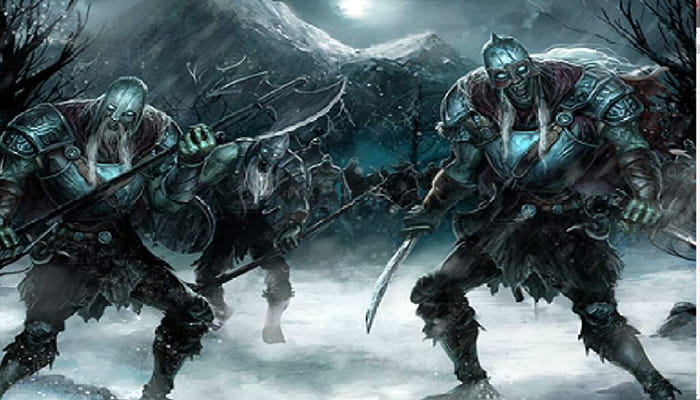
It was said that animals that decide to search near the graves occupied by Draugr become mad with the control and power of these evil mythical creatures.
It was said that these entities often returned even after being defeated. Cutting off their heads, burning their bodies, and throwing the ashes into the sea were some of the many methods used to mutilate their bodies after defeat.
Being absolutely certain that these menacing evil spirits were dead and gone was imperative. To prevent the return of the dead Vikings, scissors were placed in their chests along with pieces of twigs hidden in their clothing.
Their big toes were tied together and needles were stuck into their feet to prevent them from walking again after death.
3. Traits
Draugar possess superhuman strength, can increase their size at will, and carry the unmistakable stench of decay.
In folklore, draugars kill their victims through various methods, including crushing them with their enlarged forms, devouring their flesh, eating them whole in their enlarged forms, killing them indirectly by driving them mad, and drinking their blood.
These undead have the ability to enter the dreams of the living, and often leave a gift so that “the living person can be sure of the tangible nature of the visit.”
They also brought disease to villages and could create temporary darkness during the day. They preferred to be active at night, although they did not seem to be vulnerable to sunlight like some other undead creatures.
4. Creation of draugr
The main indication that a deceased person will become a draugr is that the corpse is not in a horizontal position, but rather in an upright or seated position, indicating that the dead could return.
5. Who could become a draugr?
Like many other ancient civilizations, the Vikings did not consider death to be the end of a person’s existence. The concept of an afterlife played an important role in Norse society. Sometimes, the afterlife seemed more real than the reality in which people lived.
Norse scholars have identified two different sets of beliefs related to the fate of the dead. Either life continued in the halls of the gods, Valhalla, or there was a continuation of life within the burial mound.
These two Norse beliefs about the afterlife are archaeologically compatible.
The last dream of a Viking warrior was to enter Valhalla, the gigantic and majestic chamber of the fallen heroes of the god Odin, warriors and powerful chiefs who died heroically in battle. But not everyone could enter Valhalla.
When a deceased body was placed in a grave, the person was not really dead. It was believed that the“dead”body was animated with a strange life and power and could become a draugr. So basically anyone who was buried could become a draugr.
6. How to avoid them
To stop the draugr, you must place large rocks on the graves, or sometimes directly on top of the corpse.
In some Viking graves, archaeologists discovered that the dead person’s weapons had been rendered unusable.
The Norre Naera runestone is interpreted as having a “binding inscription for the grave” used to keep the deceased in their grave.
The Old Norse literature mentions that cremation was the only way to “destroy a dangerous corpse.” By burning a body, one could be sure that the deceased could not become a draugr.
Many relics in ancient tombs reveal that the type of burial a Viking received depended on their importance in society. When a Viking died, they could be buried or burned.
7. Myths and legends
It was often believed that Draugar lived in tombs and guarded treasures buried with them.
These beings could rise from the grave and increase their size at will. The size attributed to the draugr was a way of expressing the creature’s vast strength. The draugr was not an ignorant creature. It could exhibit supernatural powers and possessed knowledge of the past and future.
In Norse society, a female shaman known as a Volva was attributed with the power to predict future events. However, in Norse sagas there are also stories describing how some Draugar also mastered prophetic visions.
People were afraid of the draugr because they exhibited abnormal behavior, violent tendencies, and a hostile attitude toward humans. The Vikings feared the Draugr: undead creatures with knowledge of the past and future
In the sagas, there is not a single description of a bleeding draugr. One could find out if a person had become a draugr or was still human by checking if the blood came from a wound. For the Norse, a draugr was like a piece of living wood.
This horrible creature had lost its human appearance, the ability to behave like humans, and lacked social skills. However, it could move, speak, and even recite poems. Some draugar were also associated with the gift of speech and prophetic visions.
Sometimes they would come in large groups to attack a settlement, but not all draugr were interested in terrorizing humans. Many draugar liked to stay in their graves.
In Norse mythology, there are many references to a creature known as the Draugr. It can best be described as a fearsome and ugly undead creature that would rise from the grave and make life miserable for people.
There is archaeological evidence showing that the Vikings feared the draugr so much that they took precautions to prevent the draugr from returning to the world of the living.
The Vikings feared the Draugr: undead creatures with knowledge of the past and the future. The draugr was by no means a stupid creature. On the contrary, it knew the secrets of the past and the future, and there were many reasons why the Norse feared the arrival of this horrible being.
Archaeologists have discovered runestones that mention the Draugr. For example, on the Karlevi Runestone, which was placed on top of a burial mound, there is an inscription that reads:“Danger! Ghosts!”
Dating from the late 10th century, the Karlevi runestone is the oldest runestone on the island of Oland in Sweden.
9. In popular culture
Here are some literary references and games where draugr appear:
Books
- The villain Surt, in Elizabeth Boyer’s Norse-inspired novel The Sword and the Satchel, is a draugr.
- The barrow-wights of Middle-earth are based on the draugr, as they remain around their gold even after death and can pass through walls like the normal draugr.
- Other characters such as the Dwimmerlaik and possibly the Great Goblin may also be based on draugr.
Games
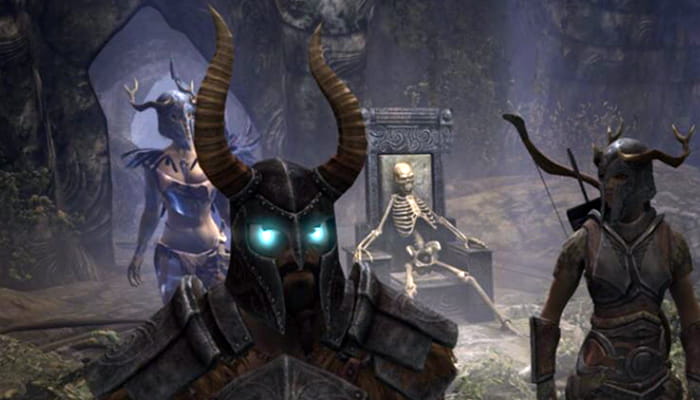
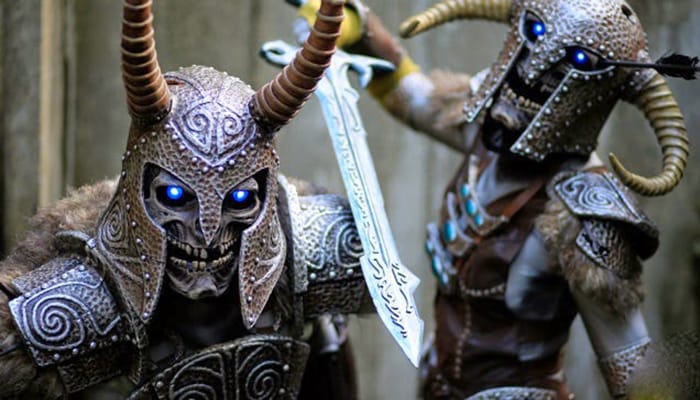
- The popular game The Elder Scrolls V – Skyrim has quite a few undead Vikings lurking around, ready to attack.

