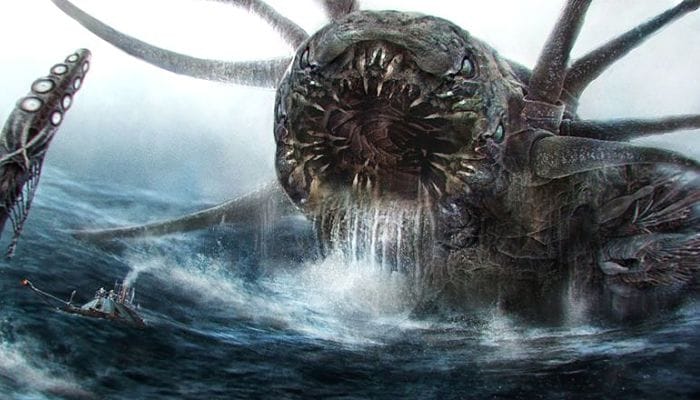
Caribdis is the son of Gaia and Poseidon. She was originally born a nymph who served her father, but because she displeased Zeus, she was cursed and turned into a much-feared sea monster that resides in the Strait of Messina.
Origin
Originally, as a nymph, Charybdis was tasked with flooding dry lands in the name of her father’s kingdom. As such, she is credited with being responsible for the ebb and flow of the daily tides throughout the world. All of this changed, however, when she managed to attract the attention, and wrath, of the powerful Zeus.
History
There are two different versions of the story that explain how she came to be cursed by Zeus, although both have the same end result. In the first, Charybdis became too enthusiastic in her duties to her father Poseidon and began flooding too much land. As a result, Zeus caught her and transformed her, forcing her to live in the Strait of Messina, on the side closest to Italy.
In the second account, she was stealing and eating sheep belonging to Heracles, which he had in turn stolen from Geryon in his tenth labor. The fact that Charybdis had stolen what Heracles had legitimately kidnapped enraged Zeus, and he punished her as a result.
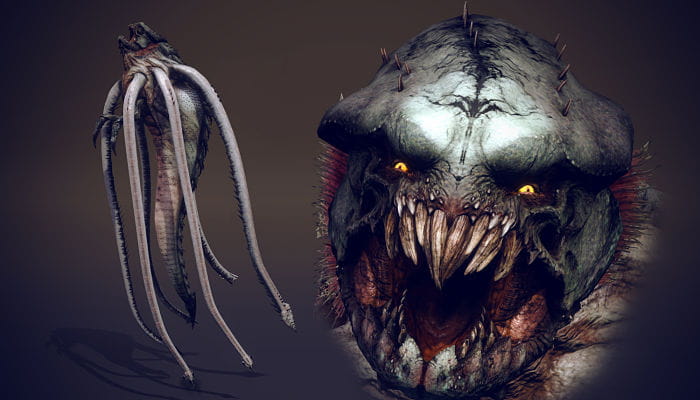
Regardless of which story you choose to believe, the punishment Charybdis received from Zeus was the same. He transformed her and imprisoned her in the Strait of Messina. Trapped in a cave or under the rock on which a huge fig tree grew, she was allowed to continue her tasks, but only three times a day for the ebb tide and three times a day for the flood tide.
Due to its central location, a huge whirlpool formed in the strait, creating a danger for anyone trying to pass through. This danger was compounded by the fact that on the Sicilian side of the strait lived another monster, Scylla, who snatched sailors from ships that sailed too close to her perch.
Odysseus
Apart from the general legends of the treacherous passage where Charybdis resides, there are very few records of it. However, there is one notable exception, and that is the story of the fantastic voyages of Odysseus.
Odysseus knew of the dangers presented by Charybdis and Scylla, and asked Circe for advice on how to pass safely between them. She advised Odysseus that there was no truly safe passage, but told him that if he sailed closer to Scylla, he would lose only a few men, while sailing close to Charybdis he would lose his men, his ship, and his life. Odysseus reluctantly did as he was advised, and lost six men from his crew.
On his return journey, after all his crew and most of his ship had been exhausted, Odysseus encountered Charybdis once again. This time, it was just him and small pieces of his ship that had formed into a raft. When he encountered Charybdis this time, she was sucking the sea down. Odysseus survived this by clinging to a branch of the fig tree on her rock.
The raft, however, was dragged into the abyss. Odysseus clung to the tree for hours, waiting for Charybdis to give way to the water, and hopefully the raft, when she expelled the ocean. This was the case, and to Odysseus’ relief, the raft was intact. He retrieved it and quickly rowed away with his hands before Caribdis could suck the raft, his body, and his life into the depths of Poseidon’s sea.
Current influence
The whirlpool that is the physical representation of Charybdis is now known as Galofalo (or Garofalo). It is still credited with controlling the daily influences of the tides. She, along with Scylla, is also used in a colloquial phrase to represent being caught between two equally unpleasant options, “Caught between Scylla and Charybdis.”

