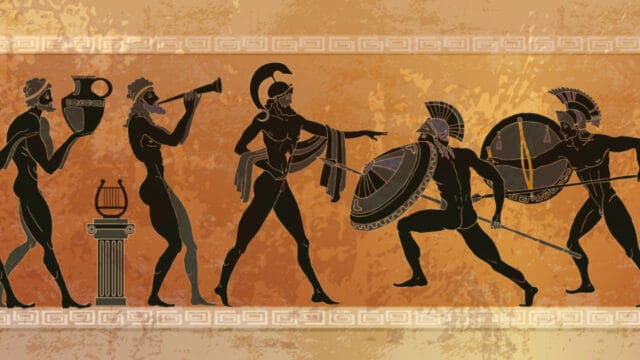
The Berserkers were an elite fighting group and a secret shamanic society. These men were said to gain their great strength and power through ritualistic practices that led them to live extreme lifestyles. The Berserkers were said to live in the forest and endure extreme conditions in their attempts to harness the power of their chosen animal cult: the bear, the wolf, or the pig.
Although each of these cults has its own name, they are generally recognized today as berserkers above all else. Just like the fighting heroes of Greek mythology, who fought great battles in defense of their honor and their people.
At the forefront of King Harald’s troops was a spectacle that brought his enemies to their knees—the Berserkers. These legendary fighters were part of a strange cult that lived in the forest and sought to harness the power of fighting animals. They were an elite group within the Viking ranks that inspired fear even among their own comrades.
It was well known that they were fearless and not bound by the same rules as other humans or soldiers. In fact, some speculated that the Berserkers were no longer human, but had become a kind of shape-shifter. Regardless of what the Berserkers were—human or animal—they inspired fear every time they were summoned.
Origins of the name “Berserker”
There are several theories about the origin of the name “Berserker.” The first theory claims that “ber” was understood to mean “naked,” while “serkir” translated as shirt. The combined phrase meant “shirtless,” which supposedly described the nearly naked state in which the Berserkers were known to enter combat.
Others argue that ‘ber’ should be seen as ‘berr’—the Norse word for bear. This was thought to describe the bear worship of these famous warriors, who were known for closely guarding the king. This theory has led many historians to abandon the “bare shirt” theory.
Possible links to magic
It is believed that the Berserkers, like other northern warriors, began their traditions in magic hunting. This is perhaps why different cults adopted animal representations as the head of their groups. It is important to note that although the Berserkers were known for their cruelty and violence, they were also very religious. In fact, there are stories of a Berserker who was challenged to a fight and postponed the duel for three days to accommodate a religious celebration.
Although they were known for being a highly religious cult, their idea of religion was very different from what we think of today. The similarities lie in their self-control, spiritual connection to their religious figures, and strict training. However, the similarities end there. The Berserkers did not oppose violent behavior and were so ruthless in their actions that they are believed to have tarnished the reputation of the entire Norse culture.
They gave the Norse a bad reputation
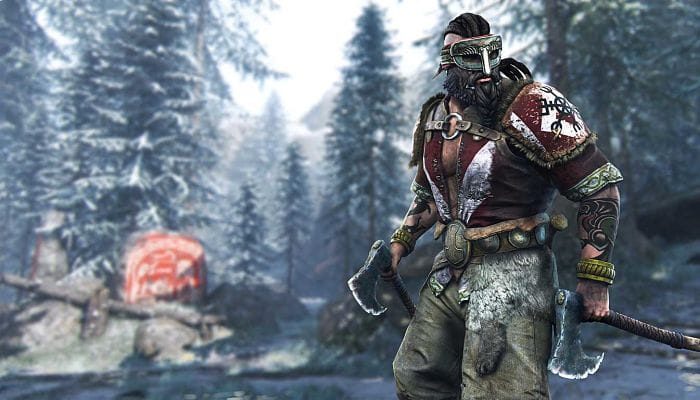
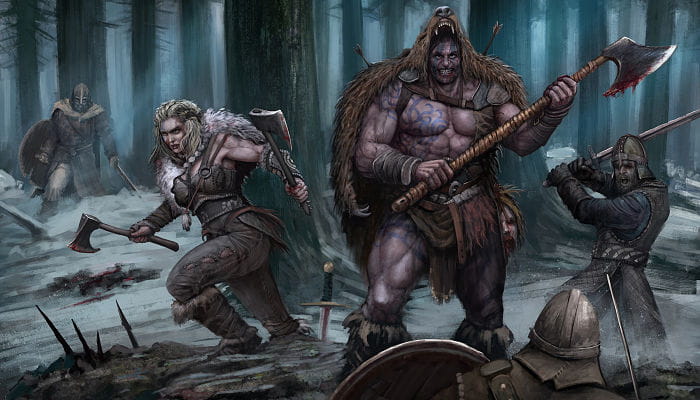
When we think of the Norse and Vikings, we often think of large beasts who pillaged villages, stole from their own, and spilled blood wherever they went. However, the Norse themselves were actually quite peaceful people and even had high standards of gender equality for their time. The Berserkers, however, were another story. These men were so brutal that they raped and pillaged villages indiscriminately.
Some of the harshest criticism of the Berserkers came from their habit of destruction and devastation, even among their own people. This is probably part of the reason why their group was later outlawed. The Berserkers were known to raid and burn villages, kill livestock, kill men and women indiscriminately, and rape both married women and virgins. They were known to be similar to vicious animals, and everyone feared them when they entered their frenzy, often known as berserkergang.
Berserkergang
Berserkergang was a terrifying spectacle. Commonly, this state caused warriors to enter such a state of hysteria and frenzy that they could not tell friends from enemies. They would cut down anything living in their path without remorse—often while engaging in other terrifying behavior. Many accounts of the Berserkers speak of their tendency to bite (and even eat) the metal on the edges of their shields, and one account even mentions a Berserker who swallowed a burning ember.
Although berserkergang was most commonly seen in battle, there were also cases where the transformation could be seen in berserkers attempting to do the impossible while working. They would enter a frenzied trance in which they could not be disturbed by any outside force and could not be harmed by fire or iron weapons.
Reaching the berserkergang state was considered a rite of passage into their cult world. Men trained in the forest for years to become worthy enough to join the ranks of the elite. They defied the code, adopted the habits of their patron animal, and drank the blood of wolves, pigs, and bears.
The life of a Berserker
The berserkers lived without the same luxuries that the rest of the Norsemen had access to. However, they were not resentful of this. Rather, they embraced it. One of the most revealing aspects of this is that they gnawed on the edges of their shields and commonly threw their swords and shields aside before battle. When the Norse reached manhood, their father gave them a sword and a shield.
This was considered one of their most prized possessions, and they took great care of these things. The fact that the Berserkers cast them aside with such indifference shows that they have forgotten the concerns of men and instead have risen to a higher level.
The great spirituality and discipline with which the Berserkers practiced leads some to believe that the cult could have developed a level of martial arts that would have been comparable to that of Japanese culture. The Berserkers were so dedicated to their craft that they were often recorded in historical texts as animals rather than humans.
This was considered a great achievement, as the main goal of the Berserker was to transform themselves into the animal of their cult. There are some accounts in history that claim that some Berserkers succeeded in this and were actually shape-shifters, although most scholars agree that this was probably hyperbole.
Perhaps one of the most notable traits of the Berserkers was their ferocious behavior. These men were capable of terrifying feats and were known to strike fear into the hearts of anyone who had the misfortune of crossing their path. But what made them so terrifying?
There are several theories about how the Berserkers were able to gain such strength and power. One of the most popular is that the Berserkers used psychedelics and alcohol to enter their intense and frenzied trances. Both are believed to fit the specifications of substances that could have been used in Viking rituals and would go a long way toward explaining the strange behavior of the Berserkers. It has been hypothesized that Amanita muscaria—a type of psychedelic mushroom—may have been used regularly by the Berserkers. If so, this would explain many of the symptoms associated with the berserkergang trance.
Although berserkergang was most commonly seen in battle, there were also cases where the transformation could be seen in berserkers attempting to do the impossible while working. They would enter a frenzied trance in which they could not be disturbed by any outside force and could not be harmed by fire or iron weapons.
Reaching the berserkergang state was considered a rite of passage into their cult world. Men trained in the forest for years to become worthy enough to join the ranks of the elite. They defied the code, adopted the habits of their patron animal, and drank the blood of wolves, pigs, and bears.
Berserkers
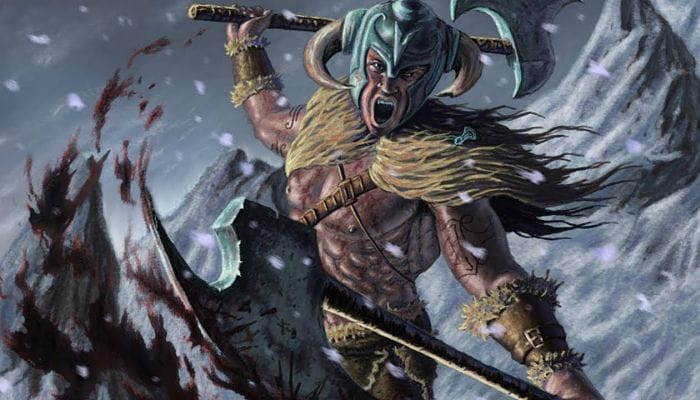
Of all the ranks of the Norse shamanic cult, the Berserkers were the best known. It is from them that we get the English word ‘berserk’ – to describe their state of delirium, hysteria, and frenzy. The Berserkers were the warriors of the bears. This cult was one of the most widespread in the northern hemisphere. In fact, remnants of their order can still be seen in the Danish and British royal guards. Both the Royal Guard and the Queen’s Guard wear bearskin caps to show their history as bear warriors.
This cult order wore bear skins into battle and lived according to the code of the bear. When they died, their bodies were placed on bear skins before their funerals to symbolize the life they had lived.
Ulfheonar
Wolf warriors were also revered among the ranks of the Berserkers, although they were known as the ulfheonar. This particular rank was well known in Norse culture, but it also survives through Roman culture thanks to shields that were recovered by Roman soldiers. These items were displayed in the Armilustrium.
Wolf warriors are also found throughout other ancient cultures, most notably the Mongols and Native Americans. The order of the wolf warriors was highly respected by the rest of Norse culture. This particular cult was thought to be one of the most powerful, as these soldiers were often called “Men of Odin.”
Svinfylking
Last but not least, the Svinfylking consisted of boar warriors. The boar was believed to be loved by the god Freyr and the goddess Frigga. These warriors were well known in Norse culture, although in addition to their cruelty, they were recognized as masters of both disguise and escape. They used these talents to give themselves an advantage on the battlefield.
The Legacy of the Berserkers
Although not necessarily connected to a secret society or shamanic practices, cases of activities similar to those of the Berserkers have been documented in Malaysian culture. In these cases, people with no history of violence or uncontrollable rage will acquire a weapon and attempt to kill as many people as possible before ending their rampage by committing suicide or being killed by an intervening presence such as the police. This behavior also gave rise to a commonly used expression: ‘Running Amok’.
Explanation of the myth
Although many aspects of the Berserkers have likely been exaggerated, this cult of superwarriors was very real. They have a very unique history, although many of their beliefs and practices remain a mystery today.