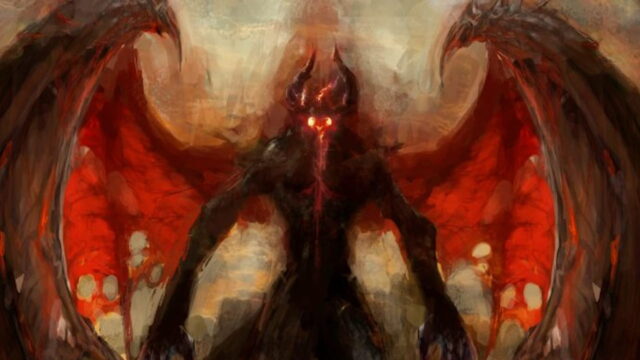
Belial, also known as Beliar, is a demon. The word means worthless in Hebrew, and later came to represent the personification of the devil. In the Old Testament of the Bible, the word tends to be used to describe a class of people, for example, their children. The New Testament presents Satan as the ruler of evil, but before that, this demon was said to be his predecessor. In demonology, he is one of Satan’s most notable sources of demons.
Sources
The term appears 27 times in the Masoretic Text, an authoritative Hebrew and Aramaic text. The word is used, in a Hebrew context, to describe many degrading concepts or people, such as those who support or encourage the worship of other gods, those who have committed sexual crimes, or rabble-rousers.
The Dead Sea Scrolls mention the Angel of Light and the Angel of Darkness. God is referred to as the Angel of Light, and Belial as the opposite. It was said that the demon brought guilt and evil to man. The source also recounts a dream of Amram, the father of Moses, where Belial is described as the King of Evil or Prince of Darkness.
The Fragments of a Sadokite Work, texts contained in the Dead Sea Scrolls, speak of Belial’s three nets: fornication, wealth, and contamination of the sanctuary. He is described as a rebel or an agent of divine punishment and is said to have influenced the Egyptian sorcerers to oppose Moses. This text also classifies any of his followers as necromancers or magicians!
The Testament of the Twelve Patriarchs, one of the hidden scriptures linked to the Old Testament, describes the devil as God’s adversary and casts him in the role of tempter. The texts quote that fornication brings man closer to Belial and separates him from God. It also states that when the soul is disturbed, it is Belial who rules over it.
When Egypt abandons Israel, Belial will remain with the Egyptians in darkness, the document states. It also supports the view that the Messiah will punish the devil and his followers upon his return. Another apocryphal (hidden) text describes him as the angel of anarchy and the true ruler of Earth.
The devil is also mentioned in John Milton’s Paradise Lost and Robert Browning’s Soliloquy of the Spanish Cloister; both poets were considered free thinkers in their respective times.
Occult References
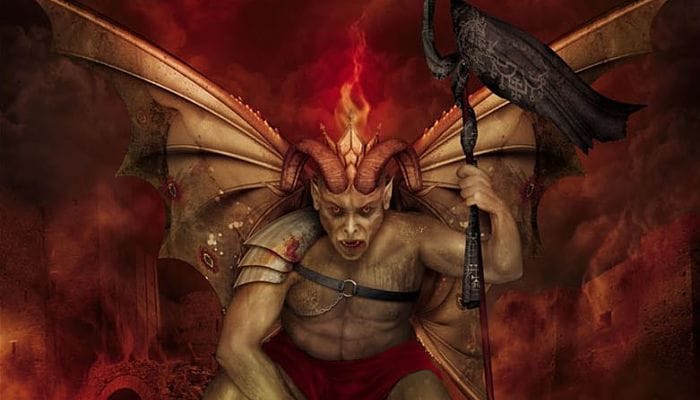
Several occult texts refer to Belial, including the 17th-century grimoire The Lesser Key of Solomon, Aleister Cowley’s Goetia, and the Satanic Bible. In the Goetia, Belial is presented as the king of demons and created second only to Lucifer. He is said to bring favors to magicians and appears as two angels standing on a chariot of fire.
In the Pseudomonarchia Daemonum, he is listed as one of the best demons. In the text, he is described as the seducer of all fallen angels. He is also illustrated as being extremely deceitful and only offering the truth when threatened.
Edgar Cayce, a Christian psychic and mystic, used the term sons of Belial in his deep trance readings in 1937. He was popularly known as the sleeping prophet and gave over 2,500 readings to those he induced into a deep trance state. He used the term in the Hebrew sense of worthlessness, but later used it to refer to opposing human forces.
The 15th-century nobleman Gilles de Rais is said to have devoted himself to alchemy and the occult. Sources claim that de Rais attempted to summon the devil using the body parts of his victims, possibly hundreds, as sacrifices. The Frenchman was branded a serial killer and executed.
Modern references
Belial also continues to appear in many modern books (The Ghosts by Dean R. Koontz and The Master of Lies by Graham Masterson), films (Nosferatu, The Exorcism of Emily Rose, and The Case of the Basket), and games (Vampire: The Requiem, Diablo, etc.).
Belial is associated with the immoral, atheists, magicians, or perhaps anyone who goes against the law, it seems. However, in today’s modern society, don’t most people tend toward aberration and deviation from the status quo in some way? Does the tendency to be self-aware and question previously accepted dogma make us all sons and daughters of Belial?