Beelzebub is a powerful demon who occupies a prominent place in the hierarchy of hell. He is known for spreading belief in false gods, fanning the flames of war or lust, and possessing human bodies to carry out horrible acts.
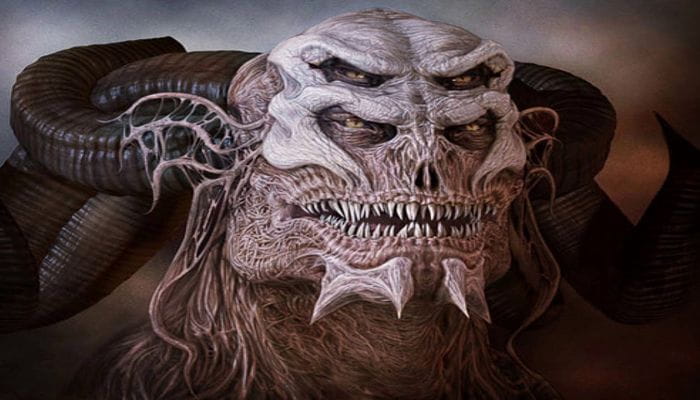
Physical Description of Beelzebub
With nicknames such as “lord of dung” and “god of filth,” it is safe to assume that Beelzebub is not a pretty character. Like many demons, he is often described as a small, shriveled, hunched creature. He may have red or purple skin, ram’s horns, a forked tongue, and a long tail. But he is most famous for his wings, which are so powerful that he has sometimes been called “lord of the skies” or “lord of the flies.”
Some books on witchcraft note that when summoned, Beelzebub likes to appear in the form of a fly. This may seem like a harmless choice, but when you stop to consider ancient beliefs about flies, it becomes deeply sinister. The old scientific theory of spontaneous generation claimed that flies were born from rotting flesh and emerged from corpses to be carried into the air.
Beelzebub’s fly, in particular, is said to be a replica of the flies he observed swarming around the decomposing bodies of plague victims.
Personality
Don’t be fooled by the insulting nicknames and impotent forms used to describe Beelzebub. This is one of the most powerful demons in Hell, second only to Satan himself. Some theologians even claim that he has usurped Satan and become “prince of demons” and “chief of hell.” Others claim that Beelzebub and Satan are one and the same.
According to Judeo-Christian beliefs, Beelzebub began his demonic career as a false god. He used clever lies and earthly rewards to convince men to worship false gods, usually himself. For example, the Torah tells the story of an Israeli god who injured himself and ordered his servants to ask this demon if he would recover. In response, the prophet Elijah appeared to condemn the king, as he had asked Beelzebub for help instead of the one true God. According to God’s will, the king died from his injuries.
Later, he diversified his strategies for torturing humanity. In the “Testament of Solomon,” Solomon claims that Beelzebub was among the demons he enslaved to build his temple. He describes a conversation with the demon, in which Beelzebub said that anything that causes chaos or suffering is sure to delight this demon.
Special abilities
Like all demons, he has a variety of magical powers. His specialty seems to be possession. In the early days, he liked to incarnate golden idols, making them appear as if they had powers so that people would worship them. Later, he began to possess human beings. His name has appeared in numerous famous cases of possession: Anneilse Michel, Louis Gafridi, and many of the “witches” in the Salem witch trials. Opponents of Jesus Christ even accused him of mixing his powers with those of Beelzebub.
Cultural Representation
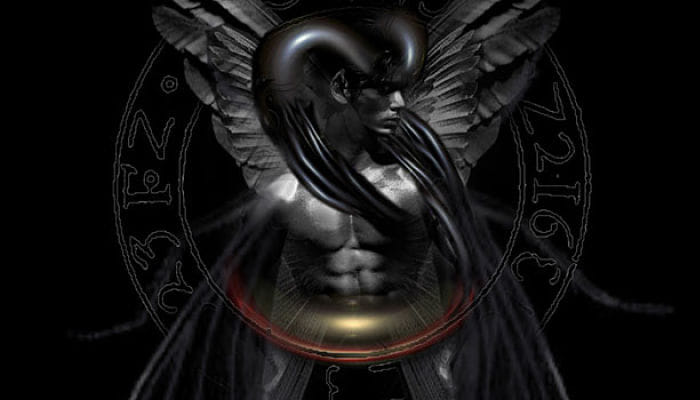
Before Beelzebub was a demon feared by Jews and Christians, he was Baal, a god in the Philistine city of Ekron. The suffix “zebu” was added to his name as a sign of respect, similar to calling someone “prince.” It is unclear what exactly Baal’s role was in Ekron.
Some scholars have suggested that he was a god of agriculture, while others have connected him to “fly cults.” When Jewish monotheism emerged around Ekron, any god who was not “the one true god” had to be discredited. Ba’al Zebub became a demon and was disgraced with nicknames such as “lord of the flies” and “lord of dung.”
It is in this demonic form that he first appears in the Jewish Torah. He is mentioned once, in the book of Melachim, as a false god. Later, the Christian Bible added to the legend of Beelzebub. He does not appear in the Old Testament, but in the New Testament, his name appears as a taunt hurled at Jesus. Matthew, Mark, and John describe moments when Jesus was accused of being with Beelzebub.
Even so, he remained a minor character in the Christian faith until the 16th century, when occultists and theologians began trying to describe the hierarchy of hell. Most of them agreed that Beelzebub was one of the most important among the demons, possibly even equal to or superior to Satan. He makes his most famous appearances in Dante’s Inferno, Paradise Lost, and The Pilgrim’s Progress.
Modern appearances
Today, Beelzebub has taken a step back into the shadows. Most people believe that he is just another variation of “the devil,” and the names Satan and Lucifer are more popularly used to describe that character. However, some literary works have paid homage to this prince of demons, most notably Lord of the Flies.

