The Beast of Gévaudan was a monstrous creature, similar to a werewolf, that turned the mid-18th century into a terrible bloodbath for the inhabitants of Gévaudan, a small province in south-central France. Although the Beast claimed between 80 and 200 lives and left numerous eyewitnesses in its wake, it was never positively identified as a known predator. To this day, it remains one of the bloodiest mysteries in history.
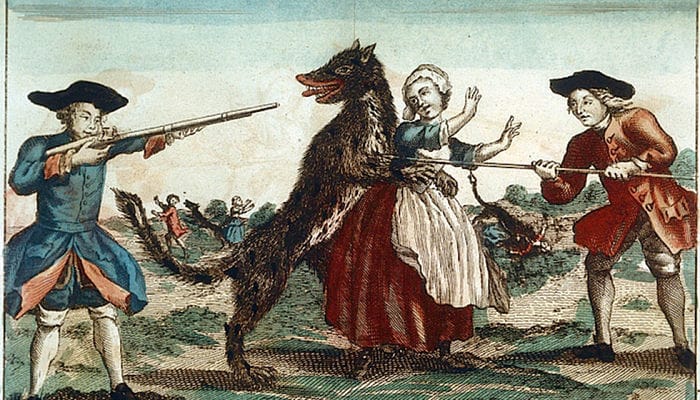
Physical Description of the Beast of Gévaudan
Eyewitness accounts of the Beast of Gévaudan paint a picture of a motley creature, a mosaic of features from wolves, lions, hyenas, bears, dogs, and panthers. According to all reports, the Beast was enormous. Many witnesses compared it to a small horse or a calf. The Beast’s fur varied in color.
Its base coat wasusually reddish brown, but its markings varied from a black stripe down the spine to patches of gray hair and spots on the hindquarters. It had long, vicious fangs and claws unlike any of the predators known in the region. Some witnesses claimed that the claws had grown together into a kind of hoof.
The head of the Beast of Gévaudan was flatter and its snout more like that of a pig than a wolf; its ears were small and round. It had a broad, cavernous chest, narrow hips, and a long, thin but terribly powerful tail. According to some witnesses, the Beast could use its tail as a weapon to knock men down.
Hunters produced up to six different bodies, claiming to have killed the Beast. These bodies weighed around 150 pounds and looked like very large wolves. The two most credible bodies were stuffed, examined by surgeons, and even presented at the royal court. One of the bodies was described by a famous wolf hunter, who said: “The other body was described by the superintendent of the Gévaudan region, who reported that
Behavior
The Beast was feared not only for its terrible power but also for its unusual and brutal hunting techniques. Although it preferred to attack victims when they were alone, it clearly had no fear of adult humans, being six times more likely to attack an adult than a typical wolf.
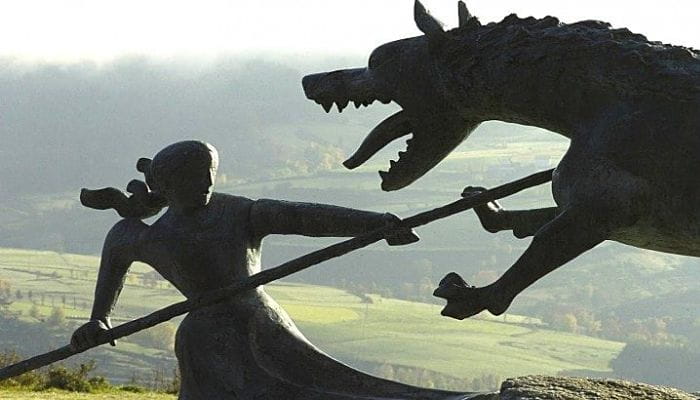
Its attacks were almost always a surprise; it would suddenly appear from the bushes or even drop on its victims from above, and it seemed to prefer daylight to the typical cover of nighttime predators. It used its claws to devastating effect, much more so than typical wolves, but its signature killing blow was to rip out its victims’ throats or crush their skulls.
Chillingly, the Beast seemed to hunt as much for pleasure as for hunger. Although it sometimes devoured its victims, it killed them and abandoned their corpses just as often. Over time, the Beast proved to have as much talent for playing “the hunted” as it did for playing “the hunter.”
It was a master of evasion; just when hunters thought they had it cornered, it would disappear. It also seemed unaffected by bullets. According to several hunters, it suffered multiple gunshot wounds, only to get up and escape back into the bushes.
Many inhabitants of Gévaudan believed that the Beast had helpers in its dirty work. Some of its victims were killed at the same time in different places, and some witnesses reported seeing it in the company of its mate, its cubs, or even a man. This last report, along with the fact that the Beast was sometimes seen wearing armor made of hard pigskin, led some villagers to believe that it was a trained attack animal rather than a lone predator.
History
Its first attack took place in the summer of 1764, when it attacked a woman who was tending her livestock. Fortunately, the woman’s herd included several bulls, which managed to defend themselves against the Beast, but the next victim, a 14-year-old boy, was not so lucky.
Within a few months, the monster had claimed so many lives that mass hysteria began to set in. The hysteria was fueled by the Beast’s reputation for striking at any time and in any place. Although it preferred lone shepherds, it was also documented attacking villagers while they worked in public gardens, shoppers at the large spring fair, and even priests and monks at an abbey.
Public hysteria reached its peak in 1765, when the Beast attacked a group of seven armed men. Although the men survived, the audacity of this attack brought the Beast to the attention of the king, who launched a crusade to end the bloodshed. Despite the king’s anger, the Beast’s reign of terror would continue until June 19, 1767.
The Hunt
Shortly after the Beast’s killing spree began, local men took up arms against the monster that was ravaging them. In less than six months, these men had declared all-out war on the local wolf population, forming large hunting parties called “beats.” In total, these hunting parties would kill over 100 wolves before the hysteria subsided.
In October 1764, Captain Duhamel organized his soldiers into one of the largest hunting parties ever to pursue the beast. Fifty-seven men took on the project, but the Beast evaded them all. However, their failure only served to excite other hunters from across the country. Soon a reward was offered for the Beast’s skin, and hunters flocked to the Gévaudan region to take part in the sport.
Art and literature
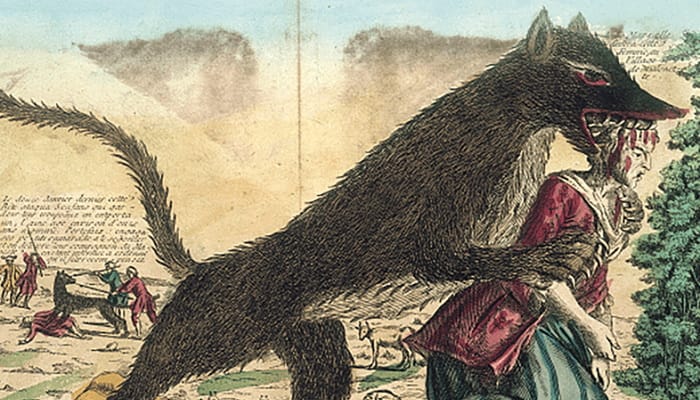
During the reign of the Beast of Gévaudan, numerous artistic representations of it were made, both to warn the public about it and to help hunters identify it. It was a regular feature in newspapers and on wanted posters.
Since its death, the Beast of Gévaudan has become a famous figure in the werewolf tradition. It made its literary debut in Gothic novels such as La Bête du Gévaudan and Wolves: An Old Story Told Again. Since then, it has moved into contemporary media, such as the feature film Brotherhood of the Wolf and the television drama Teen Wolf.
Explanations for the creature
Perhaps even more than it captures the imagination of fans of paranormal fiction, the Beast fascinates historians and cryptozoologists. Unlike other “mythical” creatures, the Beast of Gévaudan has a solid track record. There is no doubt that something was responsible for all the carnage, and scholars love to speculate about the true identity of that something.
Until recently, the most popular theory explained the Beast as a wolf-dog hybrid. If a wolf mated with a large dog (mastiffs were popular at the time), the offspring could have had several of the Beast’s traits, namely its size, thin tail, and reddish coat. It could also have had the Beast’s peculiar disposition, which combined the predatory bloodlust of a wolf with a dog’s lack of fear of humans.

