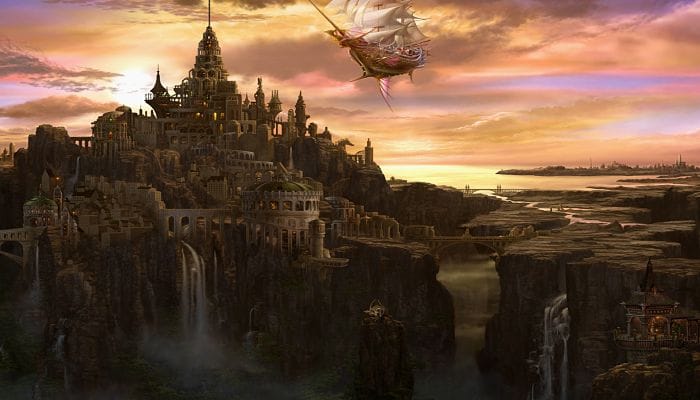
Avalon is the mythical island in the Arthurian legend, also known as the Isle of Apples or the Isle of Glass, a mythical place like the island of Thule. It is said that the legendary healing powers of the island restored King Arthur after he was wounded in an important battle. His sword, Excalibur, was also forged there, according to Arthurian authors.
Source and Etymology
Avalon is first mentioned in Geoffrey of Monmouth’s Historia Regum Britanniae, a fictional historical text written in 1136, where Avalon is referred to as Avallo. In his Vita Merlini, he refers to Insula Pomorum, the island of apples, in relation to the mythical island. Here we can see the close relationship with the Celts, as the Celtic word Avallo, Old Irish aball, Middle Breton avallenn, and Middle Welsh afall refer to the apple.
According to scholars, the apple probably represents immortality and also implies a distant place, due to the perception that apples are generally grown in distant regions. The name Avalon may even be related to Avalloc, a Celtic god, according to sources.
Location of the island of Avalon
In Celtic mythology, Avalon is associated with the afterlife and was even believed to exist outside of normal time. It was believed to be accessible to the islands furthest from the British coast. The Celts believed that the islands were mystical gateways and referred to them as the Islands of the Dead. After Arthur was seriously wounded in the Battle of Camlann, he was taken to the island to be healed.
Sources claim that the island was also home to the Celtic goddess Morgan le Fay. According to the Vita Merlini, Avalon was an island similar to the Elysian Fields, where crops flourished and people lived extraordinarily long lives.
Glastonbury
Many Arthurian authors and historians consider Glastonbury to be the location of Avalon. The name Glastonbury, in its oldest form in Welsh, was translated as Island of Glass. As the area was very marshy, it was understandable that the people of the time considered it an island.
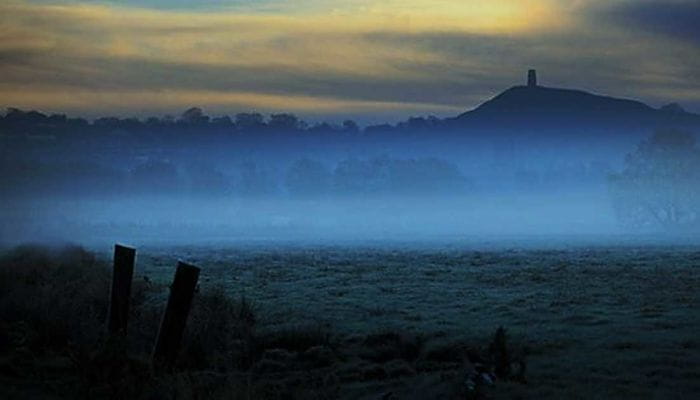
In Celtic times, Glastonbury Tor, or hill, was a sacred religious site. Pilgrims used to follow priests and priestesses of pagan religions, or ancient Celtic religions, in a procession up the Tor. They believed that the Tor had a secret entrance to the afterlife.
From 670 AD, the Tor was occupied by a Benedictine monastery called Glastonbury Abbey. In 1190, the monks of the abbey claimed that the bones of King Arthur and Guinevere were buried there. They allegedly discovered a cross and a coffin on the grounds with the words “Here lies the renowned King Arthur of the Isle of Avalon” engraved on the cross.
According to scholars, a large male skeleton was found in the coffin, supposedly with a wound to the head. Unfortunately, the only evidence for this claim is a second-hand account from a man who spoke to an alleged witness at the time. However, the monks’ claim drew a lot of attention to their abbey, resulting in an influx of visitors and increased financial support.
Even today, visitors are welcomed to Glastonbury with the sign: The Ancient Avalon. Historians continue to debate whether Glastonbury is indeed Avalon, but in general the claim is rejected.
In Modern References
The BBC television series Merlin is based on the legends of Arthur and mentions the mythical island. In the series, they frequently refer to the Lake of Avalon. The lake was home to immortal winged creatures called the Sidhe and one of the few entrances to the afterlife. Merlin threw the sword, Excalibur, into the lake, from where Arthur later retrieved it from the stone.
Many modern pagans draw on the legend of Avalon as a path to inner wisdom. They also see the Glastonbury Tor as a significant spiritual place, even today. Light workers and spiritual healers also believe that the mystical island represents a path to inner peace or paradise.
Celtic polytheism has had a major influence on mythology, including the legend of this legendary island. Since the Celts were closely linked to nature and the supernatural, the mythical island and its healing powers were a significant example of their belief system, and even today, the island remains linked to the healing and magical arts.

