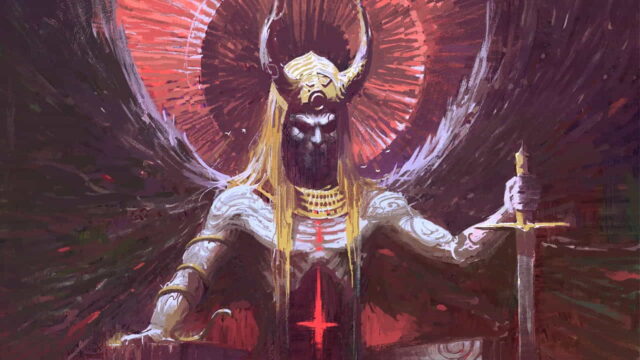
Astaroth is often depicted as one of the demons who serves as the “Grand Duke of Hell,” although there is some debate as to whether he is a demon or if he was simply brought into existence as a demon when the modern religions of this world rose to power.
It is believed that Astaroth’s origins are rooted in the Babylonian goddess Astarte and that she was transformed into the demon Astaroth as a way to undermine existing beliefs. For this reason, it is essential to learn about Astarte and other ancient goddesses in order to fully understand Astaroth.
Due to the debate surrounding Astaroth’s origins, there are several different variations of who he (or she) is in his true form. Most versions from mainstream religions (especially Christianity and Islam) claim that Astaroth has always been a demon.

Their explanation for the creature’s appearance in modern times is simply that as a deceiver, Astaroth took the form of the goddess Astarte to win the favor of the people. He is said to commonly try to win people over through laziness and manipulation of logic.
There are, however, other religions that view Astaroth as a useful demon who is not necessarily benevolent, but not evil either. Furthermore, some writings that mention Astaroth seem to portray him as an angel who “opposes the demon of power” (Testament of Solomon).
Astaroth according to modern religion
What is known about Astaroth according to the major religions is that he is said to be part of the first hierarchy in Hell, which is composed of an evil trinity (Astaroth, Beelzebub, and Lucifer/Satan/Beelzebub). Astaroth is perhaps one of the lesser threats to humanity in terms of physical danger, although he seems to be fond of manipulation and corruption of an intellectual nature.
This does not mean, however, that Astaroth does not wield impressive power within the ranks of Hell. As one of the Great Dukes of Hell (the evil trinity), Astaroth possesses immense power that must be acknowledged. In addition to his position in the evil trinity, Astaroth is believed to command 40 legions of demons and spirits, suggesting that he is also a respected military strategist.
Astaroth, the ally of evil
This could explain why Astaroth is seen as a political ally. Astaroth is also given a position that reflects his impressive intelligence as Treasurer of Hell. With these titles combined, it is easy to see why this demon is so feared and respected.
It is said that when Astaroth is summoned, he is willing to share his vast knowledge of the past, present, future, and intellectual interests. However, when summoning Astaroth, it is important to take precautions. This demon is known for his foul breath, which is said to be fatal in encounters.
To protect yourself from Astaroth’s breath, it is said that an enchanted ring made of pure silver can be worn as protection. This ring must be held under the summoner’s nose to ensure that the individual remains protected throughout their interaction with Astaroth. Failure to do so will result in death.
Manifestations of Astaroth
However, if you were able to summon Astaroth, you would find that the demon is very communicative with information and always responds with the truth. Astaroth is said to be particularly fond of telling people the story of creation and the history of the fall of the angels and the old world. Although this seems out of place with the behavior one would expect from a Grand Duke of Hell, it is possible that this demon has an ulterior motive.
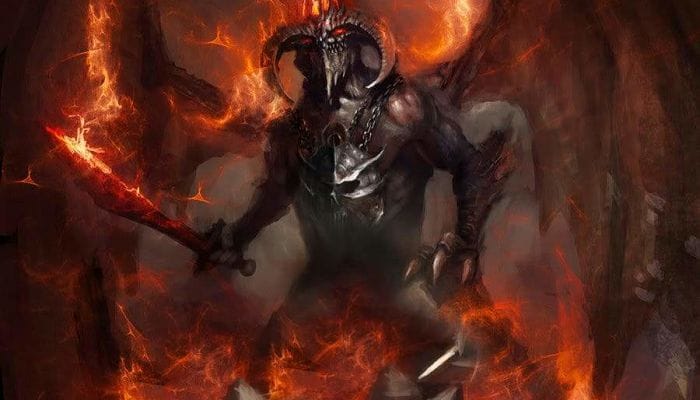
Every story of an encounter with Astaroth is said to have at least one point in time when the Duke shows himself to be very upset about becoming a demon and seems to think that he has been judged wrongly. He will tell the whole truth of the story of his fall, although he will often insist on proving why he is being unjustly judged and punished.
There are conflicting opinions as to why Astaroth is known for defending his case so often. Those who follow the views of the major religions claim that Astaroth uses his knowledge to manipulate the truth of his fall and lead others into temptation and, eventually, eternal damnation. Others believe that Astaroth is a victim and that his image has been misinterpreted over time.
To say the least, the view of his appearance as a demon is interesting because it is unclear whether he earned this title because he was once an angel who fell out of favor with the creator, or if he is a demon because a religion or culture found it necessary to change his true identity. Either way, the Grand Duke is clear that the punishment he has been given is unfair, although most who believe in Astaroth will attribute this to one of his tricks.
Knowledge
If asked, Astaroth will tell any truth concerning the past, present, or future. He is also quick to help others acquire knowledge about anything involving intellectual pursuits and is especially eager to help with matters of science. Those who worshipped him in various ancient cultures were known for their flourishing intellectual societies.
Astaroth is also known as a great mentor to turn to if you need help, especially if that help is needed to establish important political or business connections. According to many legends, Astaroth serves as an advisor to both humans and demons, although he seems to have a preference for human affairs. This is possibly because Astaroth seems to be conscious when giving advice and does not want his wisdom to be associated with evil intentions or bad intentions.
1) God and nature
Nature is one of the pillars of this culture and is mentioned in verses, stories, and legends, which describe its natural processes and how it coexisted with humans.
In short, it is described as a human family in which the sun is their mother, the moon is their father, and the stars are their siblings.
2) Inner heroism
This is recounted through Lithuanian myths that narrate the inner heroism of a human being. In explanatory terms, it is difficult to delve deeper into this element, as it speaks of feats in mythical lands that are on the opposite side of the earth, referred to as “the land above all seas” or “the underwater cosmic kingdom.”
3) The god of morality
These stories deal with moral issues and are popular throughout Europe. They revolve around a deity who appears before people to guide them in moral matters, but they do not recognize him.
What these stories seek to convey is that people should always act with harmony and justice, listening to their inner voice, because you never know when this god is watching you.
According to specialists, this representation is thought to arise from mixed Christian and pre-Christian character.
Main gods known in Toltec mythology
Based on various studies conducted by specialists, it was concluded that Lithuania has or had the following as its main deities:
1) Dievas
Known in Lithuanian mythology as the supreme god of the world, his name means “bright light of the sky” and is mentioned under the celestial phrase Saule noiet dievÄ, in English.
Manifestations of Dievas
He is mentioned in Christian texts from Lithuania, where he is described in detail and represented as a human being known as a wise old man or an old beggar. Other speculations claim that he can take different forms without any limits.
2) Perkons
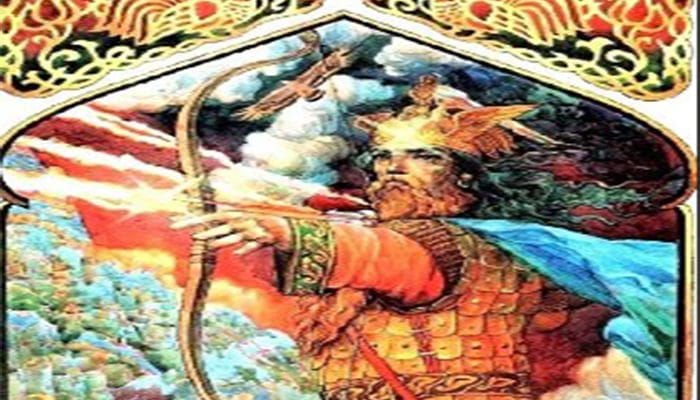
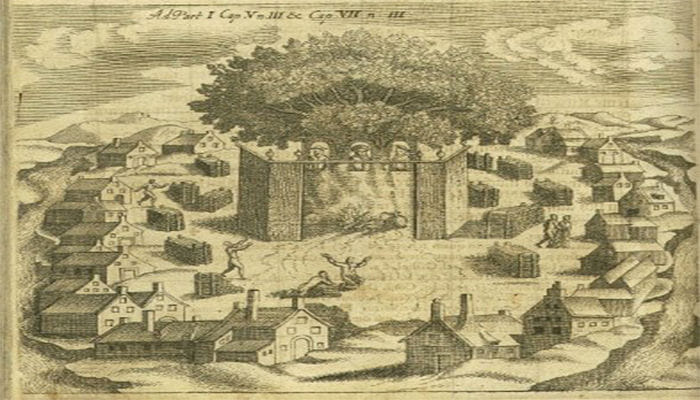
He is considered the guardian of law and order, as well as a deity of fertility. He is thought to hold the oak tree in high esteem, as it is a tree that is frequently struck by lightning.
What does Perkons look like?
His physical appearance is described as that of a strong, energetic man with a beard, accompanied by an axe. Some even say that PÄ“rkons often uses his two-wheeled chariot to race across the sky in flames to bring rain.
Beliefs related to this deity
A) One story says that his lightning is responsible for purifying the earth so that plants can grow.
B) However, his lightning is not only intended for the earth, but is also thrown at evil spirits, unjust men, and to discipline the gods. The latter comes to light in the Lithuanian legend:
It tells of the moment when the god Mënuo, ruler of the moon and husband of Saule, goddess of the sun, cheated on her. When Perkūnas found out, he punished him by cutting him into pieces.
C) There is a belief in ancient tradition that speaks of PÄ“rkons’ bullets, which are thought to be buried in the ground as flints or can be any object that inhabits the earth or even a person that can be used by mortals as a shield against demons or, in the most earthly case, as a cure for toothache, fever, and fright.
3) Velnias
This is the deity in charge of the underworld and also the guardian of the hidden treasures that people hide in the earth. It is said that his main duty is to take care of these objects, protect the poor, but punish criminals, abusers, misers, villains, and drunkards.
For paganism, this deity symbolizes the connection with humans despite being thought of as a ghost, as he was responsible for helping humans who wanted a better life.
However, when Lithuania entered the Christian era, he became an evil spirit called Satan who came down to earth to seek out the wicked, which led him to become a frightener and persecutor, believed to be half-animal, half-human, wearing black leather and having horns, horse’s hooves, and a tail.
Method of punishment
For Velina, all his punishments are related to death and come in the form of tricks or ruses that people cannot even imagine. He can take the form of an animal or a child, or even become a wounded being who needs help to take their souls.
Legends in her honor
The best-known story is based on a poor man who realized one day that he had nothing to eat, so he fed on children and decided to give himself up voluntarily to this deity.
When the devil arrived, he told him that he did not want his soul but that he could lend him money. About three years later, the same man had to take his debt to the devil in the same forest and call him with the words: “I got drunk, I got drunk.”
The subsequent story of what happens when the man finally wants to pay his debt is not revealed in detail, leaving it open to speculation by believers.
Secondary deities in Lithuanian mythology
Although the information available on this culture is very limited, based on various sources, other mythical entities that were part of this history are presented as follows, the most notable being:
1) Laima
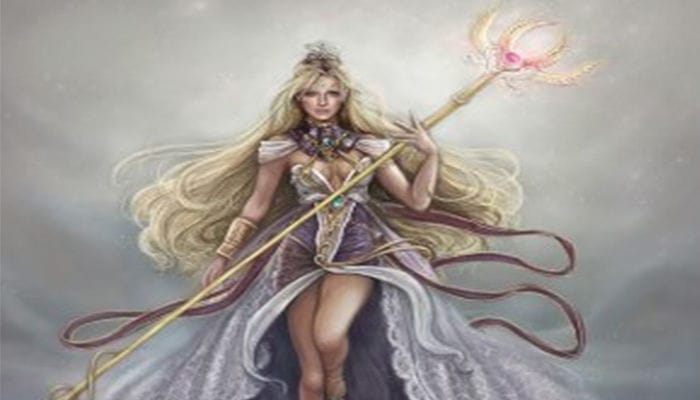
She is the representation of destiny and luck, and also symbolizes victory or triumph in the Etruscan and Roman worlds.
She is also associated with the stages of human life: birth, marriage, and death. She is the patron saint of pregnancy and is believed to protect human life.
In Lithuanian mythology, Laima is almost always confused with other beings with similar names, one of which brings good fortune and the other is a fairy. However, it is important not to confuse them, as her role in this mythology is to prophesy what a person’s life will be like from the moment they are born.
As a result, it is believed that there were three of them in history who gave different predictions, but that the final declaration could not be changed by anyone, not even by this goddess.
Scholars believe that in ancient times this was a cloak of tranquility for warriors, since according to Manfred Tietz in 1837, Lithuanian soldiers feared nothing because they believed in a destiny that was already written.
However, Algirdas Julien Greimas expressed his opinion that this was superficial and that Laima did not have the power to define the destiny of the Lithuanians, but could only see what was going to happen to them.
For her part, in her own version of the myth of the Great Flood, it is said that she participated in the birth of humanity.
2) Zemyna
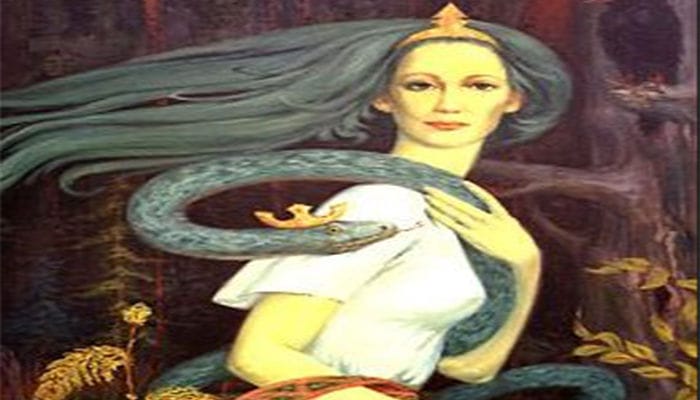
Mother Earth, who watches over animals and natural fruits, is responsible for ensuring that the earth is fertile for humans to harvest.
As a way of honoring her, people pray to her when they wake up in the morning and when they go to bed at night.
Known to farming communities, she is thought to be the wife of the celestial god Perkunas, as they associate the fertilization of the earth with the arrival of the rains that come with the first thunder of spring, which is thought to be the reason for their marriage, as a result of which she became pregnant. although it is unknown if this is true. They also say that she can only bear fruit with the sky, the sun shining, the moon shining, and the rain falling.
3) Saule
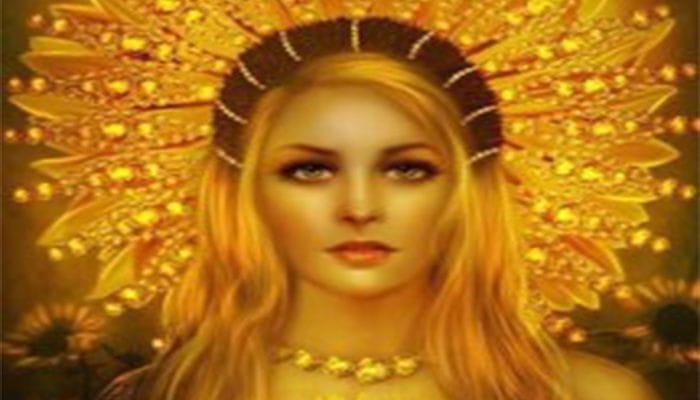
Characterized as the sun goddess, she is known in Lithuanian stories that relate her to MÄ—nuo, the moon.
Myths related to this deity
a) The first and best-known story about this goddess involves her husband Mėnuo, who cheats on her by falling in love with the star Venus, or the morning star, Aušrinė.
*There are different versions of this story about how these lovers were punished by the thunder god Perkūnas, who unleashed his power on MÄ—nuo, who is thought to have been cut in two, but because he did not learn his lesson, he was condemned to live this way every month.
*The second hypothesis says that they separated voluntarily, but since they did not want to stop seeing their daughter Žemyna, the earth, they agreed that the sun would rise like a lantern during the day, while the moon would light up the night while visiting her.
* The last version involves Dievas, who supposedly disfigured the moon god’s face.
b) On the other hand, in other stories, AuÅ¡rinÄ— is one of SaulÄ—’s daughters and servants, who lights the fire and prepares her for another day of travel across the sky, while her bed for the night is made by VakarinÄ—. Therefore, in Lithuanian mythology, she was the mother of other planets called:
- Indraja (Jupiter).
- SÄ—lija (Saturn).
- Žiezdrė (Mars).
- Vaivora (Mercury).
Celebrations in her honor
The festivals in her honor were held during the summer solstice and are intended to:
- Create crowns.
- The search for the magical fern flower.
- Light bonfires, dance, and jump over the fire.
- Until the sun rises to greet it.
Later, at around 4 a.m. the following day, the winter solstice celebration takes place, which celebrates the return of this deity. However, according to researchers, Christianity absorbed these activities.
4) Gabija, the goddess of fire and the hearth
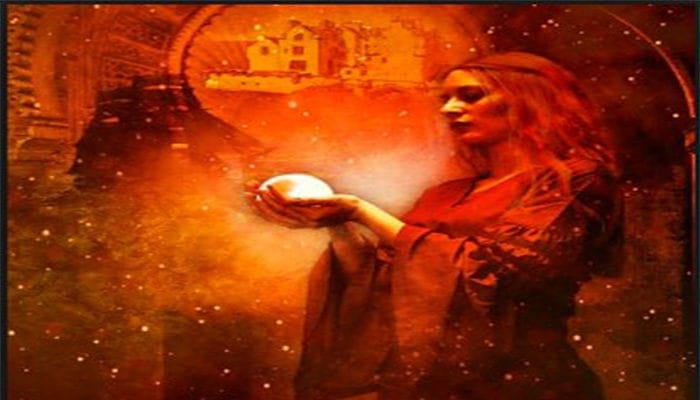
Also known as Gabieta or Gabeta, she is known as a spirit of fire and the home. However, under the name Gabjauja, she was also considered the goddess of corn and other cereals.
It is also thought that she can vary in physical form, as she can be a cat, a stork, or even a rooster, although on some occasions she appeared as a woman dressed in red.
Rituals associated with her
The one that is known is based on the fact that when a person wanted to perform a ritual for a Lithuanian god, they had to make a double offering, one for the one they wanted to invoke with fire or food, and Gabija was offered water for the fire and beer for the food.
In fact, it was believed that her fire harbored thieves and demons, and these could only be destroyed with pure water.
For her part, she was a highly respected deity, so she was treated as a living being. Peasants gave her bread and salt, and the fire was lit near her bed and covered with charcoal so that it would not spread throughout the house every night.
However, when she was upset, she would simply decide to “go for a walk,” which meant burning down the house. Another way to offend her was to stomp on the fire, spit, or urinate on it, which would cause people to become ill and have bad luck in their lives. Finally, with the arrival of Christianity, A Gabija was identified with Saint Agnes.