Aeolus, god of the winds, dwells on the mythical floating island of Aeolia. It was here that all the winds were kept: stormy winds, gale-force winds, and gentle breezes. The strongest winds were found in various caves on the island, waiting to be released by Aeolus’ command. The meaning of the name Aeolus is “agile, “ which is very fitting for the “Guardian of the Winds. “

Zeus, the King of the Gods, assigned him this task. Although Aeolus is sometimes considered a mortal and also known as a lesser god, his legacy as master of the winds remains to this day. He also has the title Hippotades, which means “reindeer of horses.” The winds were considered spirits in the form of horses, controlled and contained by Aeolus. He is infamous for his role in Homer’s Odyssey. In Homer’s story, he was a mortal, not a god, but he still had the duty of supervising the winds.
Origin
Odysseus was on a journey struggling to return home to his wife and was lost at sea before he and his crew landed on the island of Aeolia. After a month on the island, enjoying the hospitality of Aeolus, the god kindly offered to help Odysseus and his men reach their destination by confining all adverse winds in a bag and sending the favorable gentle west wind to push them safely home.
Once aboard the ship, while Odysseus slept, his suspicious crew of sailors agreed that he must be hoarding a variety of riches in that bag. Curious, they opened it and released all the uncontrollable winds. The winds swirled and formed a powerful storm that drove the ship back to the island of Aeolia. Aeolus considered this a sign from the gods and advised the sailors to leave the island and never return.
Genealogy of Aeolus
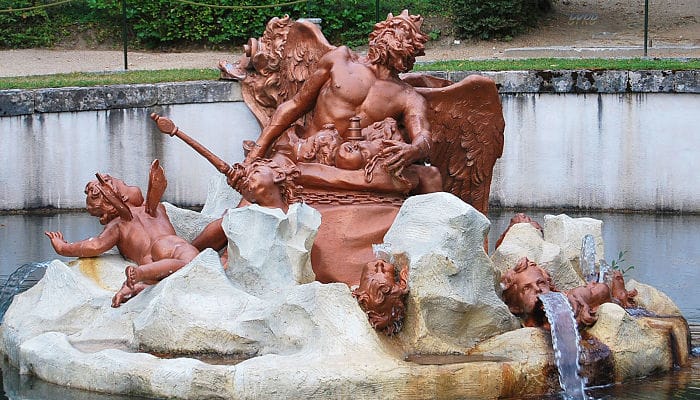
The name Aeolus was given to three different characters who appear in Greek mythology. Their stories seem to overlap, and sometimes even the most distinguished mythographers have trouble distinguishing them. Perhaps the easiest way to begin to understand the complex genealogy is to distinguish by family tree, starting with each of Aeolus’s mythical parents.
Son of Hippotes
The best-known Aeolus was originally a mortal, described in Homer’s Odyssey as the Guardian of the Winds. This Aeolus was the son of Hippotes and the prophetic nymph Melanippe. Melanippe was the mother of Arne, the daughter of Poseidon and mother of Aeolus in other stories. Yes, it’s a bit confusing—but for the purposes of the Odyssey story, Aeolus’ parents were Hippotes and Melanippe. According to the renowned Greek historian Diodorus, Aeolus had 12 children: six sons and six daughters.
Son of Hellen
Another Aeolus was the son of Hellen, the ruler of Aeolia and King of the Hellenes in northern Greece. His mother was the water nymph Orseis of Thessaly (the later name of Aeolia), and his wife was Enarete. Aeolus and Enarete are considered the ancestors of the Aeolians. It is also believed that they had numerous children, and the exact number remains a matter of debate.
Because his children knew no one outside their own family, it has been said that Aeolus allowed his sons and daughters to marry each other. The brothers drew lots for the sisters.
In other versions of the story, Aeolus did not approve of or allow incest among his children. Two of the brothers, Canace and Macareus, were secret lovers, and Canace became pregnant by her brother. Macareus promised to marry her but never did. After their baby was born, the nurse tried to take the newborn away in a basket, but she was caught in the act when the baby cried. Aeolus was furious when he found out about the baby and sent Canace a sword to kill herself. In some versions of the story, Macareus also commits suicide.
Son of Poseidon
The third Aeolus was the son of Poseidon, the god of the sea. The mother of this Aeolus was Arne, who was the daughter of the first mythological Aeolus and Melanippe. When Arne told her father that she was pregnant by Poseidon, he did not believe her and gave her to a stranger named Metaponto. Arne later gave birth to twins, the third Aeolus and Boeotus.
There are two versions of the end of this story. In the first version, Metapontus adopted the twins, but when they grew up, they had to leave the city because they killed Metapontus’ wife after a dispute. Boetus and Arne went south to Thessaly (Aeolia) and Aeolus went to a group of islands in the Tyrrhenian Sea, which are now called the Aeolian Islands.
In the second version, poor Arne was blinded by her father when he found out she was pregnant, and he took the twins away from her and abandoned them in the desert. A cow found the babies and fed them milk until some shepherds came along and took care of the children.
Coincidentally, at that time, the King of Icaria was angry with his wife, Queen Theano, because she had not given him any children. He threatened to send her into exile. In desperation, he sent servants to find him a baby. They took the twins from the shepherds, and Queen Theano presented them to the king as his own. Curiously, the king did not question this, as he was delighted to have two beautiful young children.
Eventually, Queen Theano gave birth to her own natural children. The king, however, always preferred the twins to the others. This made Theano jealous and worried about who would inherit the kingdom. Once they grew up, she devised a plot to send all the children out hunting together. Her natural sons, who already knew her secret, were going to kill the twins. Poseidon intervened and saved Aeolus and Boeotus, who ended up killing Theano’s other sons.
Upon hearing the news of their death, the queen committed suicide. Poseidon told Aeolus and Boetus that he was their father and that their mother was being held captive by their grandfather. The twins killed their grandfather and freed their mother. Poseidon restored their sight and brought the whole family to Metaponto, who finally adopted the twins and married their mother.
Historical influence

The Odyssey is the second poem in Homer’s epic tale. It is the story of Odysseus’ travels on his way back to his homeland of Ithaca after the Trojan War, and covers all the misfortunes and encounters he experiences along the way. The story of Aeolus, the magical island, and the bag containing the winds is a well-known story in this famous journey. It was originally written in Homeric Greek, but continues to be translated into modern languages and read and enjoyed around the world. The island of Lipari, off the coast of Sicily, is identified with the magical Aeolia where Aeolus kept the winds.

