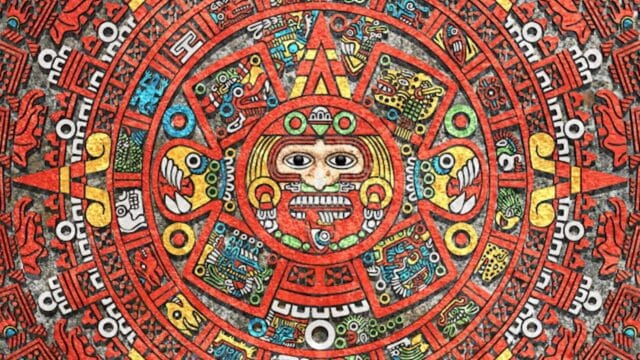
The pantheon of Mayan gods is a set of anthropomorphic deities that were often associated with animistic spiritual forces. As a group, the allied city-states, known as Mayan polities, shared all the gods, but certain deities were identified with specific Mayan centers or with the dynastic families of the rulers of those cities.
Most popular and revered Mayan gods
Below is a brief description of the 10 most popular Mayan gods in this religion that you should definitely know about, bearing in mind that many of them are summarized in the Mayan myths that have been generated from their religion.
1.- Itzamna
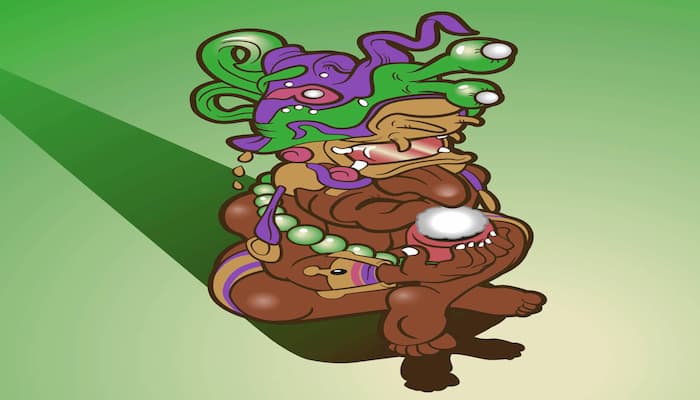
Itzamna is also known as Ah Dzib (“scribe”) or idzat (“learned person”) and, for Mayan scholars, God D. He is the ancient creator god, and perhaps the main god of the Classic and Postclassic periods. He is associated with creation and sustenance, writing, wisdom, and esotericism.
Often depicted with a hooked tooth or a cracked mouth to indicate his age, Itzamna can appear in many different forms: as a priest, or as a caiman (a type of crocodile), and sometimes as a personified tree or as a bird deity.
2.- Ah Puch
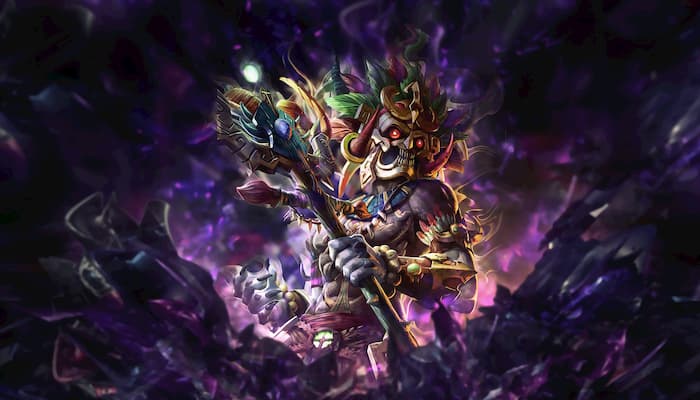
Ah Puch is the Mayan god of the dead, most often associated with death, bodily decay, and the welfare of the newly dead. His epithets in Quechua include Cimi (“Death”) and Cizin (“The Farting One”). He is physically represented as large spots on his body signifying putrefaction, with a very swollen belly.
Images from the classical period sometimes include a hairy collar (“death collar”) with globular elements extending outward, which have been identified as bells, rattles, or extruded eyeballs. He often has a human bone in his hair. His images are often comical, with specific references to his anus and flatulence.
3.- Acan
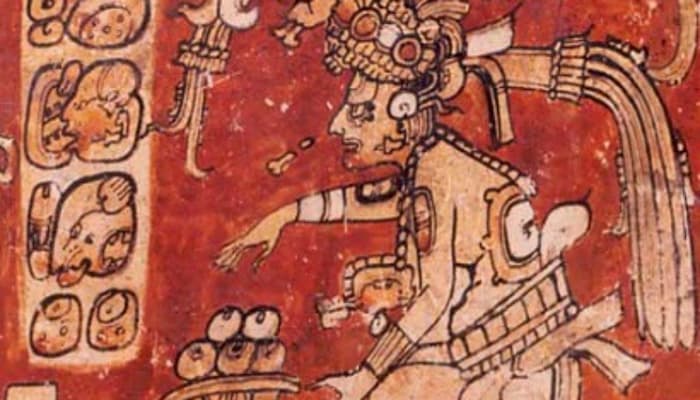
One of the Mayan gods known as the god of drinking, disease, and death. Acan often holds an enema syringe and/or is depicted vomiting, both signs of his involvement in drinking binges, especially the alcoholic drink pulque (“chih”).
Acan’s face is characterized by a division sign or percentage sign on his cheek and a blackened region around his eye. There is often a sign of darkness or night (Ak’b’al or Akbal) on or around his eye, and there is often a human femur in his hair.
4.- Hurricane

Known as the one-legged god, in the Mayan religion he is the lord of lightning. Illustrations of Huracán show him with a long, serpentine nose with scales on his belly—hot plates like those seen on a turtle’s shell extending from his abdomen—and a single leg and foot, often burning like a snake. He has also been seen with an axe, torch or cigar and a circular mirror stuck in his forehead.
5.- Camazotz
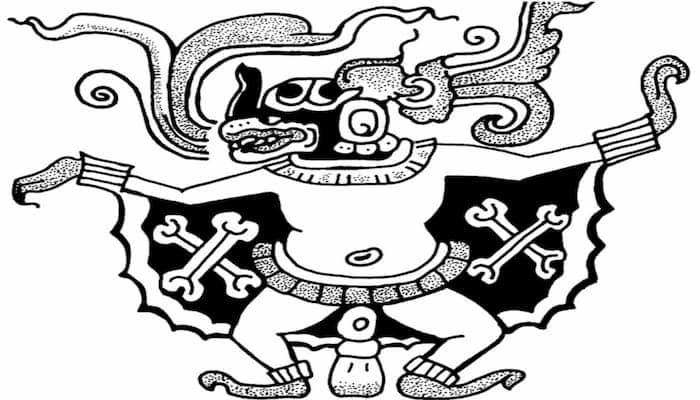
The bat god Camazotz, or Zotz, appears in a story from the Popol Vuh, in which the twin heroes Xbalanque and Hunahpu find themselves trapped in a cave full of bats, large beasts with “snouts like swords that they used as murder weapons.”
6.- Zipacna
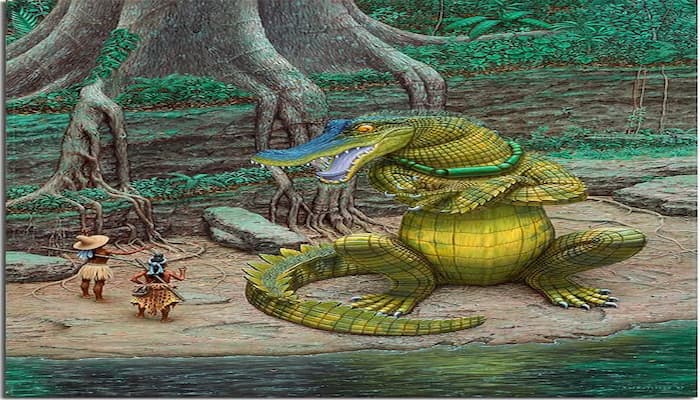
The Mayan rain god Chac poses halfway, engaging with the Earth Monster as he celebrates the birth of the baby Jaguar. Zipacna (or Sipac) is a celestial crocodile warrior, considered a counterpart to the pan-Mesoamerican god Cipactli, the earth monster, who had to be killed to create the earth.
7.- Chaac
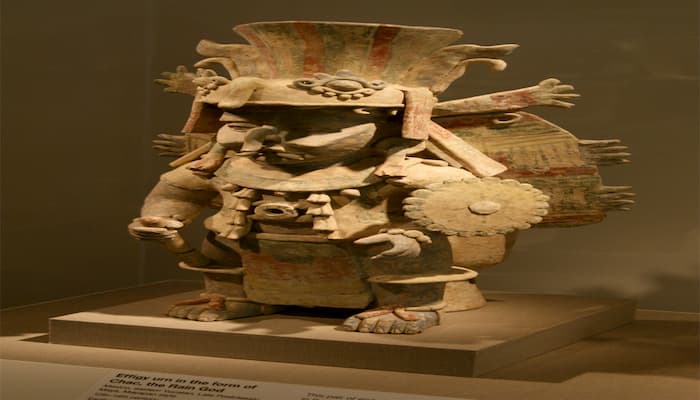
Chaac is one of the oldest known gods in the Mayan pantheon, dating back to the Preclassic period in the Mayan region. Some scholars consider Chac to be the Mayan version of the Aztec Quetzalcoatl.
Chac is the Mayan god of rain and lightning, and has several names, including Chac Xib Chac, Yaxha Chac, and, for scholars, God B. This god is depicted with a long, pendulous, curled nose, and often holds axes or snakes in his fists, both widespread symbols of lightning. Chac is closely identified with war and human sacrifice.
8.- Xmucane and Xpiacoc
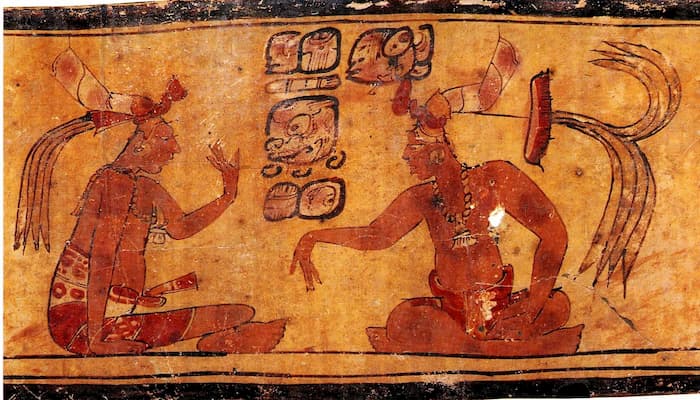
The primordial couple Xmucane and Xpiacoc appear in the Popol Vuh as the grandparents of two sets of twins: the older group of 1 Monkey and 1 Howler, and the younger group of Blowgunner and Jaguar Sun. The older couple suffered great losses in their lives and therefore learned to paint and carve, learning peace from the fields.
The younger couple were magicians and hunters who knew how to hunt for food and understood the violence of the forest. The two groups of twins were jealous of how Xmucane treated the others and played endless pranks on each other. Eventually, the younger couple won, turning the older couple into monkeys. Out of pity, Xmucane allowed the pipers and singers, the painters and sculptors to return, so that they could live and bring joy to all.
9.- Kinich Ahau
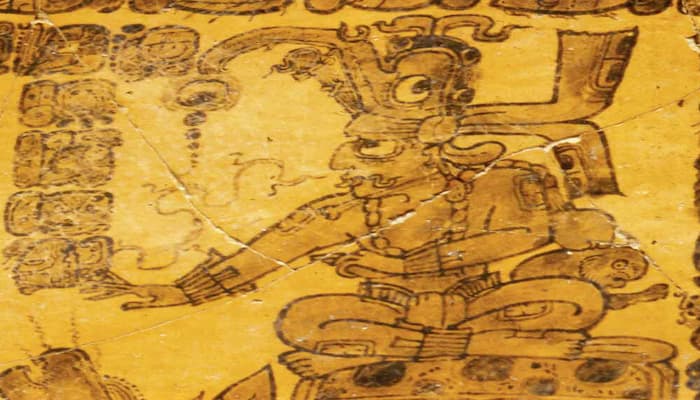
Kinich Ahau is the Mayan sun god, known as Ahau Kin or God G, whose defining characteristics include a “Roman nose” and a large square eye. In frontal views, Kinich Ahau is cross-eyed and often depicted with a beard, which could be a representation of the sun’s rays.
Other features associated with Kinich Ahau are his filled-in incisors and the rope-like elements protruding from the sides of his mouth. Inscribed on his cheek, forehead, or other part of his body is the four-bladed symbol of the sun. His “Roman nose” has a pair of beads on the tip. The identification of Kinich Ahau with decapitation and jaguars is common in Mayan iconography from the Late Preclassic to the Postclassic periods.
10.- Moan Chan
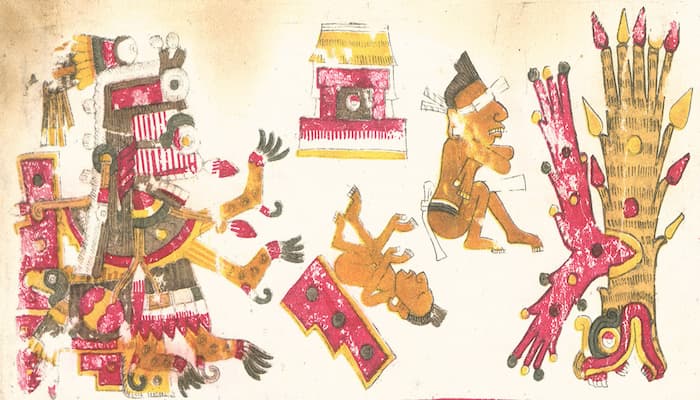
Moan Chan is the elderly merchant named Moan Chan or “Misty Sky” and God L, who is most often depicted with a staff and a merchant’s bundle. On a vase, God L is depicted wearing a wide-brimmed hat adorned with feathers, with a bird of prey sitting on the crown. His cape is commonly a black-and-white design of chevrons and staggered rectangles or one made of jaguar skin.
Misty Sky is most often depicted as an ancient man, hunched over with age, with a prominent, pockmarked nose and a sunken, toothless mouth. Occasionally depicted smoking a cigar, the god L is also associated with tobacco, jaguars, and caves.
Conclusion
According to colonial records, there was a hierarchy of gods, with Itzamna at the top. Many of the gods have multiple names and a variety of aspects, making it difficult to determine exactly how many gods the Maya had: there are likely to be at least 200. Among the most important are Itzamna the Creator, the rain god Chac, the goddess of fertility, Ix Chel, and the gods of death, Ah Puch and Akan. We hope that our description has helped you learn a little more about this culture.